


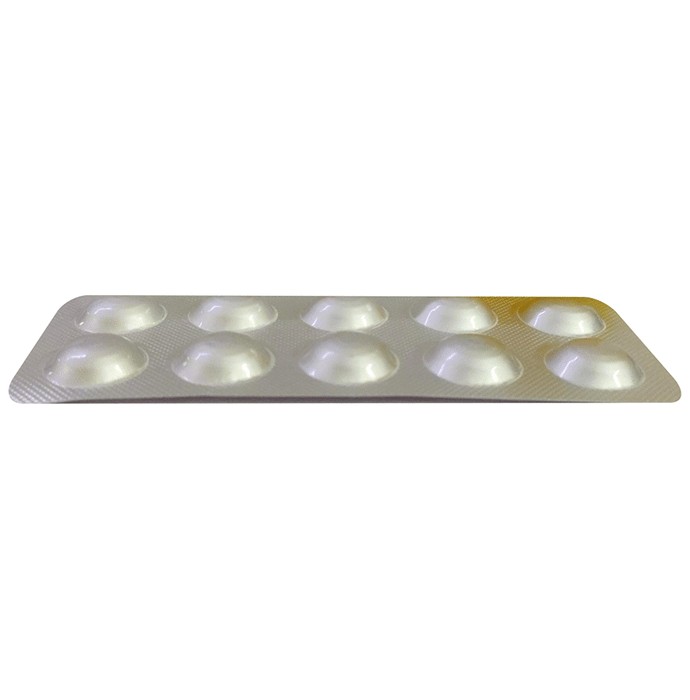
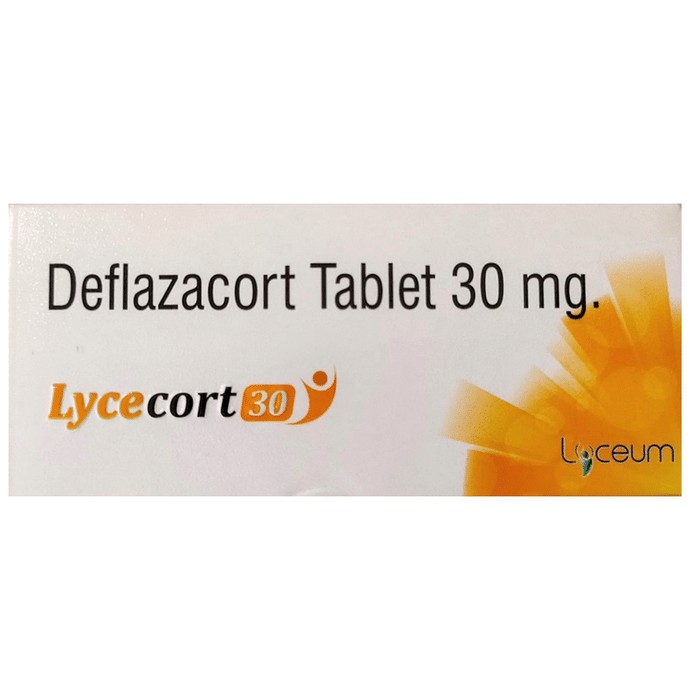
Lycecort 30 Tablet

Marketer
Lyceum Life Sciences Pvt Ltd
Salt Composition
Deflazacort (30mg)
Overview Lycecort 30 Tablet
Prednicort 30mg tablets are corticosteroids, effective against diverse inflammatory and autoimmune disorders. Their mechanism involves suppressing inflammation-inducing substances and modulating immune responses. These tablets may be administered with or without food; consistent, timely dosing optimizes efficacy. Continue treatment as directed by your physician; premature discontinuation is inadvisable. Common adverse effects include increased hunger, weight increase, frequent urination, Cushing's syndrome, cough, upper respiratory infections, hirsutism, obesity, and nasopharyngitis. Report any concerning side effects to your doctor. Prednicort 30mg can impair immune function; promptly report any infection symptoms, such as fever or sore throat. Disclose all current medications to your doctor before commencing treatment. Pregnant or lactating individuals should seek medical counsel prior to use.
Primary Ingredients of Lycecort 30 Tablet
No text provided. Please provide the text you would like me to rephrase.
Uses of Lycecort 30 Tablet
Managing inflammatory and autoimmune disorders
Major Benefits of Lycecort 30 Tablet:
Follow your doctor's instructions precisely regarding dosage and treatment length for this medication. Swallow the Lycecort 30 Tablet whole; do not break, crush, or chew it. It can be taken with or without food, but consistency in timing is recommended. Limit consumption of salads and vegetables while using Lycecort 30 Tablets.
Common Side effects of Lycecort 30 Tablet:
- Increased appetite
- Weight gain
- Frequent urge to urinate
- Cushing syndrome
- Cough
- Obesity
- Nasopharyngitis (inflammation of the throat and nasal passages)
- Upper respiratory tract infection
- Abnormal hair growth
How to use Lycecort 30 Tablet:
Follow your doctor's instructions precisely regarding the dosage and treatment length for this medication. Ingest the Lycecort 30 Tablet whole; do not chew, crush, or fracture it. This medication can be taken with or without food, but consistency in timing is recommended. Minimize consumption of Lycecort 30 Tablet alongside meals featuring salads and vegetables.
How Lycecort 30 Tablet works:
Lycecort 30 Tablets contain a corticosteroid that elevates glucocorticoid levels, thereby reducing inflammation-inducing compounds. This medication's immunosuppressive action prevents the body's immune system from attacking itself, a crucial benefit in conditions such as organ transplantation or cancer.
SAFETY ADVICE
 AlcoholUNSAFE
Consuming alcohol alongside Lycecort 30 Tablet is inadvisable.
 PregnancyCONSULT YOUR DOCTOR
The use of Lycecort 30 Tablet during pregnancy may pose risks. While human data is scarce, animal research indicates potential harm to a developing fetus. A physician will assess the advantages against possible risks prior to prescribing. Seek medical advice before using this medication.
 Breast feedingCONSULT YOUR DOCTOR
Using Lycecort 30 Tablet while breastfeeding is likely inadvisable. Available human data indicates a potential for the medication to transfer to breast milk, posing a possible risk to the infant.
 DrivingSAFE
Driving ability is typically unaffected by Lycecort 30 Tablet.
 KidneySAFE IF PRESCRIBED
For individuals with kidney disease, Lycecort 30 Tablet is considered safe for use. No alteration of the Lycecort 30 Tablet dosage is necessary.
 LiverSAFE IF PRESCRIBED
Patients with liver disease can safely use Lycecort 30 Tablet without requiring any dosage modification.
What if you forget to take Lycecort 30 Tablet :
Should you forget to take your Lycecort 30 Tablet, administer it at your earliest convenience. If, however, your next scheduled dose is imminent, omit the missed dose and resume your usual dosing pattern. Avoid taking a double dose.
Facts to Know About Lycecort 30 Tablet
| Label | Value |
|---|---|
| Chemical Category | Glucocorticoids, mineralocorticoids, progestins, and their derivatives |
| Developing Good Habits | No. |
| Treatment Category | Endocrine Signals |
 3,018 People bought this recently