


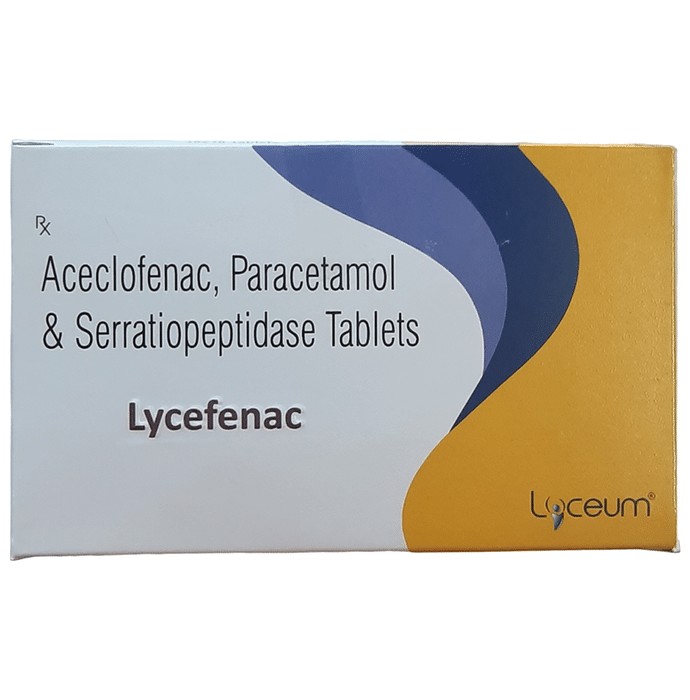
Lycefenac Tablet

Marketer
Lyceum Life Sciences Pvt Ltd
Salt Composition
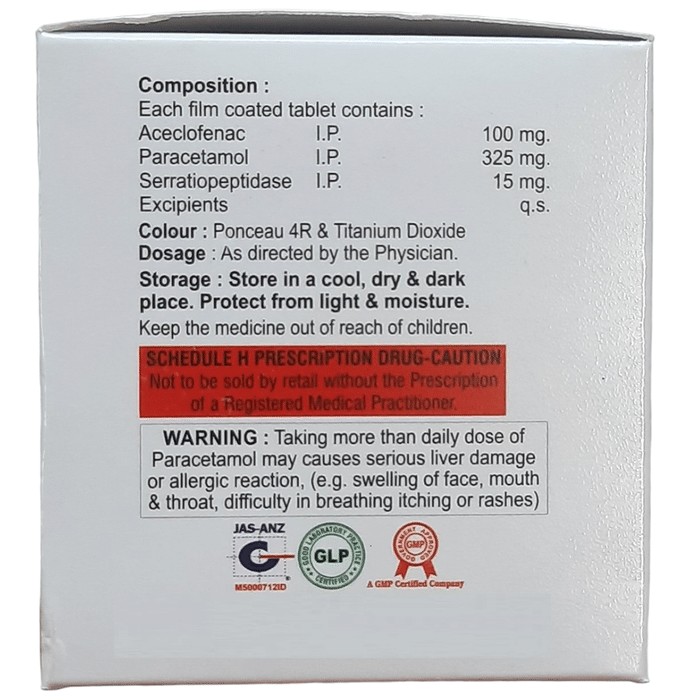
Aceclofenac (100mg) + Paracetamol (325mg) + Serratiopeptidase (15mg)
Overview Lycefenac Tablet
Combiflam-L is a dual-action medication formulated to reduce both pain and inflammation. It offers relief from musculoskeletal discomfort, including muscle aches, joint pain, and post-surgical soreness. This medication effectively manages inflammatory conditions such as rheumatoid arthritis, ankylosing spondylitis, and osteoarthritis. Always adhere to your physician's prescribed dosage and regimen. To minimize stomach irritation, take Combiflam-L with food or milk. Consistent, timely administration enhances its therapeutic efficacy. Continue taking this medication as directed until your doctor advises otherwise. Potential side effects include nausea, vomiting, abdominal pain, dyspepsia, heartburn, elevated liver enzymes, vertigo, somnolence, and diarrhea. For prolonged use, your doctor might monitor your renal and hepatic function, along with blood counts. Extended use carries a risk of severe complications, such as gastrointestinal bleeding and renal impairment. Combiflam-L is contraindicated during pregnancy and lactation.
Uses of Lycefenac Tablet
Analgesia
Major Benefits of Lycefenac Tablet:
Follow your doctor's instructions precisely regarding dosage and treatment length for Lycefenac Tablets. Ingest the tablets whole; avoid chewing, crushing, or breaking them. Administer this medication with food.
Common Side effects of Lycefenac Tablet:
- Nausea
- Vomiting
- Stomach pain
- Indigestion
- Heartburn
- Loss of appetite
- Diarrhea
- Dizziness
- Increased liver enzymes
- Drowsiness
How to use Lycefenac Tablet:
Follow your doctor's instructions precisely regarding the dosage and treatment length for Lycefenac Tablets. Ingest each tablet whole; avoid chewing, crushing, or breaking it. Always take Lycefenac with a meal.
How Lycefenac Tablet works:
Lycefenac Tablet unites Aceclofenac, Paracetamol, and Serratiopeptidase—three active agents. Aceclofenac, a non-steroidal anti-inflammatory drug (NSAID), and Paracetamol, an antipyretic, synergistically reduce pain and fever by inhibiting the production of inflammatory mediators in the central nervous system. Serratiopeptidase, a proteolytic enzyme, aids healing by selectively degrading inflammatory proteins.
SAFETY ADVICE
 AlcoholUNSAFE
Lycefenac Tablet should not be taken with alcohol.
 PregnancyCONSULT YOUR DOCTOR
The use of Lycefenac Tablets during pregnancy may pose risks. While human data is scarce, animal research indicates potential harm to the unborn child. A physician will assess the advantages against possible dangers prior to prescribing. Seek medical advice.
 Breast feedingCONSULT YOUR DOCTOR
Data on Lycefenac Tablet use while breastfeeding is lacking. Seek medical advice from your physician.
 DrivingUNSAFE
Taking Lycefenac Tablets may cause drowsiness, blurred vision, or dizziness. Refrain from driving if you experience these effects.
 KidneyCAUTION
Individuals with kidney impairment should exercise caution when using Lycefenac Tablet, potentially requiring dosage modification. Physician consultation is advised. Lycefenac Tablet is contraindicated in patients exhibiting severe kidney disease.
 LiverCAUTION
Individuals with liver impairment should exercise caution when taking Lycefenac Tablet, potentially requiring a modified dosage. A physician's consultation is advised. Lycefenac Tablet is contraindicated for those with severe or active liver disease.
What if you forget to take Lycefenac Tablet :
Should you forget a Lycefenac Tablet dose, take it immediately. If, however, your next dose is imminent, omit the missed one and resume your usual dosing regimen. Never take a double dose.
Facts to Know About Lycefenac Tablet
| Label | Value |
|---|---|
| Developing Habits | No. |
| Type of Therapy | Pain Relievers |
 3,018 People bought this recently