


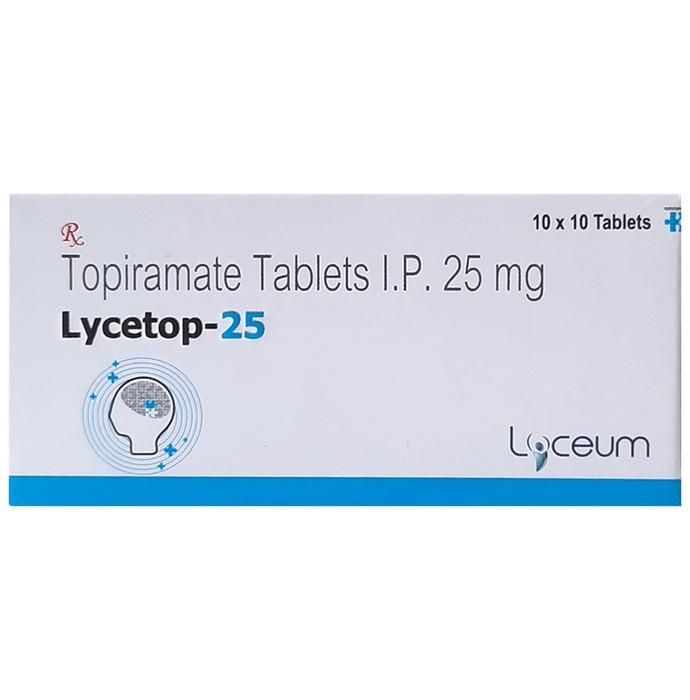
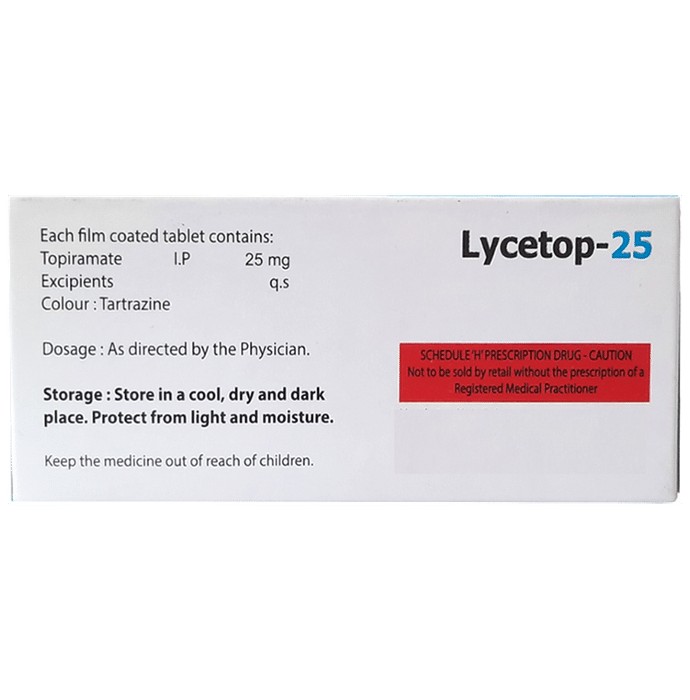
Lycetop 25 Tablet

Marketer
Lyceum Life Sciences Pvt Ltd
Salt Composition
Topiramate (25mg)
Overview Lycetop 25 Tablet
Epileptic seizures and migraine prevention are addressed by the medication Lycetop 25mg tablets. This medication is also indicated for Lennox-Gastaut syndrome management, a severe, childhood-onset epilepsy. Lycetop 25mg can be ingested with or without food, ideally at a consistent time daily. Missed doses should be taken immediately upon recollection, completing the prescribed course regardless of symptom improvement. Abrupt cessation requires prior physician consultation to avoid potential seizure exacerbation. Regular serum bicarbonate level monitoring may be recommended during treatment. Common adverse reactions include nausea, altered taste perception, weariness, diarrhea, weight reduction, appetite suppression, and cognitive deficits. Visual disturbances such as nearsightedness or glaucoma are possible; therefore, pre-treatment and ongoing ophthalmological examinations are advised. Drowsiness and vertigo may occur, necessitating caution with activities demanding concentration until the drug's effects are understood. Persistent or bothersome side effects warrant medical consultation.
Primary Ingredients of Lycetop 25 Tablet
No information provided. Please provide the text you wish me to rewrite.
Uses of Lycetop 25 Tablet
Migraine, epilepsy, and Lennox-Gastaut syndrome prophylaxis.
Major Benefits of Lycetop 25 Tablet:
Follow your doctor's instructions precisely regarding the dosage and treatment length for this medication. Ingest the Lycetop 25 Tablet whole; avoid chewing, crushing, or breaking it. While you can take it with or without food, consistency is key—administer it at the same time each day.
Common Side effects of Lycetop 25 Tablet:
- Abdominal pain
- Diarrhea
- Dizziness
- Fatigue
- Fever
- Loss of appetite
- Memory impairment
- Nausea
- Nervousness
- Numbness
- Psychomotor impairment
- Sleepiness
- Speech disorder
- Taste change
- Upper respiratory tract infection
- Visual impairment
- Weight loss
How to use Lycetop 25 Tablet:
Follow your doctor's instructions precisely regarding the dosage and treatment length for this medication. Swallow the Lycetop 25 Tablet whole; avoid crushing, chewing, or breaking it. While it can be taken with or without food, consistent timing is recommended for optimal results.
How Lycetop 25 Tablet works:
Lycetop 25mg tablets are used to treat epilepsy. This medication works by reducing excessive, irregular electrical activity within the brain's neurons, thereby controlling seizures.
SAFETY ADVICE
 AlcoholUNSAFE
Consuming alcohol while taking Lycetop 25 Tablet is inadvisable.
 PregnancyCONSULT YOUR DOCTOR
Using Lycetop 25 Tablet during pregnancy poses a confirmed risk to the fetus. Its prescription is exceptionally rare, limited to life-threatening circumstances where potential benefits outweigh the known hazards. Always seek medical advice.
 Breast feedingCONSULT YOUR DOCTOR
The use of Lycetop 25 Tablet while breastfeeding is likely inadvisable. Available human data indicates a potential for the medication to transfer to breast milk, posing a possible risk to the infant.
 DrivingUNSAFE
Taking Lycetop 25 Tablet might reduce attentiveness, impair vision, or cause drowsiness and dizziness. Driving should be avoided if these effects are experienced.
 KidneyCAUTION
Patients with kidney impairment should exercise caution when using Lycetop 25 Tablets. A modified dosage of Lycetop 25 Tablets might be necessary. Physician consultation is advised.
 LiverCAUTION
Individuals with liver impairment should exercise caution when using Lycetop 25 Tablets. Dosage modification may be necessary. Physician consultation is advised.
What if you forget to take Lycetop 25 Tablet :
Should you forget a Lycetop 25 Tablet dose, take it immediately if you remember. If, however, your next dose is imminent, omit the missed dose and resume your usual dosing pattern. Avoid taking a double dose.
Facts to Know About Lycetop 25 Tablet
| Label | Value |
|---|---|
| Chemical Type | Dioxolopyran derivative |
| Developing Habits | No. |
| Treatment Category | Neuroscience, Central Nervous System |
 3,018 People bought this recently