


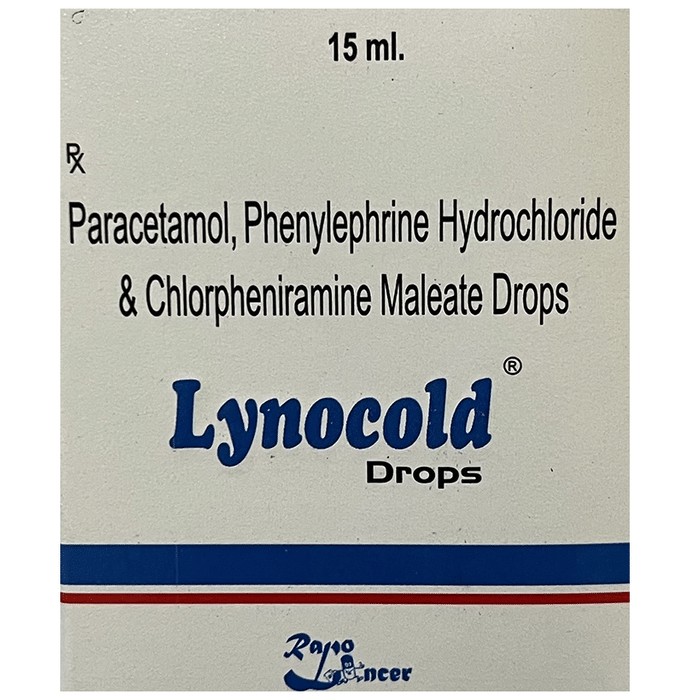
Lynocold Drop

Marketer
Kabson Medicare
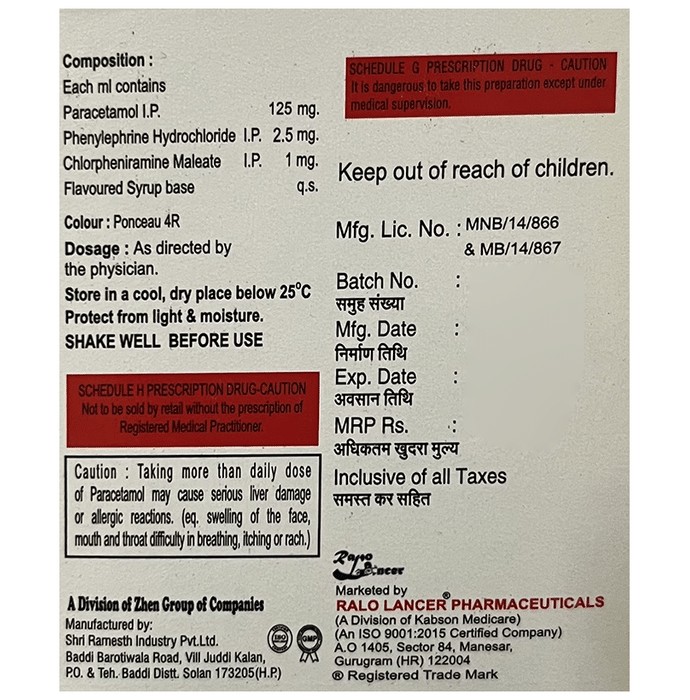
Salt Composition
Chlorpheniramine Maleate (1mg/5ml) + Paracetamol (125mg/5ml) + Phenylephrine (2.5mg/5ml)
Overview Lynocold Drop
Pediatric use of Lynocold Drops is frequent for alleviating common cold symptoms such as nasal congestion, cough, sneezing, ocular discharge, myalgia, pharyngitis, and fever. Administer Lynocold Drops orally to your child, with or without food. Given children's sensitive digestive systems, consider administering with food if stomach upset occurs. Dosage, timing, and method must adhere strictly to your pediatrician's instructions, as these vary depending on symptom severity. Establish a consistent daily administration time to integrate it into your child's routine and improve adherence. If vomiting occurs within 30 minutes, repeat the dose; however, avoid re-dosing if the next scheduled dose is imminent. Symptom improvement may begin within a week, but complete the prescribed course to prevent relapse. Minor, transient side effects like nausea, diarrhea, vomiting, dizziness, rash, or headache may occur, typically resolving as the body adjusts. Persistent or severe side effects necessitate immediate consultation with your child's physician. Comprehensive disclosure of your child's medical history, encompassing current medications, allergies, cardiac conditions, hematological disorders, congenital anomalies, respiratory issues, dermatological conditions, hepatic or renal impairment, is crucial for appropriate dosage and treatment planning.
Primary Ingredients of Lynocold Drop
No text provided to rephrase.
Uses of Lynocold Drop
Managing the Common Cold
Major Benefits of Lynocold Drop:
Administer this medication precisely as your physician prescribes, adhering to both the dosage and treatment length. Always consult the product label for usage instructions prior to consumption. Use a calibrated dropper for accurate measurement and follow the provided guidelines. Lynocold Drop can be ingested with or without food; however, consistent timing is recommended.
Common Side effects of Lynocold Drop:
- Diarrhea
- Rash
- Dizziness
- Tachycardia
- Palpitations
- Anxiety
- Restlessness
- Tremors
- Weakness
- Hallucination
- Nausea
- Headache
- Insomnia (difficulty in sleeping)
How to use Lynocold Drop:
Administer this medication precisely as your physician prescribes, adhering to both dosage and treatment length. Always consult the product label for detailed instructions prior to use. Employ a calibrated dropper for accurate measurement and follow the dispensing guidelines. Lynocold Drop can be ingested with or without food; however, consistent timing is recommended for optimal results.
How Lynocold Drop works:
Tri-action Lynocold Drops combine chlorpheniramine, paracetamol, and phenylephrine to alleviate common cold symptoms. Chlorpheniramine, an antihistamine, targets allergy-related discomfort such as nasal discharge, lacrimation, and sneezing. Paracetamol acts as both an analgesic, easing pain, and an antipyretic, lowering fever, by inhibiting the production of brain chemicals that trigger these sensations. Phenylephrine, a decongestant, shrinks nasal blood vessels, thereby relieving stuffiness.
SAFETY ADVICE
 KidneyCAUTION
Patients with kidney impairment should use Lynocold Drops cautiously, potentially requiring dosage modification. Physician consultation is advised.
 LiverCAUTION
Patients with hepatic impairment should exercise caution when using Lynocold Drop; dosage modification may be necessary. Physician consultation is advised.
What if you forget to take Lynocold Drop :
Remain calm. Unless otherwise directed by your child's physician, administer the forgotten dose immediately upon recollection. However, omit the missed dose if the next scheduled dose is imminent. Adhere to the recommended dosage schedule; avoid doubling the dose to compensate for a missed one.
Facts to Know About Lynocold Drop
| Label | Value |
|---|---|
| Developing Habits | No. |
| Treatment Category | Breathing |
 3,018 People bought this recently