


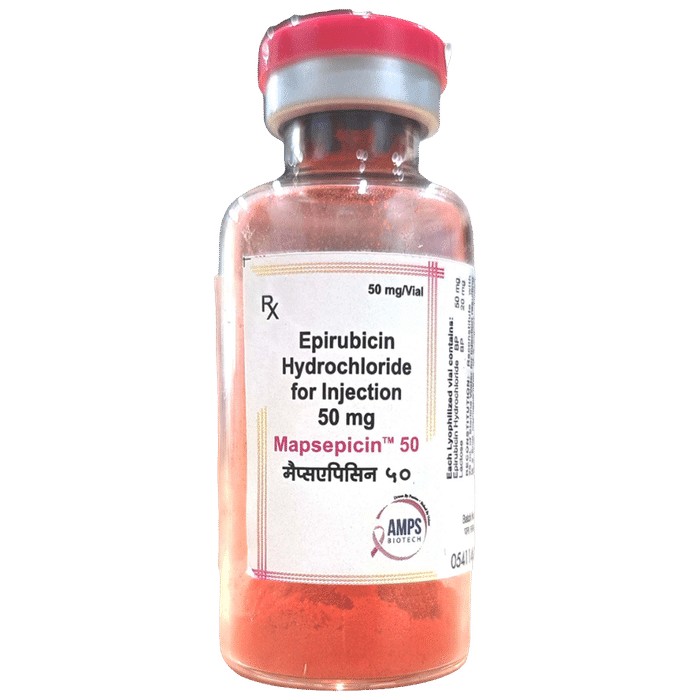
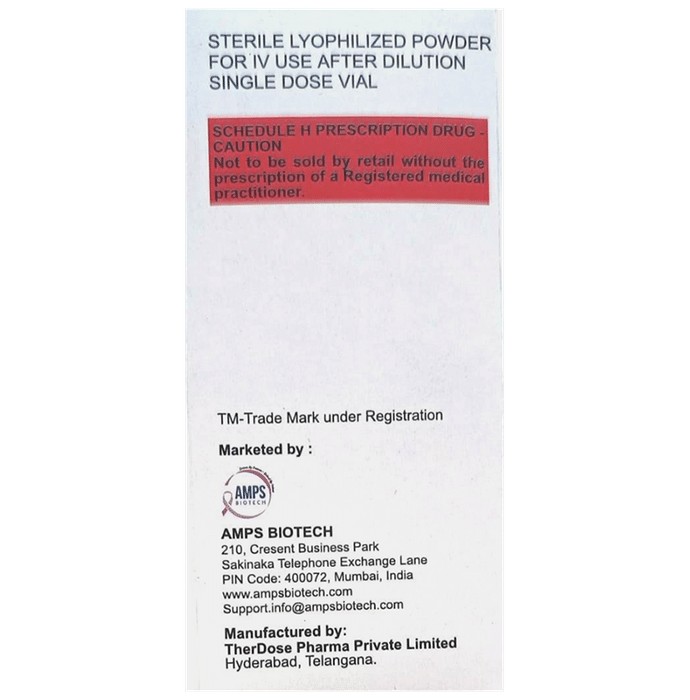
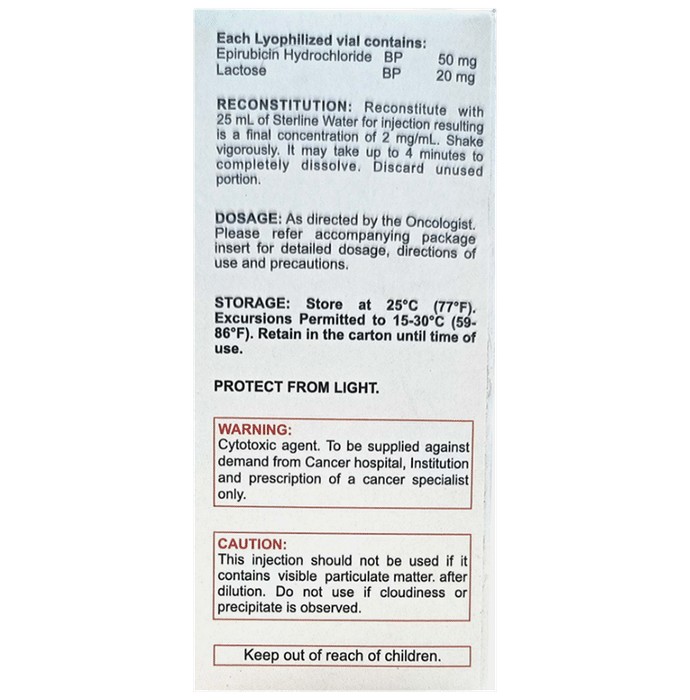
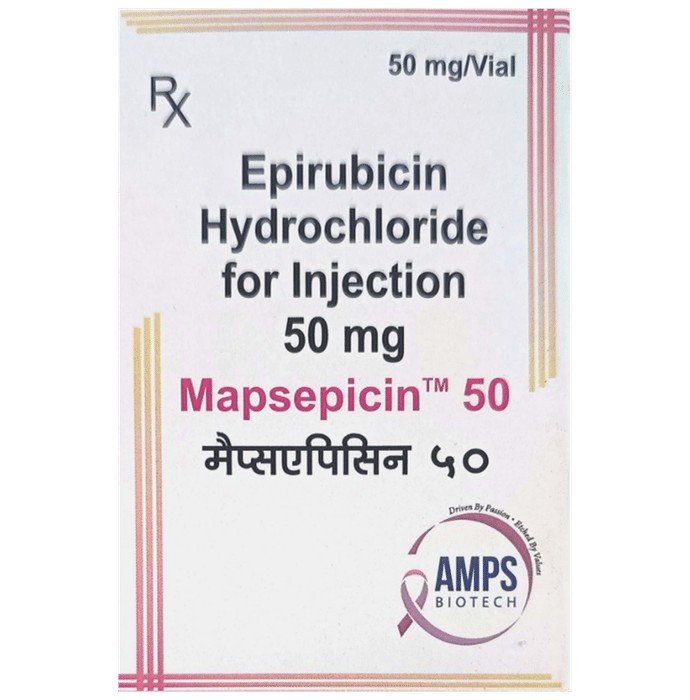
Mapsepicin 50 Injection

Marketer
AMPS Biotech Pvt Ltd
Salt Composition
Epirubicin (50mg)
Overview Mapsepicin 50 Injection
Mapsepicin 50 Injection treats various blood, breast, stomach, lung, ovarian, and soft tissue cancers. It also aids in preventing bladder cancer recurrence post-surgery. Administered intravenously by a healthcare professional, it's used cautiously, either alone or as part of combination chemotherapy, as determined by your physician. Dosage and frequency are individualized, potentially adjusting over time. Strict adherence to your doctor's instructions is vital; improper use can lead to severe adverse reactions. Therapeutic effects may take weeks or months to manifest; discontinuation should only occur under medical supervision. Reliable contraception is crucial for both men and women during treatment, as it can impair contraceptive pill effectiveness. Common side effects include nausea, low platelet counts, alopecia, amenorrhea, fever, and rash. Reduced blood cell counts increase infection risk, potentially life-threatening. Regular blood tests monitor blood cell levels and kidney, liver, and heart function. Prior to treatment, disclose any liver or heart conditions, and all other medications you're taking, as interactions can compromise efficacy. Report pregnancy or breastfeeding to your doctor.
Uses of Mapsepicin 50 Injection
Malignant neoplasm
Major Benefits of Mapsepicin 50 Injection:
Administering this medication will be performed by your physician or registered nurse; self-medication is strictly prohibited.
Common Side effects of Mapsepicin 50 Injection:
- Low blood platelets
- Nausea
- Hair loss
- Absence of menstrual periods
- Fever
- Anemia (low number of red blood cells)
- Diarrhea
- Weight loss
- Decreased white blood cell count (neutrophils)
- Hot flashes
- Gastrointestinal inflammation
- Rash
- Low energy
- Eye disorder
How to use Mapsepicin 50 Injection:
This medication will be administered by your healthcare provider. Self-medication is strictly prohibited.
How Mapsepicin 50 Injection works:
Mapsepicin 50 Injection is a cancer treatment that targets breast cancer cells. Its mechanism involves inhibiting topoisomerase II, a crucial enzyme in DNA replication. This inhibition, coupled with the generation of damaging free radicals, disrupts the cancer cells' DNA, halting their proliferation and ultimately leading to their demise.
SAFETY ADVICE
 AlcoholUNSAFE
Avoid alcohol while using Mapsepicin 50 Injection.
 PregnancyCONSULT YOUR DOCTOR
Administering Mapsepicin 50 Injection during pregnancy is contraindicated due to confirmed risks to the fetus. Nevertheless, a physician might exceptionally prescribe it in critical, life-threatening conditions where potential benefits outweigh the hazards. Seek medical advice from your doctor.
 Breast feedingUNSAFE
Administering Mapsepicin 50 Injection while breastfeeding is contraindicated. Evidence indicates potential infant toxicity from this medication.
 DrivingUNSAFE
Administering Mapsepicin 50 Injection may result in adverse reactions that compromise driving capabilities. Nausea and vomiting, potential side effects of Mapsepicin 50 Injection, can transiently affect driving skills.
 KidneySAFE IF PRESCRIBED
The use of Mapsepicin 50 Injection in individuals with impaired renal function appears to present a low risk. Existing evidence indicates dose modification may be unnecessary; however, physician consultation is advised. For patients exhibiting serum creatinine levels exceeding 5 mg/dL, reduced dosages should be explored.
 LiverCAUTION
Exercise caution when administering Mapsepicin 50 Injection to individuals with hepatic impairment; dosage modification may be necessary. Consult a physician. Mapsepicin 50 Injection is contraindicated in patients exhibiting severe liver dysfunction.
What if you forget to take Mapsepicin 50 Injection :
NA
Facts to Know About Mapsepicin 50 Injection
| Label | Value |
|---|---|
| Type of Compound | Anthracycline-based agent |
| Potential for Dependence | None. |
| Type of Medication | Cancer medications |
| Mechanism of Action | Cytotoxic alkaloid compounds |
 3,018 People bought this recently