


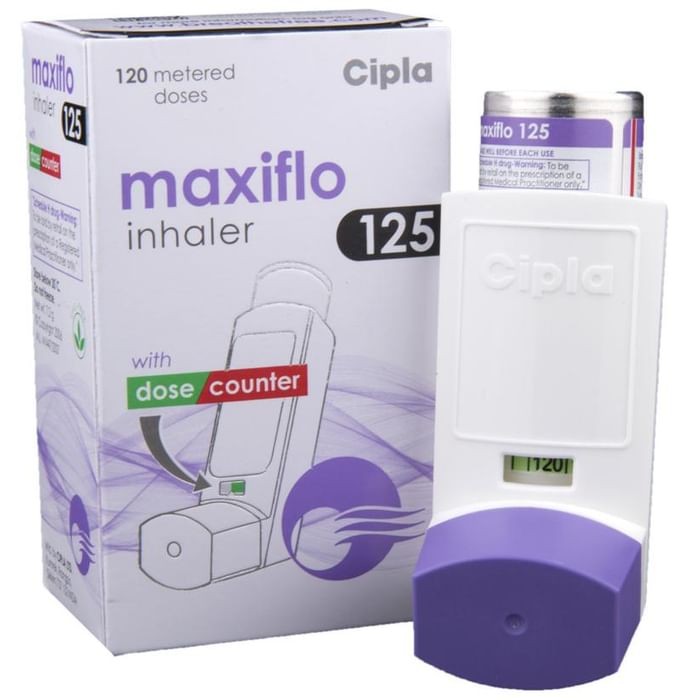
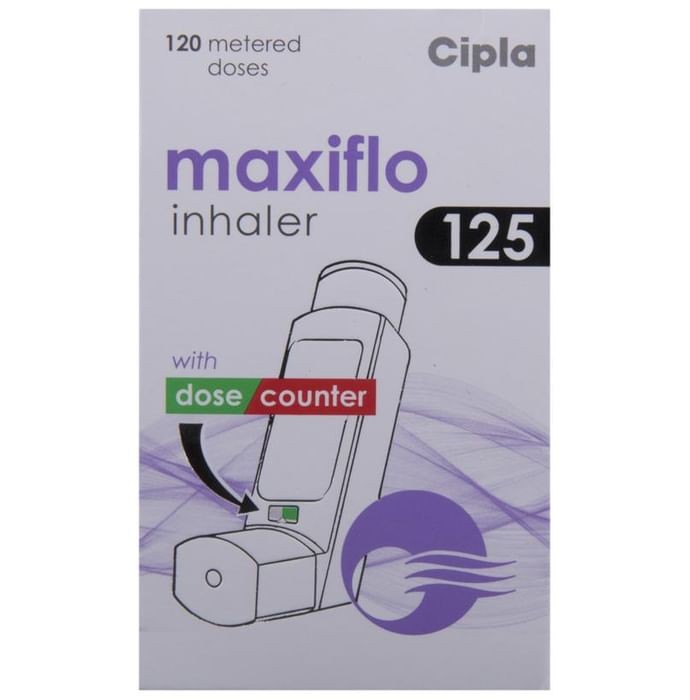
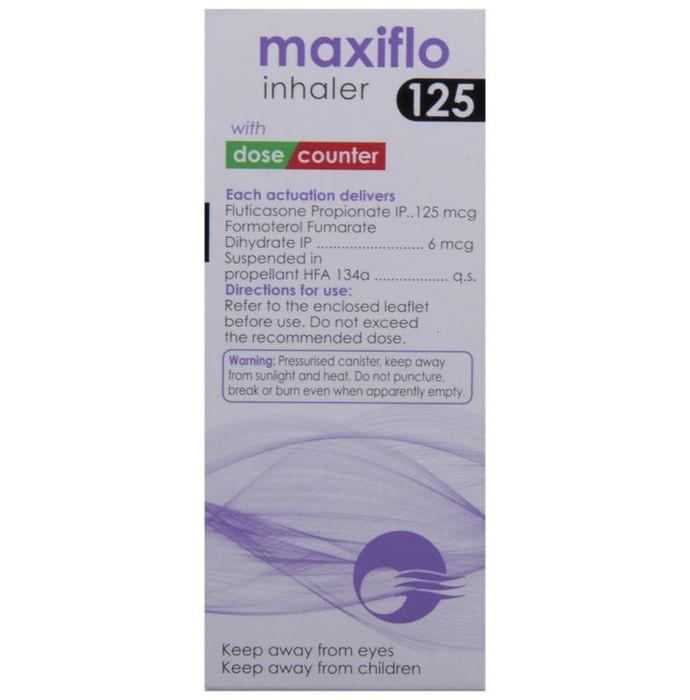
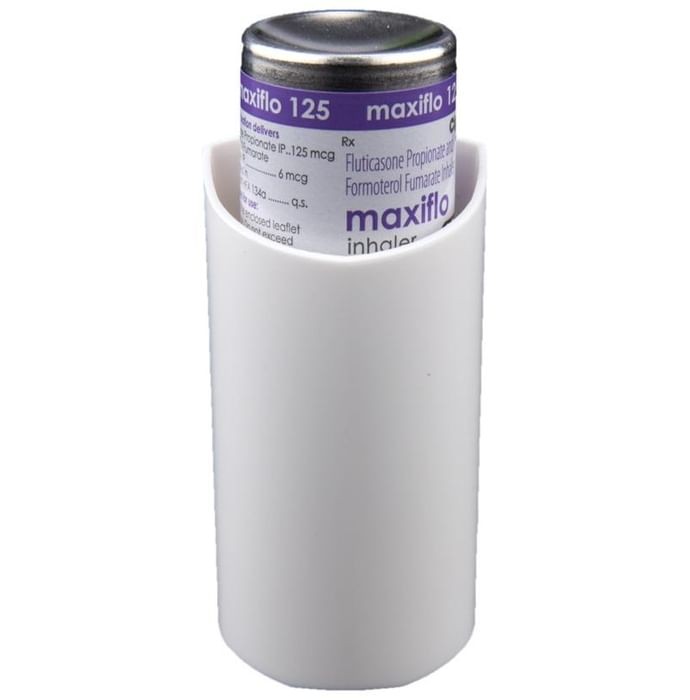
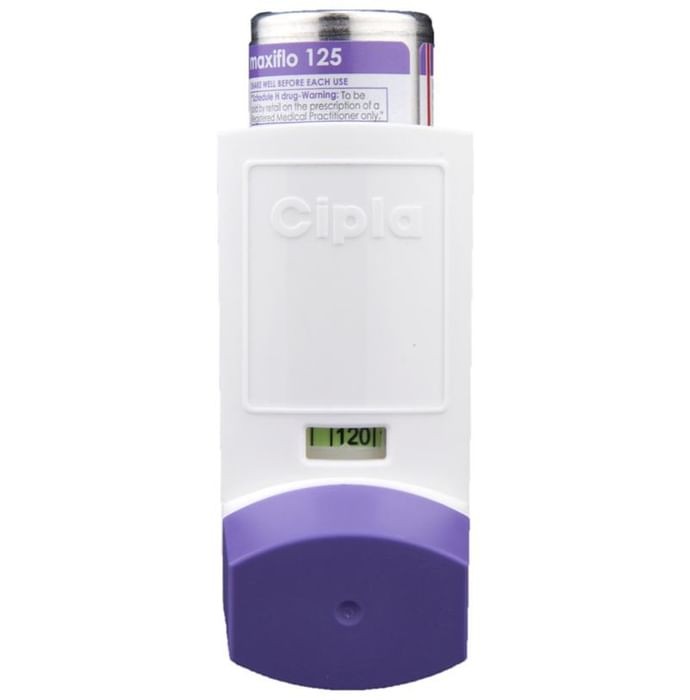
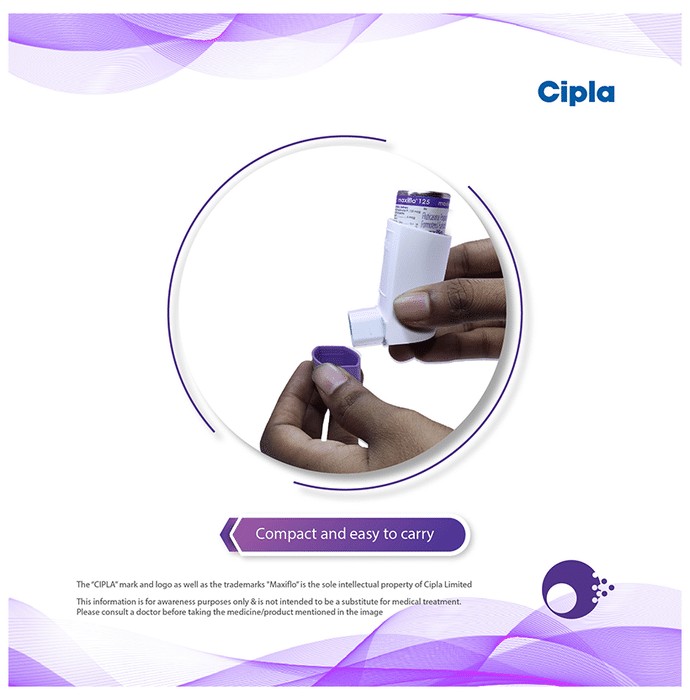
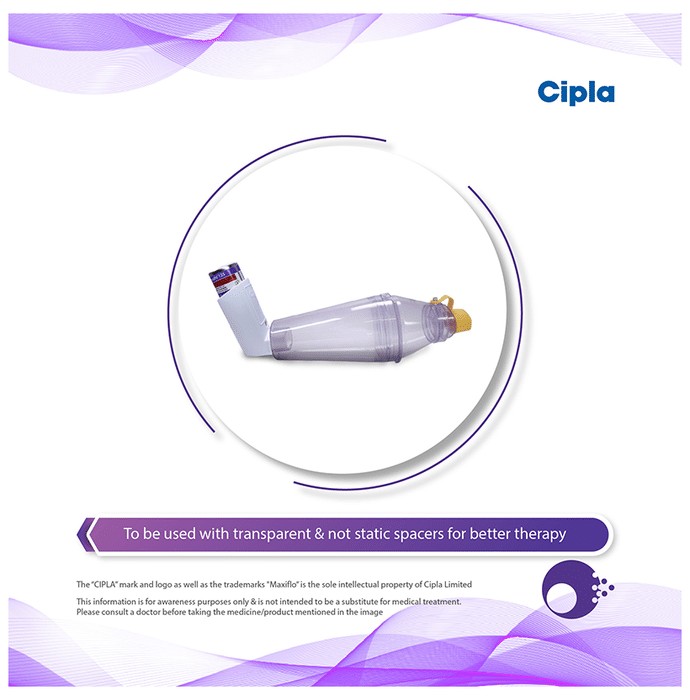

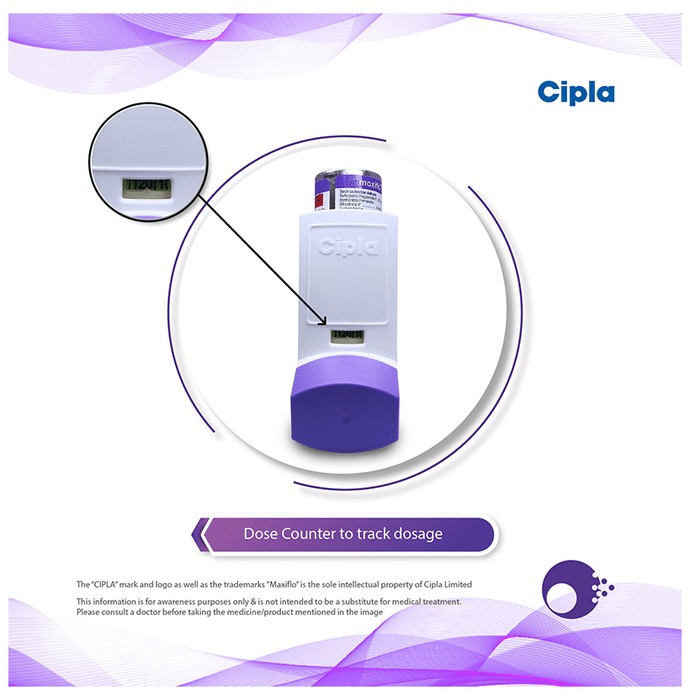
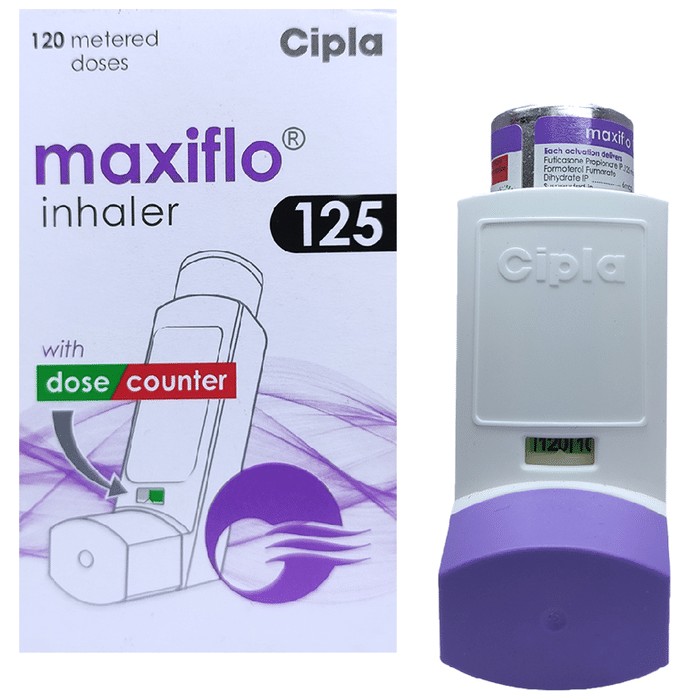
Maxiflo 125 Inhaler

Marketer
Cipla Ltd
Salt Composition
Formoterol (6mcg) + Fluticasone Propionate (125mcg)
Overview Maxiflo 125 Inhaler
Maxiflo 125 inhalation aerosol treats asthma (characterized by wheezing and breathlessness) and chronic obstructive pulmonary disease (COPD), a lung condition obstructing airflow. It eases airway muscle constriction, facilitating breathing. Your physician will determine the appropriate inhalation frequency. Maintain the lowest effective dose to manage your asthma. Benefits become apparent within days, reaching peak efficacy after several weeks. Consistent use is crucial for effectiveness; continue even without symptoms—this indicates its therapeutic action. Cessation may exacerbate asthma and COPD. This medication isn't for acute asthma attacks; use your rescue inhaler instead. Proper inhalation technique is essential for optimal results. Common side effects include nausea, vomiting, respiratory infections, headache, voice hoarseness, throat irritation, cough, musculoskeletal pain, and tachycardia. If these occur, consult your doctor, but don't discontinue treatment. Rinsing your mouth and throat or brushing your teeth after each use may minimize some side effects. Less frequent, but potentially serious, adverse effects warrant discussion with your doctor. Avoid asthma triggers and smoking. Discuss the medication's safety with your doctor if you're pregnant or breastfeeding. Inform your doctor of any kidney or liver conditions before starting treatment to ensure appropriate dosage.
Primary Ingredients of Maxiflo 125 Inhaler
No text was provided to rewrite.
Uses of Maxiflo 125 Inhaler
Managing Chronic Obstructive Pulmonary Disease (COPD)
Major Benefits of Maxiflo 125 Inhaler:
Before using, carefully review the medication label's instructions. Shake the inhaler well. Simultaneously initiate inhalation and depress the inhaler once to dispense the medicine. Retain your breath for ten seconds. Repeat this process until you've taken the prescribed number of puffs as directed by your physician. Finally, rinse your mouth completely with water and discard the rinse water.
Common Side effects of Maxiflo 125 Inhaler:
- Headache
- Cough
- Upper respiratory tract infection
- Nasopharyngitis (inflammation of the throat and nasal passages)
- Sinus inflammation
- Stomach discomfort
- Tremors
- Palpitations
- Voice change
How to use Maxiflo 125 Inhaler:
Always consult the product label for proper administration instructions. Agitate the inhaler well. Simultaneously initiate inhalation and depress the inhaler once to dispense the medication; retain your breath for ten seconds. Repeat this process until you've taken the prescribed number of inhalations as directed by your physician. Finally, rinse your mouth completely with water and expectorate.
How Maxiflo 125 Inhaler works:
Maxiflo 125 Inhaler combines formoterol and fluticasone propionate to improve breathing. Formoterol, a long-acting bronchodilator, opens the airways by relaxing airway muscles. Fluticasone propionate, a steroid, reduces airway inflammation by suppressing the release of inflammatory chemicals. This dual action facilitates easier respiration.
SAFETY ADVICE
 AlcoholUNSAFE
Alcohol and Maxiflo 125 Inhaler should not be used together.
 PregnancyCONSULT YOUR DOCTOR
Using Maxiflo 125 Inhaler during pregnancy might pose risks. While human research is scant, animal studies indicate potential harm to the unborn child. A physician will assess the advantages against possible dangers prior to prescribing. Seek medical advice.
 Breast feedingCONSULT YOUR DOCTOR
Using Maxiflo 125 Inhaler while breastfeeding is likely inadvisable. Available data from humans indicates potential transfer to breast milk, posing a possible risk to the infant.
 DrivingNone
No drug interaction detected.
 KidneyNone
No known drug interactions.
 LiverNone
No known drug interactions.
What if you forget to take Maxiflo 125 Inhaler :
NA
Facts to Know About Maxiflo 125 Inhaler
| Label | Value |
|---|---|
| Developing Habits | No. |
| Treatment Category | Breathing |
 3,018 People bought this recently