


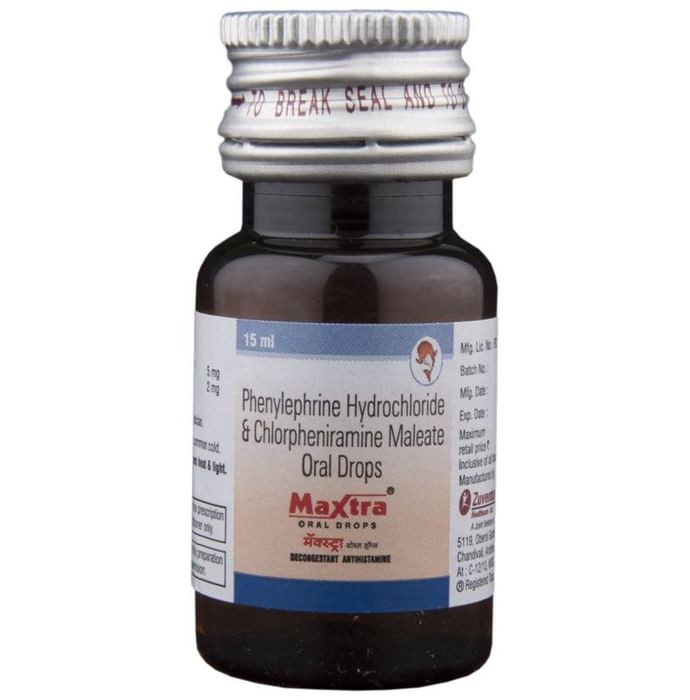
Maxtra Oral Drops

Marketer
Zuventus Healthcare Ltd
Salt Composition
Chlorpheniramine Maleate (2mg/ml) + Phenylephrine (5mg/ml)
Overview Maxtra Oral Drops
For children experiencing common cold symptoms, Pediaclear Oral Drops offer symptomatic relief. This medicine quickly eases runny noses, nasal congestion, and sneezing. Pediaclear can be administered with or without food, always following the doctor's precise dosage and treatment schedule. The prescribed amount and duration will vary based on your child's response and overall health. Continue the medication as directed. Common, typically temporary, side effects include nausea, vomiting, and headaches; these usually subside spontaneously. However, report any concerns to your doctor immediately. Drowsiness is possible; avoid activities requiring concentration until the medicine's effects are known. Adequate fluid intake is recommended during treatment. Inform your doctor of any pre-existing kidney or liver conditions before starting treatment to ensure appropriate dosing.
Primary Ingredients of Maxtra Oral Drops
No text provided to rephrase.
Uses of Maxtra Oral Drops
Managing the common cold
Major Benefits of Maxtra Oral Drops:
Administer Maxtra Oral Drops precisely as your physician prescribes, adhering to both dosage and treatment length. Always consult the product label for detailed instructions prior to use. Accurate measurement should be achieved using the provided marked dropper. While consumption with or without food is permissible, consistent daily timing is recommended for optimal results.
Common Side effects of Maxtra Oral Drops:
- Vomiting
- Restlessness
- Anxiety
- Dizziness
- Pale skin
- High blood pressure
- Seizure
- Dry nose
- Cerebral hemorrhage
- Dry throat
- Excitement
- Rash
- Headache
- Tremors
- Palpitations
- Paresthesia (tingling or pricking sensation)
- Abdominal pain
- Allergic reaction
- Decreased appetite
- Blurred vision
How to use Maxtra Oral Drops:
Administer this medication according to your physician's prescribed dosage and schedule. Always refer to the product label for usage instructions prior to consumption. Use the calibrated dropper for precise measurement and follow the provided guidelines. Maxtra Oral Drops can be ingested with or without food; however, consistent timing is recommended for optimal results.
How Maxtra Oral Drops works:
Chlorpheniramine maleate acts as an antihistamine, alleviating allergic reactions such as nasal discharge, lacrimation, and sneezing. Phenylephrine, a nasal decongestant, constricts blood vessels in the nasal passages, thereby easing congestion and stuffiness.
SAFETY ADVICE
 AlcoholCAUTION
Use of Maxtra Oral Drops with alcohol requires careful consideration. Physician consultation is recommended.
 PregnancyCONSULT YOUR DOCTOR
Data on Maxtra Oral Drops use in pregnancy are absent. Seek medical advice from your physician.
 Breast feedingCONSULT YOUR DOCTOR
Data on the safety of Maxtra Oral Drops while breastfeeding is lacking. Seek medical advice from your physician.
 DrivingCONSULT YOUR DOCTOR
The effect of Maxtra Oral Drops on driving ability is undetermined. Refrain from driving if you exhibit any symptoms impairing concentration or reaction time.
 KidneyCONSULT YOUR DOCTOR
Data regarding the administration of Maxtra Oral Drops to individuals with renal impairment is scarce. Physician consultation is advised.
 LiverCONSULT YOUR DOCTOR
Data on Maxtra Oral Drops' use in individuals with hepatic impairment is scarce. Physician consultation is advised.
What if you forget to take Maxtra Oral Drops :
Should you forget a dose of Maxtra Oral Drops, administer it at your earliest convenience. However, if your next scheduled dose is imminent, omit the missed dose and resume your usual dosing regimen. Never take a double dose.
Facts to Know About Maxtra Oral Drops
| Label | Value |
|---|---|
| Developing Habits | No. |
| Treatment Category | Breathing |
 3,018 People bought this recently