


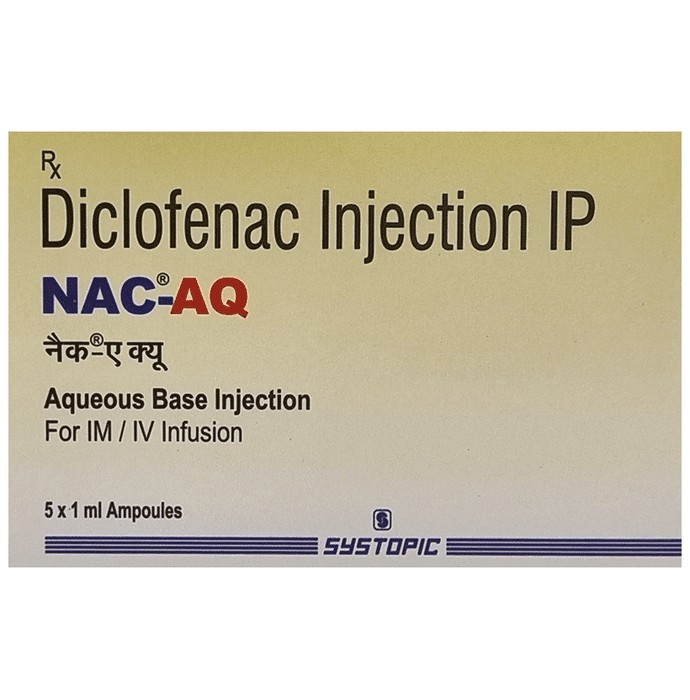
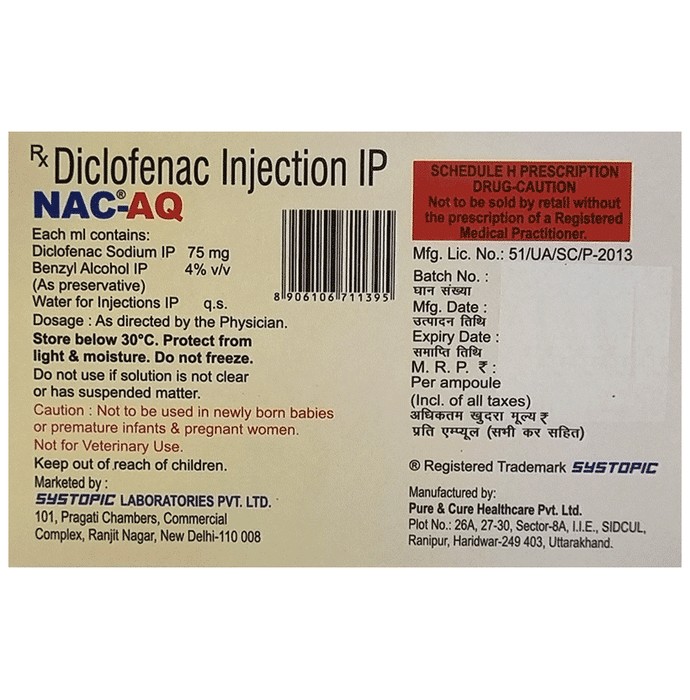
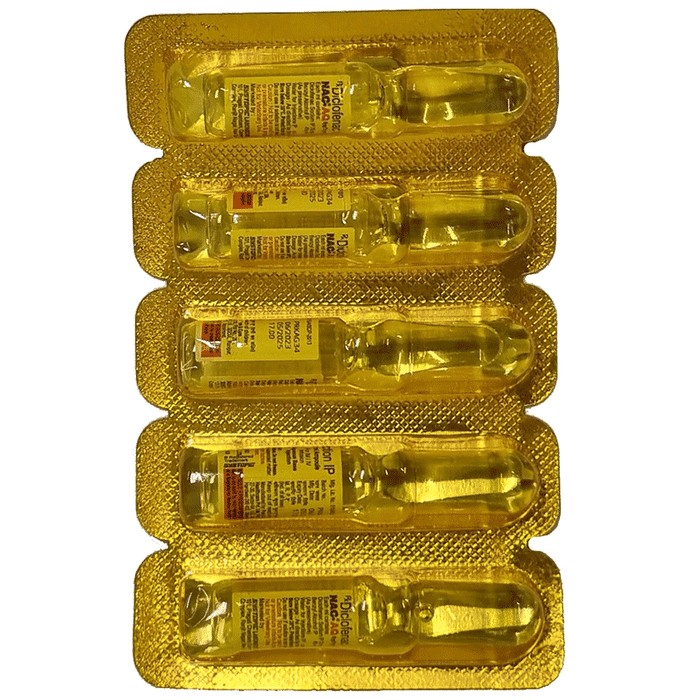
NAC -AQ Injection

Marketer
Systopic Laboratories Pvt Ltd
Salt Composition
Diclofenac (75mg)
Overview NAC -AQ Injection
NAC-AQ Injection provides analgesia, alleviating pain, inflammation, and stiffness, particularly in joints affected by rheumatoid arthritis, osteoarthritis, or acute musculoskeletal trauma. Parenteral administration is indicated when oral routes are infeasible. This injectable medication must be administered by a qualified healthcare provider; self-injection is strictly prohibited. Patients with a history of cardiovascular events (heart disease or stroke) should inform their physician. Seek immediate medical attention for any injection site reactions (pain, swelling, erythema). Common adverse effects include nausea, emesis, cephalalgia, and localized injection site responses. Prolonged therapy may necessitate regular monitoring of renal and hepatic function, along with complete blood counts. Chronic use carries a potential risk of severe complications, including gastrointestinal hemorrhage and nephrotoxicity.
Uses of NAC -AQ Injection
Analgesia
Major Benefits of NAC -AQ Injection:
This medication will be administered by your healthcare provider. Self-medication is strictly prohibited.
Common Side effects of NAC -AQ Injection:
- Injection site reactions (pain, swelling, redness)
- Vomiting
- Flatulence
- Edema (swelling)
- Nausea
- Headache
- Dizziness
How to use NAC -AQ Injection:
This medication will be administered by your physician or their designated nurse; self-medication is strictly prohibited.
How NAC -AQ Injection works:
N-acetylcysteine aqueous injection is a non-steroidal anti-inflammatory medication that inhibits the production of inflammatory mediators responsible for pain and edema.
SAFETY ADVICE
 AlcoholCAUTION
Exercise caution when using NAC-AQ Injection alongside alcohol. Seek medical advice before combining them.
 PregnancyCONSULT YOUR DOCTOR
Administration of NAC-AQ Injection is contraindicated during pregnancy due to confirmed risks to fetal development. In exceptional, life-threatening circumstances, a physician might prescribe it if the potential benefits outweigh the known hazards. Physician consultation is advised.
 Breast feedingCONSULT YOUR DOCTOR
The administration of NAC-AQ Injection while breastfeeding is likely inadvisable. Preliminary evidence from human studies indicates potential transfer of the medication into breast milk, posing a possible risk to the infant.
 DrivingUNSAFE
Administration of NAC-AQ Injection may impair driving ability due to potential adverse effects.
 KidneyCAUTION
Patients with kidney impairment should receive N-acetylcysteine (NAC)-AQ Injection only with careful monitoring. The prescribed dosage of NAC-AQ Injection may require modification. Physician consultation is recommended.
 LiverCAUTION
Individuals with hepatic impairment should receive N-acetylcysteine injection (NAC-AQ) with careful monitoring. Dosage modification may be necessary. Physician consultation is recommended.
What if you forget to take NAC -AQ Injection :
Omit a NAC-AQ Injection dose? Seek medical advice.
Facts to Know About NAC -AQ Injection
| Label | Value |
|---|---|
| Chemical Type | Phenylacetic Acid Analog |
| Developing Habits | No. |
| Treatment Category | Pain Relievers |
 3,018 People bought this recently