


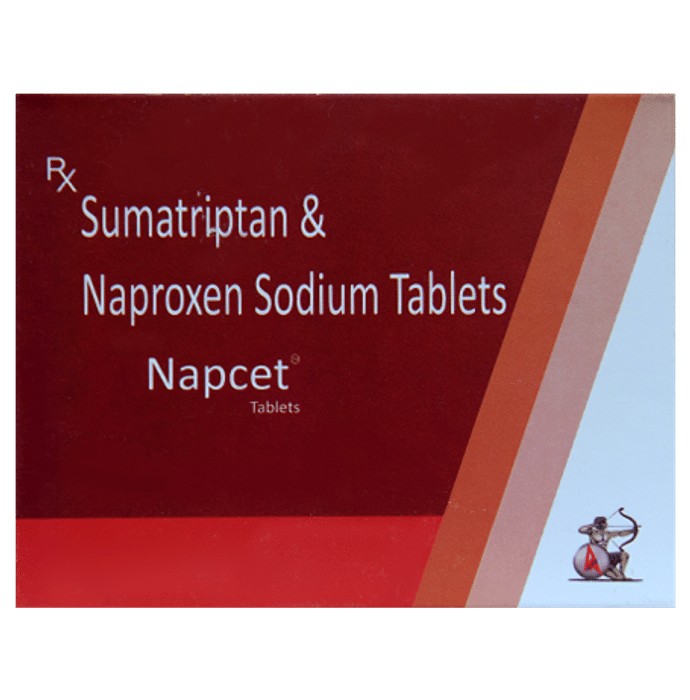
Napcet Tablet

Marketer
ADN Life Sciences
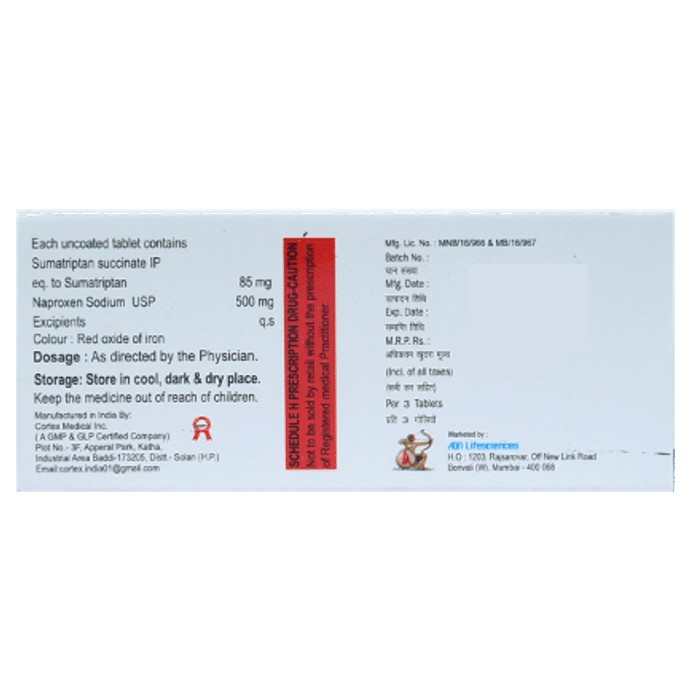
Salt Composition
Sumatriptan (85mg) + Naproxen (500mg)
Overview Napcet Tablet
Migrainex Duo tablets combine two active ingredients to manage migraine episodes. They alleviate migraine symptoms and prevent worsening of the attack by constricting blood vessels. Take Migrainex Duo with food, consistently at the same time daily for optimal blood levels. Complete the prescribed course, even if feeling better; if a dose is missed, take it immediately upon recall. Continue treatment as directed by your physician; abrupt cessation is discouraged. Possible side effects, typically transient and self-limiting, include nausea, indigestion, chest pressure, dry mouth, fatigue, muscle aches, sleepiness, limb tingling, and palpitations. Report persistent or concerning side effects to your doctor. Initial drowsiness may occur; avoid driving or operating machinery until effects are known. Mood changes, including depression, are possible, necessitating behavioral monitoring. Pregnant or lactating individuals should seek medical advice before use. Patients with heart conditions should inform their doctor; Migrainex Duo is contraindicated in certain cardiac diseases. Regular blood pressure monitoring is essential. Discontinue Migrainex Duo and consult your doctor if severe chest or abdominal pain, bloody stools, or markedly elevated blood pressure develop.
Uses of Napcet Tablet
Managing Migraine Headaches
Major Benefits of Napcet Tablet:
Consume this medication precisely as prescribed by your physician, adhering to both the dosage and treatment length. Ingest the tablet whole; avoid chewing, crushing, or fracturing it. It's recommended to take Napcet Tablet with a meal.
Common Side effects of Napcet Tablet:
- Nausea
- Dizziness
- Heartburn
- Chest discomfort
- Dryness in mouth
- Weakness
- Muscle stiffness
- Drowsiness
- Numbness of extremity
- Arrhythmia (irregular heartbeats)
- Feeling hot
How to use Napcet Tablet:
Follow your doctor's instructions precisely regarding dosage and treatment length for Napcet Tablets. Ingest the tablets whole; do not chew, crush, or fracture them. Administer Napcet Tablets with food.
How Napcet Tablet works:
Napcet Tablet combines sumatriptan and naproxen to effectively manage migraine pain. Sumatriptan, a selective 5-HT1 receptor agonist, constricts dilated blood vessels in the head, thus alleviating headache. Naproxen, a non-steroidal anti-inflammatory drug (NSAID), inhibits the production of inflammatory mediators, reducing both pain and overall inflammation associated with migraine attacks.
SAFETY ADVICE
 AlcoholUNSAFE
Consuming alcohol alongside Napcet Tablet is inadvisable.
 PregnancyCONSULT YOUR DOCTOR
The use of Napcet Tablet during pregnancy may pose risks. While human research is scarce, animal studies indicate potential harm to the fetus. A physician will assess the advantages against possible dangers prior to prescribing. Seek medical advice.
 Breast feedingCAUTION
Mothers who are breastfeeding should exercise caution when taking Napcet Tablets. Breastfeeding should be temporarily discontinued throughout the mother's course of treatment and until the medication is fully cleared from her system.
 DrivingUNSAFE
Driving ability may be impaired by Napcet Tablet side effects. These side effects can include dizziness, depression, drowsiness, fatigue, or sleep disturbances. Visual disturbances are also possible, further impacting driving safety.
 KidneyCAUTION
Individuals with kidney impairment should exercise caution when using Napcet Tablets. A modified dosage may be necessary. Physician consultation is recommended.
 LiverCAUTION
Individuals with hepatic impairment should exercise caution when using Napcet tablets. Dosage modification may be necessary. Physician consultation is advised.
What if you forget to take Napcet Tablet :
Should you forget a Napcet Tablet dose, take it immediately. If, however, your next dose is imminent, omit the missed dose and resume your usual dosing regimen. Never take a double dose.
Facts to Know About Napcet Tablet
| Label | Value |
|---|---|
| Developing Habits | No. |
| Type of Therapy | Neuroscience and Central Nervous System |
 3,018 People bought this recently