


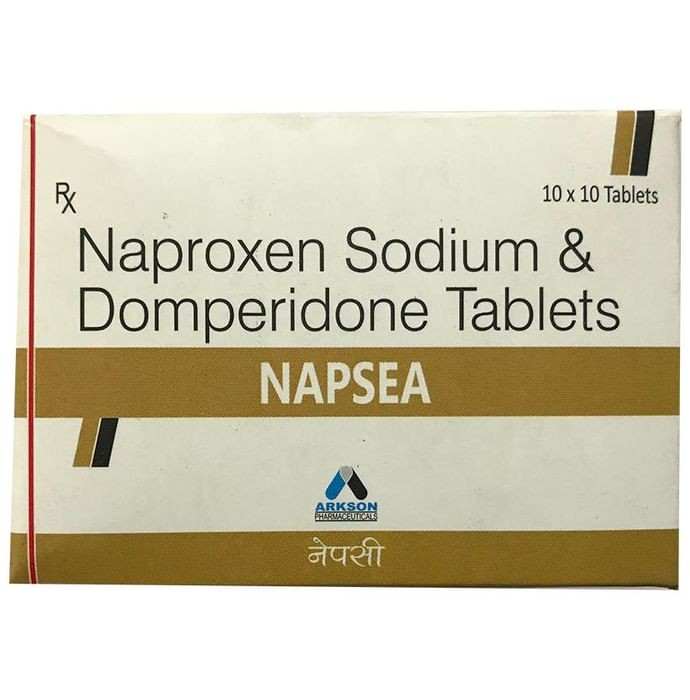
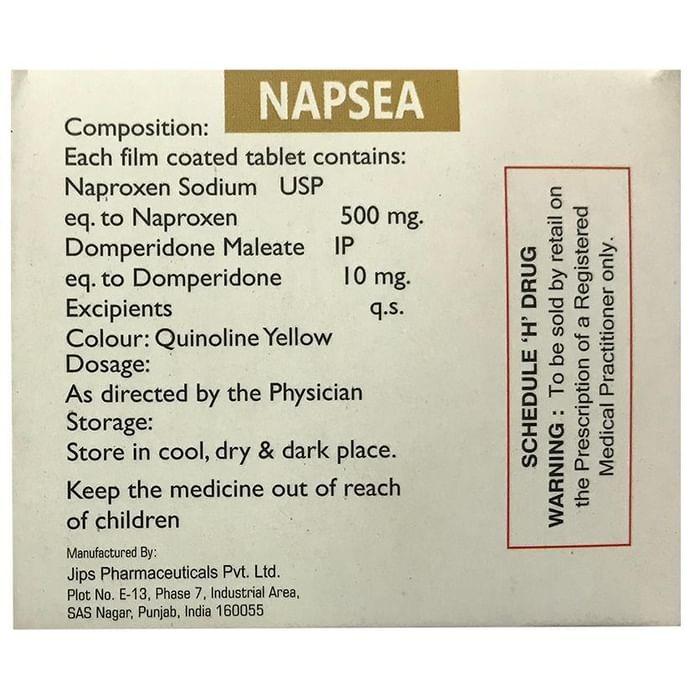
Napsea Tablet

Marketer
Arkson Pharmaceuticals
Salt Composition
Naproxen (500mg) + Domperidone (10mg)
Overview Napsea Tablet
MigraBloc tablets combine two active ingredients to prevent migraine attacks. This dual-action formulation inhibits the release of pain-inducing chemicals, reducing inflammation and fever. It also suppresses brain signals responsible for migraine-associated nausea and vomiting. MigraBloc may be prescribed independently or as part of a broader treatment plan. It can be taken with or without food; dosage and treatment duration are determined by symptom severity and response. Consistent use is crucial; discontinue only under your doctor's guidance. Some users experience mild side effects, including flu-like symptoms, upset stomach, and dry mouth. Persistent or worsening side effects warrant medical attention; your physician can offer management strategies. Minimize dosage while effectively managing symptoms. Inform your doctor about pre-existing conditions or other medications before starting MigraBloc, as interactions are possible. Caution is advised for individuals with liver or kidney disease, or those with alcohol dependency. Pregnant or breastfeeding individuals require prior consultation with their healthcare provider.
Uses of Napsea Tablet
Migraine Prevention Strategies
Major Benefits of Napsea Tablet:
Administer this medication precisely as prescribed by your physician, both in terms of dosage and treatment length. Ingest the tablet whole; avoid crushing, chewing, or breaking it. Napsea Tablet can be consumed with or without food, although consistent daily timing is recommended.
Common Side effects of Napsea Tablet:
- Flu-like symptoms
- Indigestion
- Dryness in mouth
How to use Napsea Tablet:
Administer this medication precisely as prescribed by your physician, adhering to both the dosage and treatment duration. Ingest the tablet whole; avoid chewing, crushing, or fracturing it. Napsea Tablet can be consumed with or without food, although consistent timing is recommended.
How Napsea Tablet works:
Napsea Tablet merges the actions of Naproxen and Domperidone. Naproxen, a non-steroidal anti-inflammatory drug (NSAID), alleviates migraine pain by inhibiting the production of pain-signaling molecules. Domperidone, a prokinetic agent, targets the brain's vomiting center, mitigating migraine-related nausea. Additionally, it enhances gastrointestinal motility, facilitating smoother food passage through the digestive system.
SAFETY ADVICE
 AlcoholUNSAFE
Consuming alcohol alongside Napsea Tablet is inadvisable.
 PregnancyCONSULT YOUR DOCTOR
The use of Napsea Tablet during pregnancy may pose risks. While human research is scant, animal studies indicate potential harm to a developing fetus. A physician will assess the advantages against possible dangers prior to prescription. Seek medical advice.
 Breast feedingSAFE IF PRESCRIBED
Lactation is compatible with Napsea Tablet use. Research in humans indicates negligible transfer of the medication into breast milk, posing no identified risk to the infant.
 DrivingUNSAFE
Driving ability may be impaired by Napsea Tablet side effects. These side effects can include dizziness, depression, drowsiness, fatigue, or sleep disturbances. Visual impairment is also a possibility, further impacting driving safety.
 KidneyCAUTION
Individuals with impaired kidney function should exercise caution when using Napsea Tablets. Dosage modification may be necessary. Physician consultation is advised.
 LiverCAUTION
Individuals with liver impairment should exercise caution when using Napsea Tablets, potentially requiring dosage modification. Medical advice is necessary. Napsea Tablets are contraindicated for patients exhibiting moderate to severe hepatic dysfunction.
What if you forget to take Napsea Tablet :
Should you forget a Napsea Tablet dose, take it immediately. If, however, your next dose is nearly due, omit the missed dose and resume your usual regimen. Never take a double dose.
Facts to Know About Napsea Tablet
| Label | Value |
|---|---|
| Developing Good Habits | No. |
| Treatment Category | Pain Relievers |
 3,018 People bought this recently