



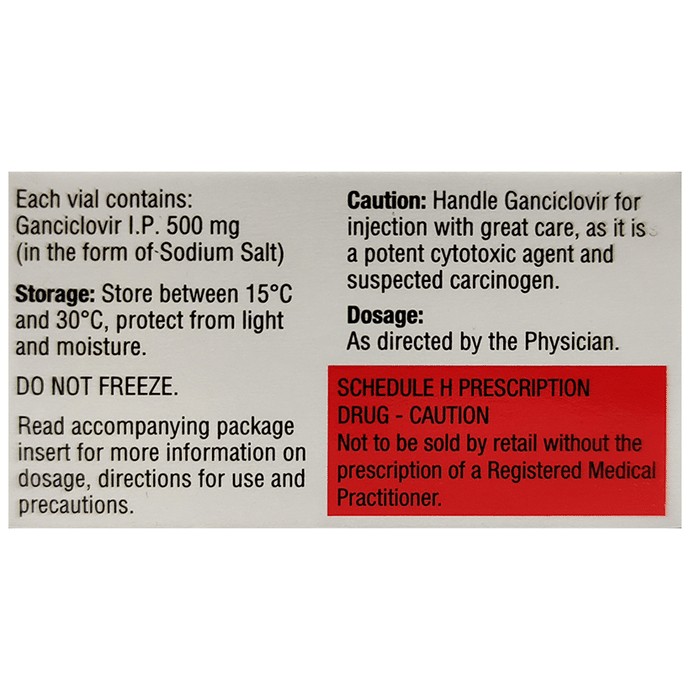
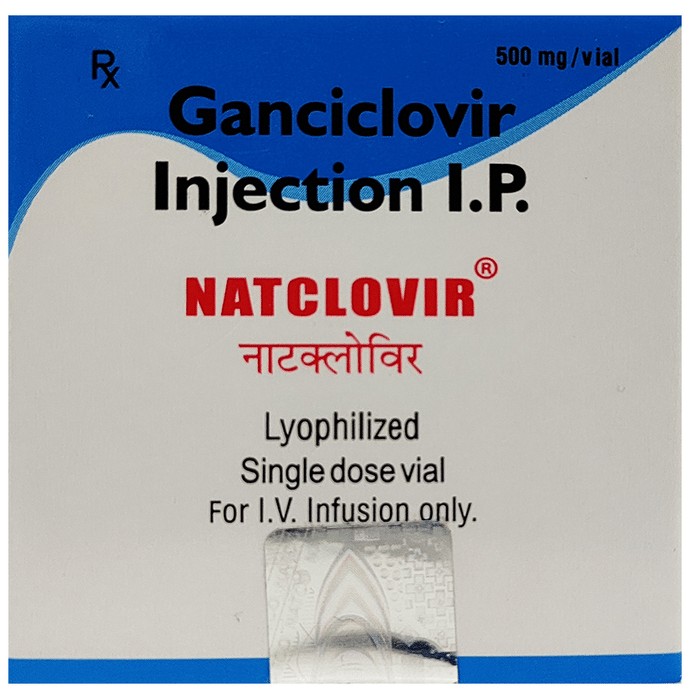
Natclovir Injection

Marketer
Natco Pharma Ltd
Salt Composition
Ganciclovir (500mg)
Overview Natclovir Injection
Cytomegalovirus (CMV) infections in immunocompromised organ or bone marrow transplant recipients are treated with the antiviral medication, Natclovir Injection. This injection also mitigates the risk of CMV retinitis-induced vision loss. Administration is strictly by intravenous (IV) infusion over one hour, solely by a qualified healthcare provider; self-administration is prohibited. Slow infusion minimizes potential kidney harm. Maintaining adequate hydration by drinking ample fluids is crucial during treatment to prevent dehydration and kidney complications. Potential side effects encompass nausea, vomiting, and elevated liver enzymes. Injection site reactions such as pain, swelling, or redness may also occur. Persistent side effects warrant immediate medical attention. Pregnant individuals, those planning pregnancy, or breastfeeding mothers should consult their physician before commencing treatment.
Primary Ingredients of Natclovir Injection
The provided text is "undefined," which lacks meaning and cannot be rephrased. A meaningful input is needed to provide a rewritten version.
Uses of Natclovir Injection
CMV Infection
Major Benefits of Natclovir Injection:
This medication will be administered by your healthcare provider. Self-medication is strictly prohibited.
Common Side effects of Natclovir Injection:
- Vomiting
- Nausea
- Injection site reaction
- Increased liver enzymes
How to use Natclovir Injection:
This medication will be administered by your healthcare provider; self-medication is strictly prohibited.
How Natclovir Injection works:
Acyclovir injection, an antiviral agent, inhibits viral replication within human cells, thereby halting further viral production and resolving the infection.
SAFETY ADVICE
 AlcoholCONSULT YOUR DOCTOR
Alcohol consumption alongside Natclovir Injection may pose unknown risks. Seek medical advice before combining them.
 PregnancyCONSULT YOUR DOCTOR
The use of Natclovir Injection during pregnancy may pose risks. While human data is scarce, animal research indicates potential harm to the fetus. A physician will assess the advantages against possible dangers prior to prescribing. Seek medical advice.
 Breast feedingCONSULT YOUR DOCTOR
Administration of Natclovir Injection while breastfeeding is likely inadvisable. Available human data indicates potential transfer of the medication into breast milk, posing a possible risk to the infant.
 DrivingUNSAFE
Administering Natclovir Injection may induce adverse reactions impacting driving capabilities. Patients might experience drowsiness, dizziness, disorientation, tremors, loss of equilibrium, or seizures during treatment.
 KidneyCAUTION
Patients with impaired kidney function should use Natclovir Injection judiciously, potentially requiring dosage modification. Physician consultation is recommended. Routine monitoring of renal function and certain blood parameters may be advisable during treatment.
 LiverCAUTION
Individuals with hepatic impairment should use Natclovir Injection judiciously. Dosage modification of Natclovir Injection might be necessary. Physician consultation is recommended.
What if you forget to take Natclovir Injection :
Should you forget a scheduled dose of Natclovir Injection, seek advice from your physician.
Facts to Know About Natclovir Injection
| Label | Value |
|---|---|
| Chemical Type | Analogous nucleoside |
| Developing Habits | No. |
| Treatment Category | Antimicrobials |
| Actions | Non-HIV antiviral medications |
 3,018 People bought this recently