


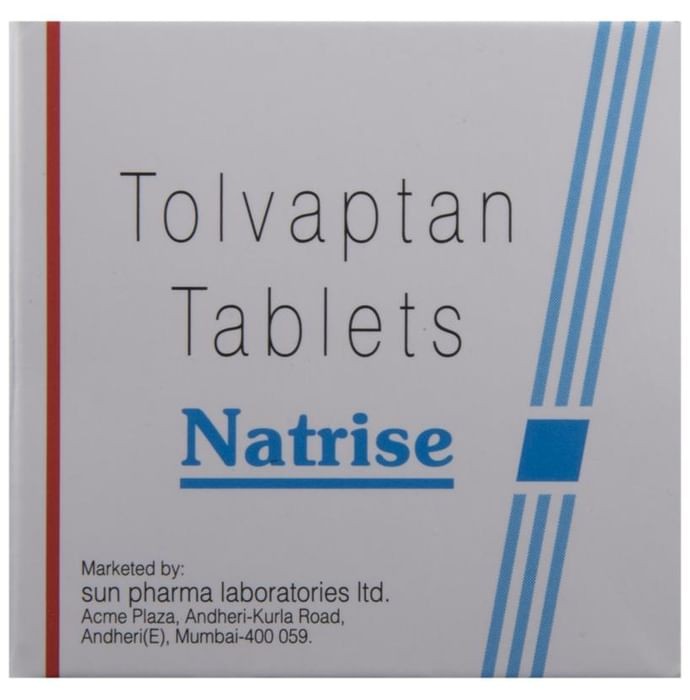

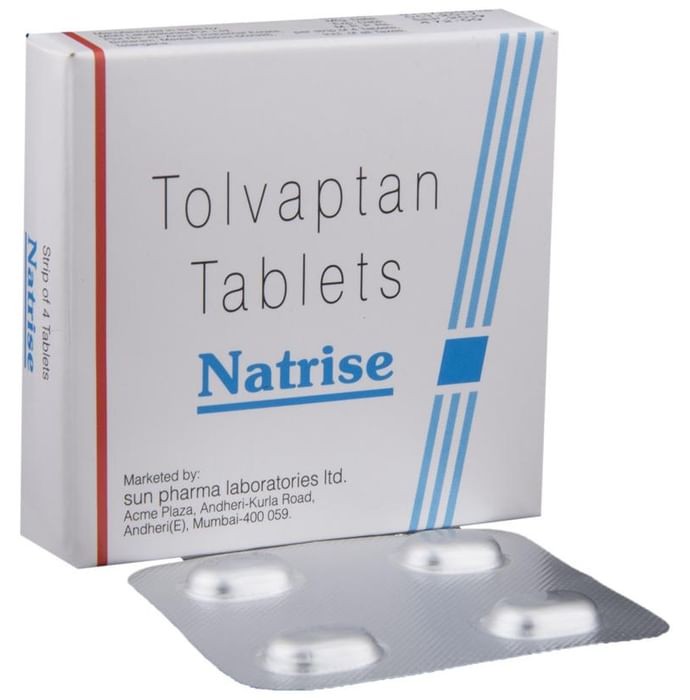

Natrise 30 Tablet

Marketer
Sun Pharmaceutical Industries Ltd
Salt Composition
Tolvaptan (30mg)
Overview Natrise 30 Tablet
Sodium depletion in the bloodstream is addressed by Natrise 30 Tablet. This medication manages hyponatremia, a condition potentially stemming from heart failure, cirrhosis, or SIADH. Natrise 30 Tablet may be ingested with or without food, strictly adhering to your physician's prescribed dosage and frequency. Consistent use is vital for optimal therapeutic effect; discontinue only under medical guidance. Commonly reported side effects include increased urinary frequency (including nocturia), xerostomia, polydipsia, nausea, elevated creatinine levels, hyperkalemia, and constipation. Persistent or worsening side effects warrant immediate medical attention. Prior to commencing treatment, disclose any renal or hepatic dysfunction. Your physician will meticulously track your serum sodium levels during therapy. Comprehensive disclosure of all concurrent medications is also crucial.
Uses of Natrise 30 Tablet
Managing hyponatremia
Major Benefits of Natrise 30 Tablet:
Administer this medication precisely as prescribed by your physician, adhering to both the dosage and treatment duration. Ingest the tablet whole; avoid chewing, crushing, or fracturing it. Natrise 30 Tablet can be consumed with or without food, although consistent timing is recommended.
Common Side effects of Natrise 30 Tablet:
- Frequent urge to urinate
- Nocturia (increased urge to urinate during the night)
- Dryness in mouth
- Increased thirst
- Constipation
- Nausea
- Increased creatinine level in blood
- Increased potassium level in blood
How to use Natrise 30 Tablet:
Administer this medication precisely as your physician directs, adhering to both the prescribed dosage and treatment length. Ingest the tablet whole; avoid chewing, crushing, or fracturing it. Natrise 30 Tablets can be consumed with or without food, although consistent timing is recommended.
How Natrise 30 Tablet works:
Natrise 30 tablets counteract the action of vasopressin. Their mechanism involves inhibiting vasopressin's effects, thereby promoting diuresis, lowering blood volume, and elevating serum sodium concentration.
SAFETY ADVICE
 AlcoholCAUTION
Exercise caution when using Natrise 30 Tablet with alcohol. Physician consultation is recommended.
 PregnancyCONSULT YOUR DOCTOR
Employing Natrise 30 Tablet during pregnancy may pose risks. While human research is scant, animal studies indicate potential harm to a fetus. A physician will assess the advantages against possible dangers prior to prescribing. Physician consultation is advised.
 Breast feedingCONSULT YOUR DOCTOR
Using Natrise 30 Tablet while breastfeeding is likely inadvisable. Available human data indicate a potential for the medication to transfer to breast milk, posing a possible risk to the infant.
 DrivingUNSAFE
Taking Natrise 30 Tablet may cause drowsiness, blurred vision, and dizziness, potentially impairing alertness. Driving should be avoided if these effects are experienced.
 KidneySAFE IF PRESCRIBED
Individuals with kidney disease can generally use Natrise 30 Tablet without altering the prescribed dosage. Nevertheless, its use is cautioned against in patients experiencing severe kidney impairment.
 LiverCAUTION
Individuals with liver impairment should exercise caution when using Natrise 30 Tablets; dosage modification may be necessary. A physician's consultation is advised. Natrise 30 Tablets are contraindicated in patients exhibiting severe hepatic dysfunction.
What if you forget to take Natrise 30 Tablet :
Should you forget to take a Natrise 30 Tablet, administer it immediately upon remembering. If, however, your next scheduled dose is imminent, omit the missed dose and resume your usual dosing regimen. Never take more than the prescribed amount at one time.
Facts to Know About Natrise 30 Tablet
| Label | Value |
|---|---|
| Chemical Category | Benzazepine Analog |
| Developing Habits | No. |
| Treatment Category | Urological Care |
| Active Class | Vasopressin receptor blocker |
 3,018 People bought this recently