


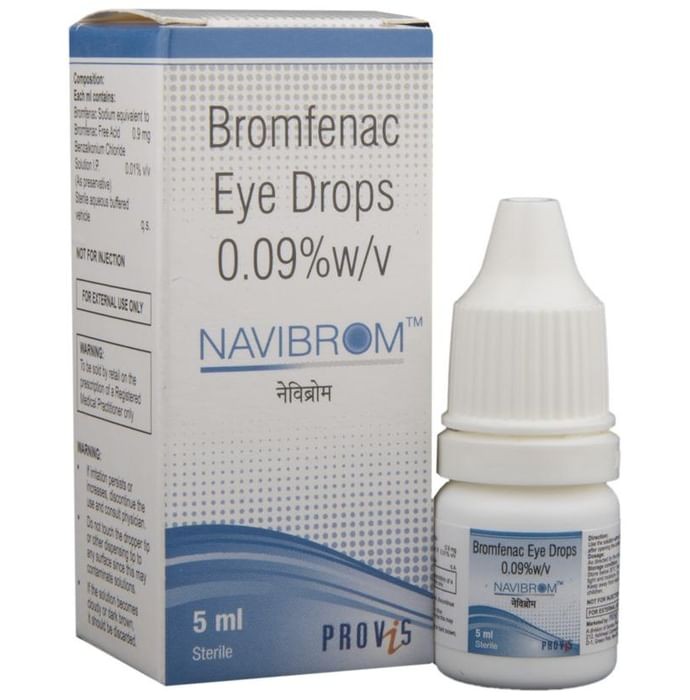
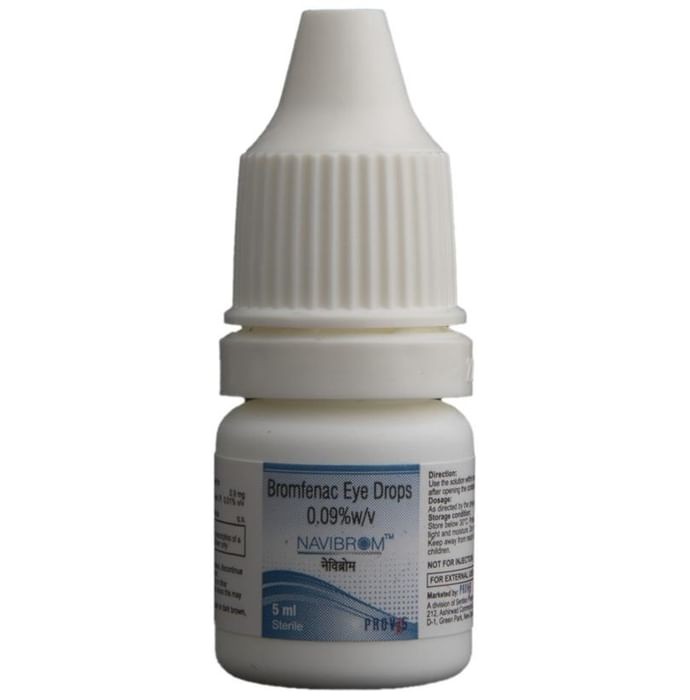
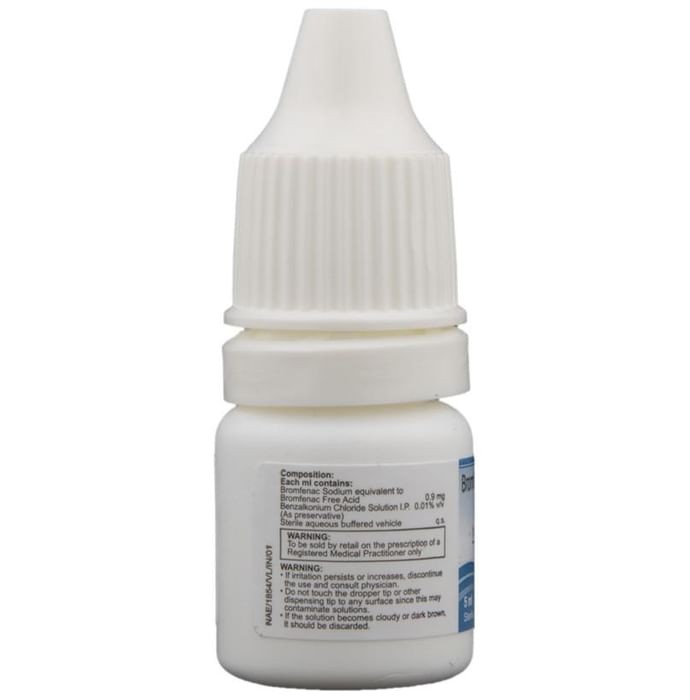
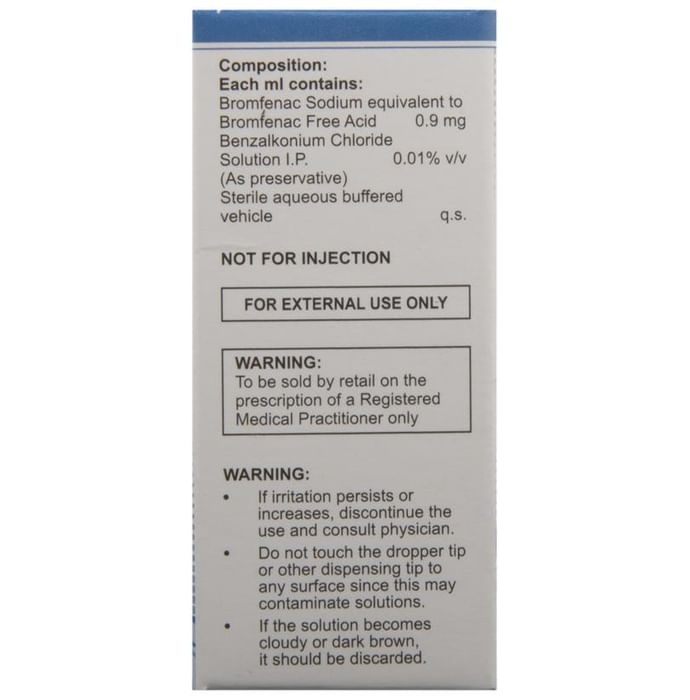
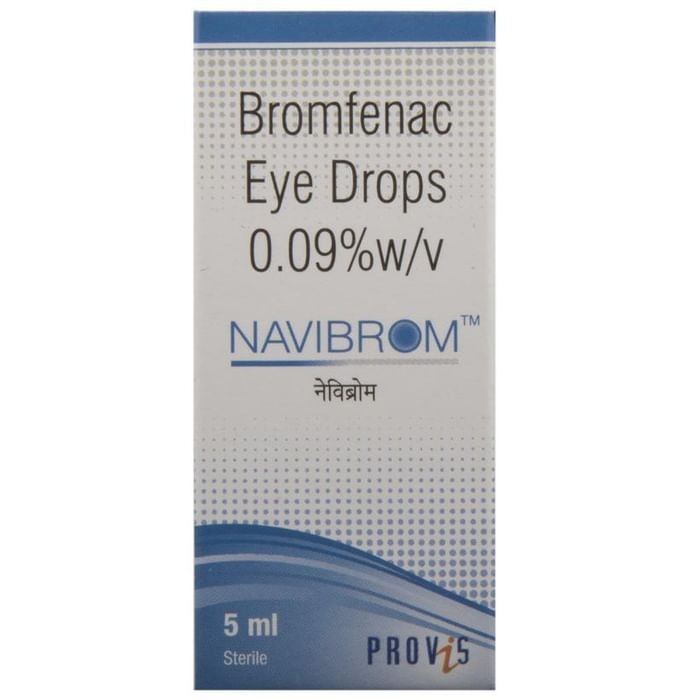
Navibrom Eye Drop

Marketer
Sentiss Pharma
Salt Composition
Bromfenac (0.09% w/v)
Overview Navibrom Eye Drop
Post-cataract surgery eye pain and inflammation are effectively managed with Navibrom Eye Drops, an analgesic medication. Administer only the prescribed number of drops, ensuring clean hands beforehand, and allowing a five-minute interval between applications. Contact lens wearers should remove lenses prior to application, reinserting them after at least fifteen minutes. Avoid touching the dropper tip to prevent contamination. Common, typically transient side effects include blurry vision, photosensitivity, altered color perception, reduced visual acuity, ocular discomfort, tearing, and headache. Persistent or worsening symptoms warrant immediate medical attention; your physician may offer strategies for mitigation. Complete disclosure of all current medications and pre-existing health conditions is crucial before commencing Navibrom Eye Drop treatment. Expectant and nursing mothers must seek medical counsel before use.
Primary Ingredients of Navibrom Eye Drop
The provided text is "undefined," therefore no rewriting is possible.
Uses of Navibrom Eye Drop
Eye discomfort and redness following surgery
Major Benefits of Navibrom Eye Drop:
Apply this medication externally only. Administer as directed by your physician, adhering to the prescribed dosage and timeframe. Consult the product label for application instructions prior to use. Position the dropper near the eye, avoiding contact. Carefully dispense the medication into the lower conjunctival sac. Remove any excess solution.
Common Side effects of Navibrom Eye Drop:
- Blurred vision
- Increased sensitivity to light
- Change in color vision
- Decreased vision
- Eye pain
- Sore eye
- Teary eyes
- Headache
How to use Navibrom Eye Drop:
Apply this medication externally only. Administer as prescribed by your physician, adhering to the dosage and treatment schedule provided. Consult the product label for complete instructions prior to application. Position the dropper near the eye, avoiding contact. Carefully depress the dropper to instill the medication beneath the lower eyelid. Remove any excess solution.
How Navibrom Eye Drop works:
Navibrom Eye Drops contain a non-steroidal anti-inflammatory agent that inhibits the production of ocular inflammatory mediators, thus relieving pain, redness, and swelling.
SAFETY ADVICE
 AlcoholNone
No known drug interactions.
 PregnancyCONSULT YOUR DOCTOR
Using Navibrom Eye Drops during pregnancy may pose risks. While human research is scarce, animal studies indicate potential harm to the unborn child. A physician will assess the advantages against possible dangers prior to prescribing. Seek medical advice.
 Breast feedingSAFE IF PRESCRIBED
The use of Navibrom Eye Drops while breastfeeding is likely safe. Available human data indicates minimal risk to the infant.
 DrivingUNSAFE
Using Navibrom Eye Drops may temporarily blur your vision. Refrain from driving until your eyesight returns to normal.
 KidneyNone
No known drug interactions.
 LiverNone
No drug interactions identified.
What if you forget to take Navibrom Eye Drop :
Should you forget a dose of Navibrom Eye Drop, administer it at your earliest convenience. Nevertheless, if your next scheduled dose is imminent, omit the missed dose and resume your usual dosing regimen.
Facts to Know About Navibrom Eye Drop
| Label | Value |
|---|---|
| Chemical Type | Benzophenone-Based Compounds |
| Developing Habits | No. |
| Treatment Category | Ophthalmology |
 3,018 People bought this recently