


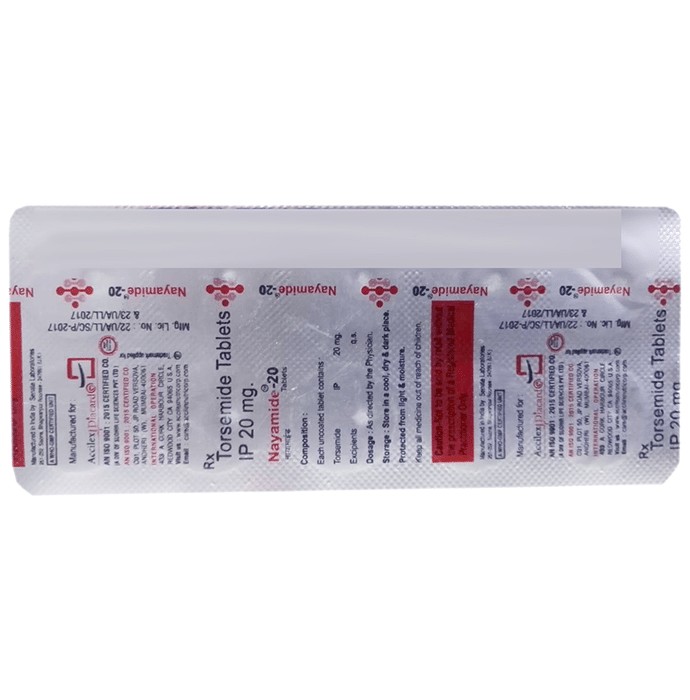
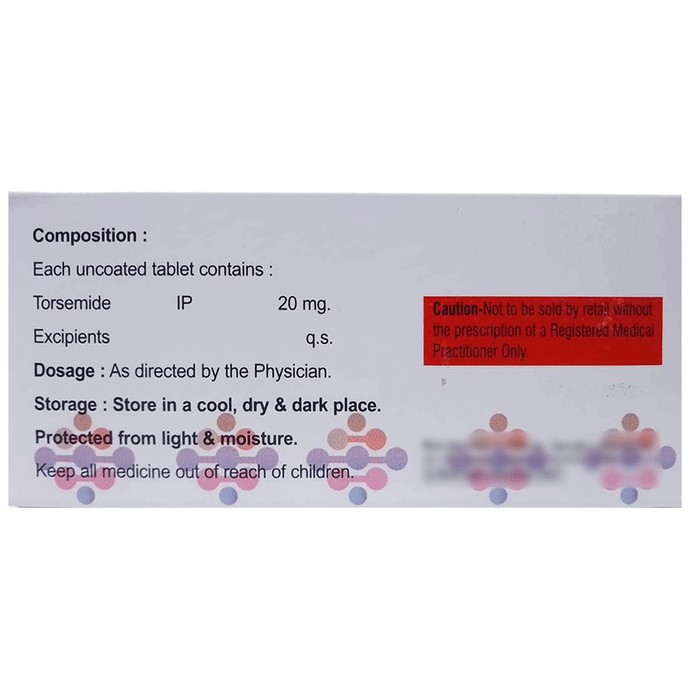
Nayamide 20 Tablet

Marketer
Accilex Diacardo
Salt Composition
Torasemide (20mg)
Overview Nayamide 20 Tablet
Aquamol 20mg tablets are classified as diuretics, also known as water pills. Their purpose is to alleviate edema (swelling) resulting from fluid retention in patients with heart, liver, or kidney conditions. This medication is also indicated for hypertension (high blood pressure). Aquamol 20mg facilitates the excretion of excess water and sodium via urine. It can be administered alone or alongside other medications, following your physician's prescribed dosage. Consumption with or without food is acceptable, but consistency in daily timing is crucial. To minimize nighttime urination, avoid taking it within four hours of sleep. Continued use is vital, even during symptom remission. Discontinuing treatment without medical consultation risks condition exacerbation. Complementary lifestyle modifications, such as stress reduction, sodium restriction, and smoking cessation, can enhance therapeutic efficacy. Typical mild side effects include headache, lightheadedness, dehydration, hypotension, and gastrointestinal discomfort, generally resolving spontaneously. Persistent or bothersome side effects necessitate medical attention. Prior to commencing treatment, disclose any liver impairment to your doctor. Pregnant or lactating individuals should seek medical advice before use. Regular monitoring of renal function and electrolyte balance is essential. As Aquamol 20mg might lower potassium levels, dietary adjustments (e.g., increased intake of bananas, coconut water) or supplementation may be recommended by your doctor.
Uses of Nayamide 20 Tablet
Managing elevated blood pressure and fluid retention.
Major Benefits of Nayamide 20 Tablet:
Administer this medication precisely as your physician directs, adhering to both the prescribed dosage and treatment length. Ingest the tablet whole; avoid chewing, crushing, or fracturing it. Nayamide 20 Tablets can be consumed with or without food, though consistent timing is recommended.
Common Side effects of Nayamide 20 Tablet:
- Headache
- Dizziness
- Dehydration
- Constipation
- Decreased blood pressure
- Upset stomach
How to use Nayamide 20 Tablet:
Administer this medication according to your physician's prescribed dosage and schedule. Ingest the tablet whole; avoid chewing, crushing, or fracturing it. Nayamide 20 Tablets can be consumed with or without food, though consistent timing is recommended.
How Nayamide 20 Tablet works:
Nayamide 20 Tablets function as a diuretic, eliminating excess fluid and specific electrolytes through enhanced urinary excretion.
SAFETY ADVICE
 AlcoholCONSULT YOUR DOCTOR
The safety of combining Nayamide 20 Tablet with alcohol is undetermined. Seek medical advice before mixing them.
 PregnancySAFE IF PRESCRIBED
The use of Nayamide 20 Tablets during pregnancy is typically deemed safe. Preclinical trials in animals have revealed minimal or no negative consequences for fetal development; however, research involving human subjects is currently insufficient.
 Breast feedingSAFE IF PRESCRIBED
Use of Nayamide 20 Tablet while breastfeeding appears to be safe. Available human data indicates minimal risk to the infant.
 DrivingUNSAFE
Taking Nayamide 20 Tablets might reduce alertness, impair vision, and cause drowsiness or dizziness. Driving should be avoided if these effects are experienced.
 KidneySAFE IF PRESCRIBED
Nayamide 20 Tablets are considered safe for use in individuals with kidney disease, and no dosage alteration is typically necessary. Nevertheless, disclosure of any kidney condition to your physician is crucial, as Nayamide 20 Tablets should be omitted if urination is impaired or if the kidney impairment stems from other medications.
 LiverCAUTION
Patients with hepatic impairment should exercise caution when using Nayamide 20 Tablets; dosage modification may be necessary. Physician consultation is advised.
What if you forget to take Nayamide 20 Tablet :
Should you forget a Nayamide 20 Tablet dose, take it immediately. If your next dose is imminent, however, omit the missed dose and resume your usual regimen. Never take a double dose.
Facts to Know About Nayamide 20 Tablet
| Label | Value |
|---|---|
| Type of Compound | Sulfonylamide compounds |
| Potential for Dependence | None. |
| Type of Treatment | Heart-related |
| Mechanism of Action | Potent diuretics that block sodium-potassium-chloride cotransport. |
 3,018 People bought this recently