


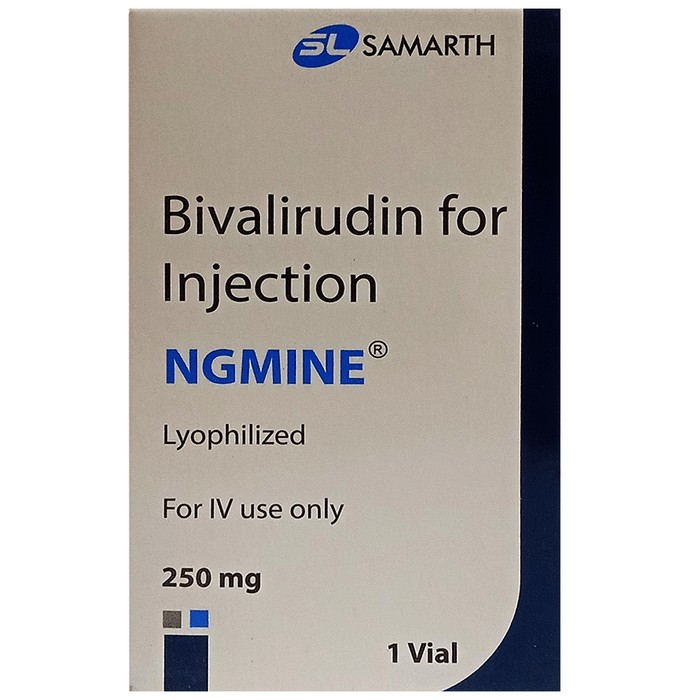
Ngmine Injection

Marketer
Samarth Life Sciences Pvt Ltd
Salt Composition
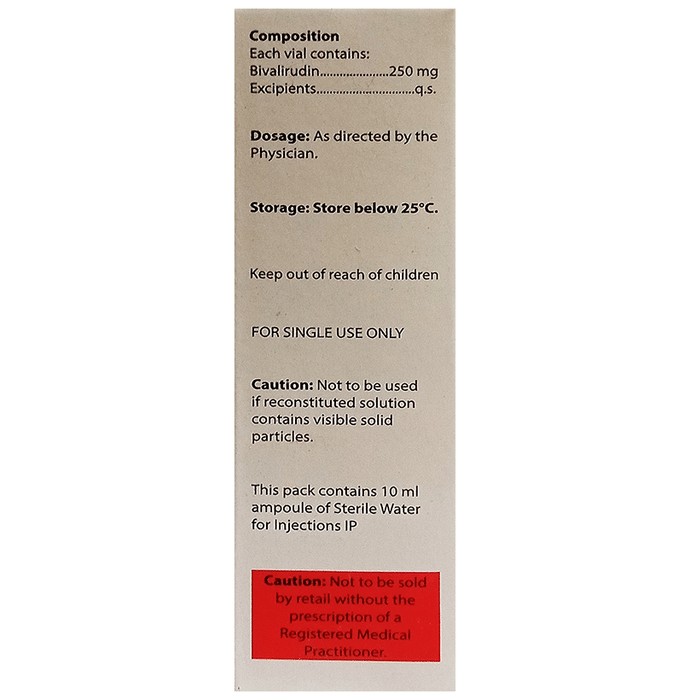
Bivalirudin (250mg)
Overview Ngmine Injection
Ngmine Injection is an anticoagulant, a medication that thins the blood to prevent and treat blood clots. Its use helps lower the risk of strokes and heart attacks, and it combats clot formation in leg, lung, brain, and heart veins. This injection is frequently administered to individuals with atrial fibrillation (irregular heartbeat) to prevent clot development, and it's also used post-knee or hip replacement to reduce clotting risk. Administered intravenously by a healthcare professional, Ngmine Injection complements lifestyle changes—like quitting smoking, healthy eating, regular exercise, and weight management—to minimize clot risk. Common side effects include headache, thrombocytopenia (low platelet count), and fever; increased bleeding (nosebleeds, bruising) is also possible, requiring caution with sharp objects during treatment. Consult your physician before use, especially if you have severe liver or kidney disease, are currently bleeding, take other anticoagulants, or are breastfeeding. Unlike some anticoagulants, routine PT-INR blood monitoring isn't necessary with Ngmine Injection.
Primary Ingredients of Ngmine Injection
No text provided. Please provide the text you wish me to rephrase.
Uses of Ngmine Injection
Preventing and managing blood clot formation
Major Benefits of Ngmine Injection:
This medication will be administered by your healthcare provider; self-medication is strictly prohibited.
Common Side effects of Ngmine Injection:
- Low blood platelets
- Headache
- Fever
- Bleeding
How to use Ngmine Injection:
Administering this medication will be performed by your physician or registered nurse; self-medication is strictly prohibited.
How Ngmine Injection works:
Ngmine Injection acts as a blood thinner, inhibiting the development of dangerous thrombi.
SAFETY ADVICE
 AlcoholUNSAFE
Avoid alcohol consumption while using Ngmine Injection.
 PregnancySAFE IF PRESCRIBED
Pregnancy use of Ngmine Injection is generally deemed safe. Preclinical trials in animals revealed minimal or no harmful effects on fetal development; nonetheless, data from human trials remain scarce.
 Breast feedingCONSULT YOUR DOCTOR
The use of Ngmine Injection while breastfeeding is likely unsafe. Available human data indicate potential transfer to breast milk, posing a risk to the infant.
 DrivingNOT RELEVANT
Ngmine Injection is exclusively administered in a hospital setting.
 KidneyCAUTION
Individuals with kidney impairment should receive Ngmine Injection cautiously, potentially requiring dosage modification. Consult a physician before administration. Ngmine Injection is contraindicated for patients exhibiting severe kidney disease or undergoing dialysis.
 LiverSAFE IF PRESCRIBED
Ngmine Injection appears safe for individuals with hepatic impairment. Available evidence indicates dose modification may be unnecessary. Physician consultation is recommended.
What if you forget to take Ngmine Injection :
NA
Facts to Know About Ngmine Injection
| Label | Value |
|---|---|
| Chemical Classification | Peptide chains |
| Developing Habits | No. |
| Treatment Category | HEART |
| Action Class | Injectable direct thrombin inhibitor |
 3,018 People bought this recently