






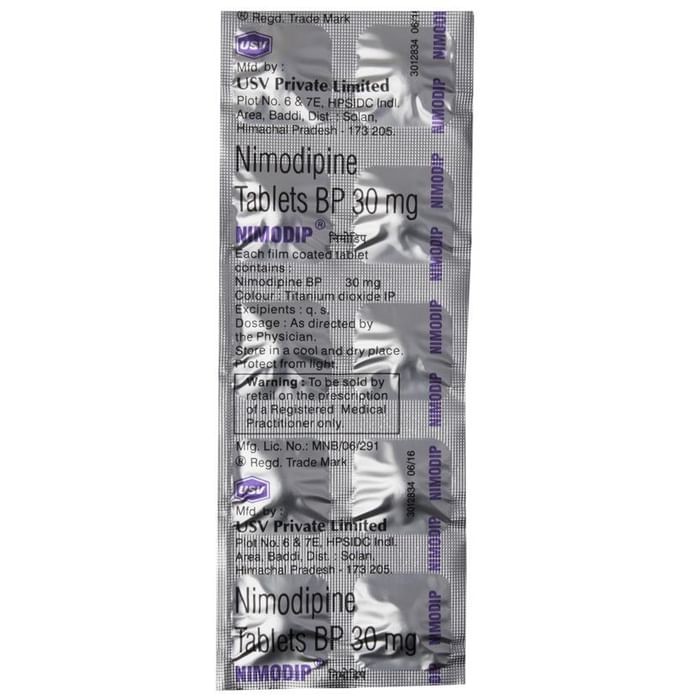
Nimodip Tablet

Marketer
USV Ltd
Salt Composition
Nimodipine (30mg)
Overview Nimodip Tablet
Nimodipine tablets are prescribed to manage and mitigate further brain injury following a subarachnoid hemorrhage (SAH), a type of brain bleed. Classified as a calcium channel blocker, it enhances cerebral blood flow and safeguards against neurological impairment. Treatment with nimodipine should commence as rapidly as possible post-SAH diagnosis. Dosage and administration schedule will be determined by your physician based on your individual health status and response. It can be ingested with or without food, but consistent adherence to the prescribed regimen is vital for optimal efficacy. Avoid antacids within two hours of taking nimodipine, as this may compromise its effectiveness. Discontinuing nimodipine without medical consultation is strongly discouraged; premature cessation may exacerbate your condition. Common adverse effects may include hypotension, tachycardia, cephalalgia, gastrointestinal distress, nausea, skin rashes, muscle spasms, and generalized edema. Report any persistent, worsening, or bothersome side effects to your doctor immediately. Prior to initiating nimodipine therapy, disclose any pre-existing cardiac or hepatic conditions. Interactions may occur with certain medications, particularly anticonvulsants and antihypertensives or cardioactive drugs. Comprehensive disclosure of all medications currently in use is crucial for safety. Pregnant or lactating individuals should seek medical guidance before nimodipine use. Your physician will monitor your blood pressure throughout the treatment period.
Uses of Nimodip Tablet
Bleeding into the subarachnoid space
Major Benefits of Nimodip Tablet:
Follow your doctor's instructions precisely regarding the dosage and treatment length for this medication. Ingest the tablet whole; avoid chewing, crushing, or breaking it. Nimodip Tablet can be administered with or without food, although consistent timing is recommended.
Common Side effects of Nimodip Tablet:
- Decreased blood pressure
- Headache
- Increased heart rate
- Nausea
- Rash
- Stomach discomfort
- Edema (swelling)
- Muscle cramp
How to use Nimodip Tablet:
Consume this medication precisely as your physician directs, adhering to both the prescribed dosage and treatment length. Ingest the tablet whole; avoid chewing, crushing, or fracturing it. Nimodip Tablets can be taken with or without food, although consistent timing is recommended.
How Nimodip Tablet works:
Nimodip tablets function as calcium channel blockers, widening constricted cerebral blood vessels to improve circulation and thereby mitigating brain injury following intracranial hemorrhage.
SAFETY ADVICE
 AlcoholUNSAFE
Concomitant use of Nimodip tablets and alcohol can lead to increased sleepiness.
 PregnancyCONSULT YOUR DOCTOR
Using Nimodip tablets during pregnancy may pose risks. While human research is scarce, animal studies indicate potential harm to the fetus. Your physician will assess the advantages against possible dangers before prescribing. Seek medical advice.
 Breast feedingCONSULT YOUR DOCTOR
The use of Nimodip tablets while breastfeeding is likely inadvisable. Available human data indicates potential transfer to breast milk, posing a possible risk to the infant.
 DrivingUNSAFE
Taking Nimodip Tablets might reduce alertness, impair vision, or cause drowsiness and dizziness. Driving should be avoided if any of these effects are experienced.
 KidneySAFE IF PRESCRIBED
Nimodipine tablets appear to pose minimal risk for individuals with kidney impairment. Current evidence indicates dose modification may be unnecessary, but physician consultation is recommended.
 LiverCAUTION
Patients with significant hepatic impairment should exercise caution when using Nimodip tablets; dosage modification may be necessary. Physician consultation is recommended.
What if you forget to take Nimodip Tablet :
NA
Facts to Know About Nimodip Tablet
| Label | Value |
|---|---|
| Chemical Type | Dihydropyridine carboxylic acid derivatives |
| Developing Habits | No. |
| Type of Therapy | Heart |
| Actions | Dihydropyridine Calcium Channel Blockers |
 3,018 People bought this recently