


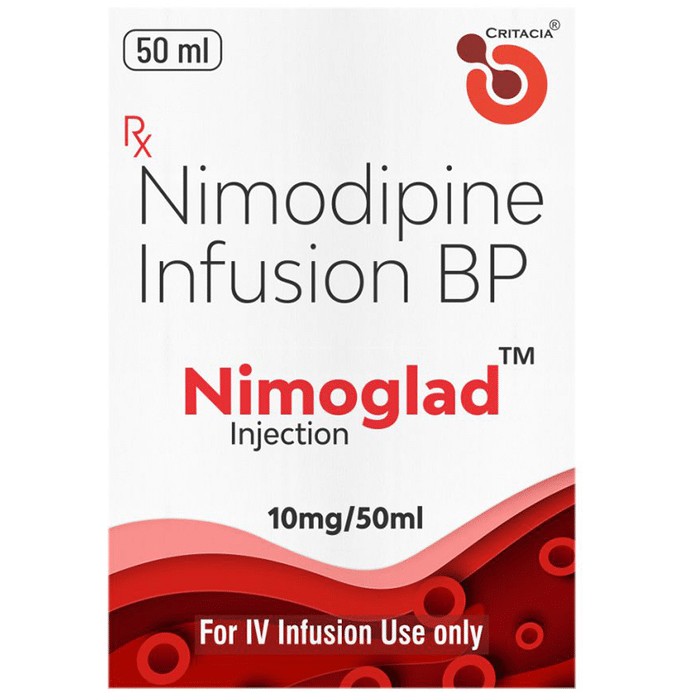
Nimoglad Injection

Marketer
Fibovil Pharmaceuticals Pvt Ltd
Salt Composition
Nimodipine (10mg)
Overview Nimoglad Injection
CerebroGuard injection is a medication employed to treat and mitigate subsequent brain injury following subarachnoid hemorrhage (intracranial bleeding). Classified as a calcium channel blocker, it enhances cerebral blood flow and safeguards cognitive function. Administration of CerebroGuard is strictly under medical supervision; dosage is individualized based on the indication and condition severity. Continue treatment for the duration prescribed by your physician. Strictly adhere to your doctor's instructions. Common adverse effects may encompass skin rash, headache, gastrointestinal upset, hypotension, and bradycardia. Report any persistent, worsening, or bothersome side effects to your doctor immediately. Drowsiness may occur; refrain from operating vehicles or machinery until the medication's effects are known. Prior to commencing treatment, disclose any pre-existing cardiac conditions. Pregnant or lactating individuals should seek medical counsel before use. Comprehensive disclosure of all concomitant medications, particularly those for hypertension or cardiovascular disease, is essential.
Primary Ingredients of Nimoglad Injection
No information provided. Please provide the text you wish me to rephrase.
Uses of Nimoglad Injection
Bleeding into the subarachnoid space
Major Benefits of Nimoglad Injection:
Administering this medication will be handled by your healthcare provider. Self-medication is strongly discouraged.
Common Side effects of Nimoglad Injection:
- Rash
- Headache
- Stomach discomfort
- Nausea
- Decreased blood pressure
- Slow heart rate
How to use Nimoglad Injection:
This medication will be administered by your physician or their designated nursing staff. Self-medication is strictly prohibited.
How Nimoglad Injection works:
Cerebral blood vessel constriction is relieved by Nimoglad Injection, a calcium channel antagonist. Improved blood flow results from this vasodilation, mitigating brain injury from intracranial hemorrhage.
SAFETY ADVICE
 AlcoholUNSAFE
Concomitant use of Nimoglad Injection and alcohol may result in significant sedation.
 PregnancyCONSULT YOUR DOCTOR
The use of Nimoglad Injection during pregnancy may pose risks. While human data is scarce, animal research indicates potential harm to the fetus. A physician will assess the advantages against possible risks prior to prescribing. Consult your doctor for advice.
 Breast feedingSAFE IF PRESCRIBED
Administration of Nimoglad Injection while breastfeeding appears to pose minimal risk. Available human data indicate negligible infant harm.
 DrivingUNSAFE
Nimoglad Injection can cause drowsiness, blurred vision, and dizziness, potentially impairing alertness. Driving should be avoided if these effects are experienced.
 KidneySAFE IF PRESCRIBED
The use of Nimoglad Injection in individuals with kidney impairment is likely safe. Preliminary findings indicate dose modification may not be necessary, however, physician consultation is recommended.
 LiverCONSULT YOUR DOCTOR
Insufficient data exists regarding Nimoglad Injection's use in individuals with hepatic impairment. Physician consultation is advised.
What if you forget to take Nimoglad Injection :
NA
Facts to Know About Nimoglad Injection
| Label | Value |
|---|---|
| Chemical Type | Dihydropyridine carboxylic acid derivatives |
| Developing Habits | No. |
| Treatment Category | Heart |
| Behavioral Class | Dihydropyridine Calcium Channel Blockers |
 3,018 People bought this recently