


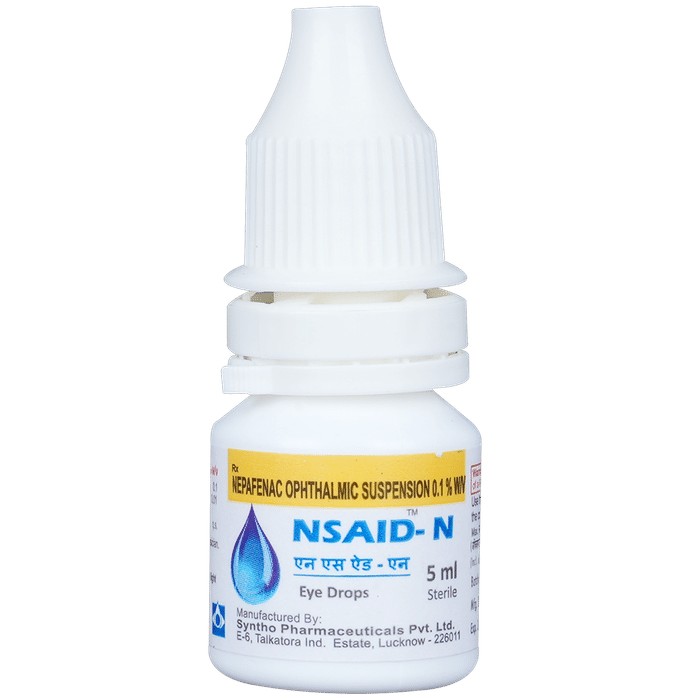
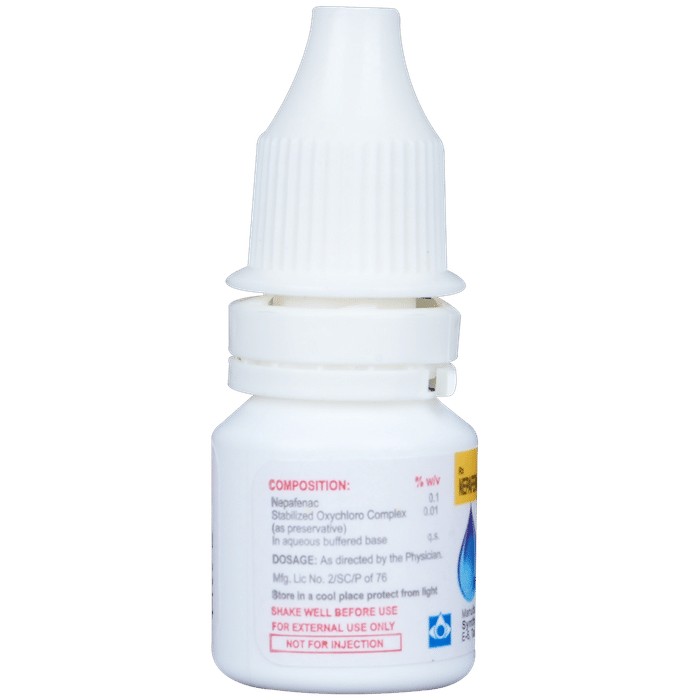
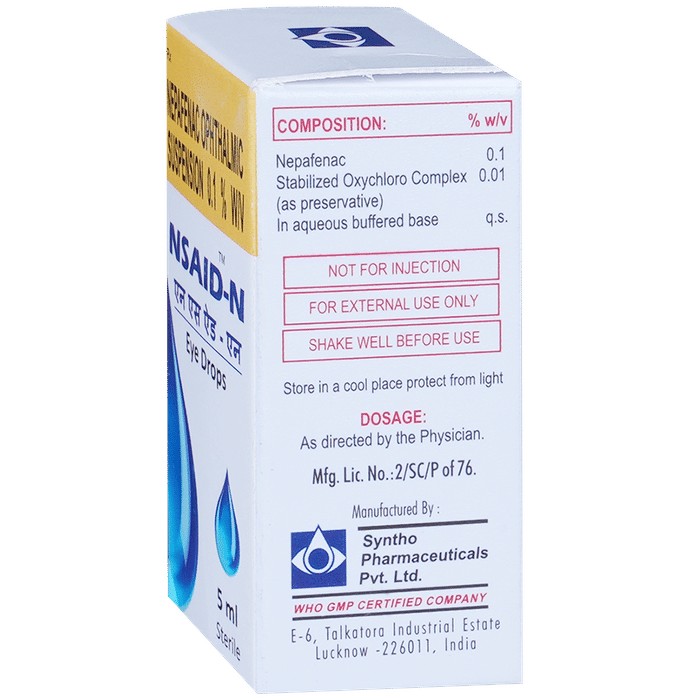
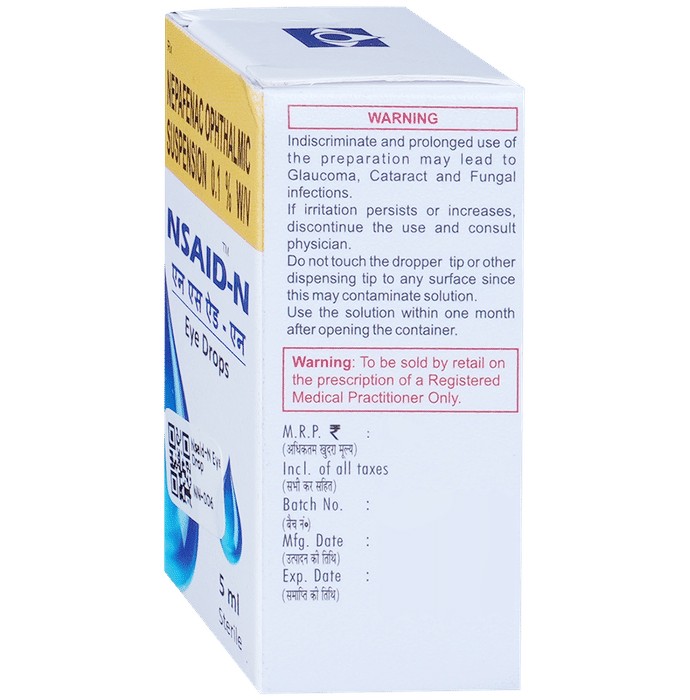
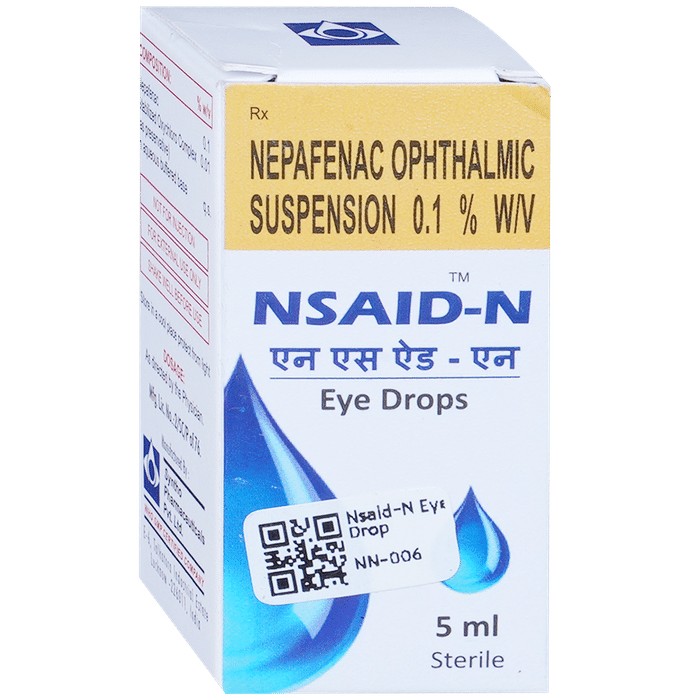
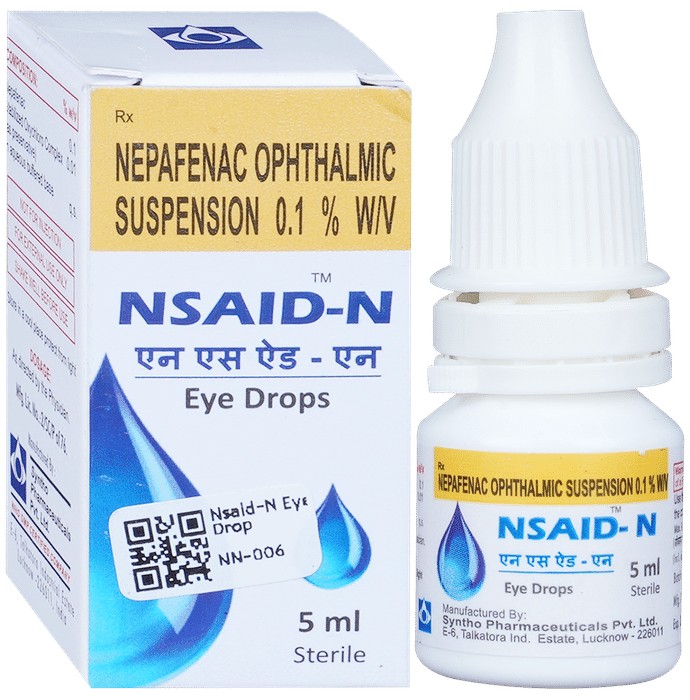
Nsaid-N Eye Drop

Marketer
Syntho Pharmaceuticals Pvt Ltd
Salt Composition
Nepafenac (0.1% w/v)
Overview Nsaid-N Eye Drop
Cataract surgery-related pain and inflammation are alleviated by the analgesic Nsaid-N Eye Drops. These drops function by inhibiting the production of ocular chemicals responsible for pain and swelling, thus promoting faster, more comfortable post-operative healing. Before administration, always sanitize your hands. Strictly adhere to your ophthalmologist's prescribed dosage, allowing approximately five minutes between instillations. Contact lens wearers should remove lenses prior to application, re-inserting them after a minimum 15-minute interval. Avoid touching the dropper tip to prevent contamination. Potential side effects, such as blurred vision, a foreign body sensation, and elevated intraocular pressure, are typically transient. However, persistent or worsening symptoms warrant immediate medical attention. Your physician can offer strategies to manage or mitigate these effects. Complete disclosure of all current medications and existing medical conditions is crucial before commencing treatment. Expectant and nursing mothers must seek their physician's guidance before using Nsaid-N Eye Drops.
Uses of Nsaid-N Eye Drop
Managing pain and inflammation after eye surgery
Major Benefits of Nsaid-N Eye Drop:
Apply this medication externally only. Administer the prescribed dosage for the specified duration as directed by your physician. Always consult the product label for instructions prior to application. Position the dropper near the eye, avoiding contact. Carefully dispense the medication into the lower conjunctival sac. Remove any excess solution.
Common Side effects of Nsaid-N Eye Drop:
- Decreased vision
- Foreign body sensation in eyes
- Increased intraocular pressure
- Stickiness
How to use Nsaid-N Eye Drop:
Apply this medication solely to the outer skin. Administer it precisely as your physician instructs, adhering to the prescribed dosage and treatment schedule. Consult the product label for detailed application guidelines. Position the dropper near the eye, avoiding contact. Carefully dispense the medication into the lower eyelid’s inner surface. Remove any excess solution.
How Nsaid-N Eye Drop works:
Nsaid-N Eye Drops utilize non-steroidal anti-inflammatory drug (NSAID) technology to inhibit the production of inflammatory mediators, thereby alleviating ocular pain, redness, and swelling.
SAFETY ADVICE
 AlcoholNone
No known drug interactions.
 PregnancyCONSULT YOUR DOCTOR
The use of Nsaid-N Eye Drops during pregnancy may pose risks. While human research is scarce, animal studies indicate potential harm to the fetus. A physician will assess the advantages against possible dangers prior to any prescription. Seek medical advice before use.
 Breast feedingCONSULT YOUR DOCTOR
Data on the safety of Nsaid-N Eye Drops while breastfeeding is lacking. Seek medical advice from your physician.
 DrivingUNSAFE
Following application of Nsaid-N Eye Drops, temporary blurred vision may occur. Refrain from driving until your vision returns to normal.
 KidneyNone
No known drug interactions.
 LiverNone
No known drug interactions.
What if you forget to take Nsaid-N Eye Drop :
Should you forget a dose of Nsaid-N Eye Drop, administer it at your earliest convenience. Nevertheless, if your next scheduled dose is imminent, omit the missed dose and resume your usual dosing regimen. Avoid taking a double dose.
Facts to Know About Nsaid-N Eye Drop
| Label | Value |
|---|---|
| Chemical Type | Benzophenone-Based Compounds |
| Developing Habits | No. |
| Treatment Category | Ophthalmology |
| Action Class | Topical Nonsteroidal Anti-inflammatory Drugs (NSAIDs) – Nonselective COX-1 & COX-2 Inhibitors |
 3,018 People bought this recently