


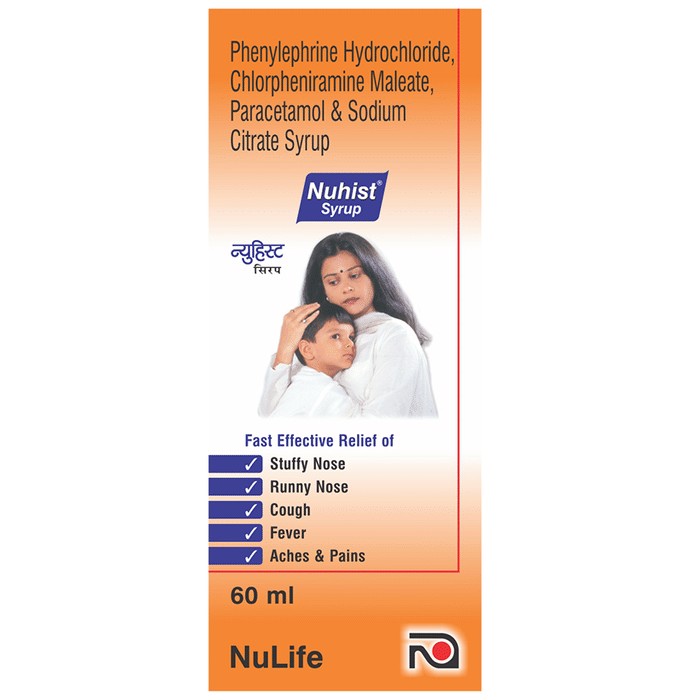
Nuhist Syrup

Marketer
NuLife Pharmaceuticals
Salt Composition
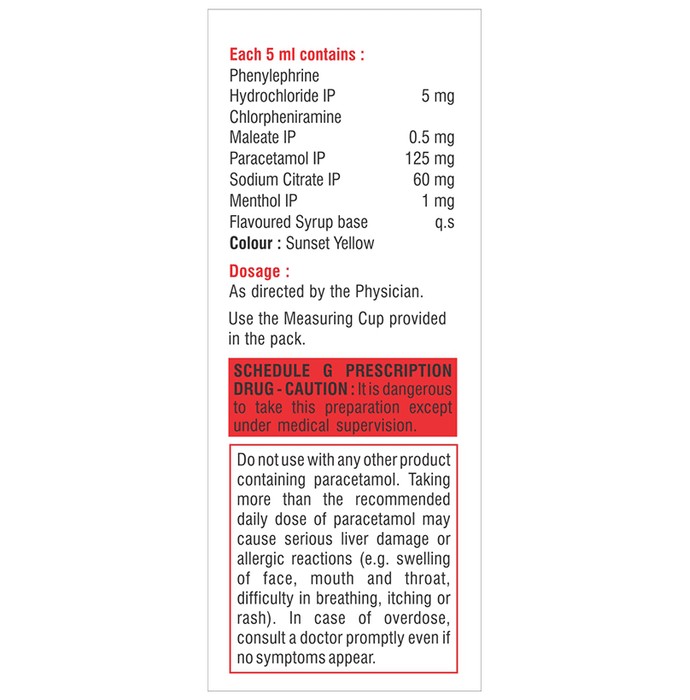
Chlorpheniramine Maleate (0.5mg/5ml) + Phenylephrine (5mg/5ml) + Paracetamol (125mg/5ml) + Sodium Citrate (60mg/5ml)
Overview Nuhist Syrup
Pediatricians often recommend Childrest Syrup to alleviate childhood cold symptoms like nasal discharge, coughing, sneezing, eye watering, throat irritation, muscle pain, and fever. These symptoms frequently accompany the common cold, allergic rhinitis (hay fever), and other respiratory illnesses. Administer Childrest Syrup orally to your child, with or without food; if stomach upset occurs, give it with food. Dosage, frequency, and method are determined by your child's doctor based on their specific symptoms; adhere strictly to the prescribed regimen. Consistent daily administration helps establish a routine and improves adherence. If vomiting occurs within 30 minutes, repeat the dose; however, do not repeat if it's near the next scheduled dose. Symptom improvement usually begins within a week of consistent use; however, complete the full prescribed course to prevent relapse. Minor, temporary side effects such as vomiting, diarrhea, nausea, dizziness, rash, and headache may occur, typically resolving as the body adjusts. Persistent or bothersome side effects require immediate consultation with your child's physician. Always inform your doctor of your child's complete medical history, including current medications, allergies, heart conditions, blood disorders, birth defects, airway or lung issues, skin problems, liver or kidney dysfunction. This information is crucial for safe and effective treatment.
Uses of Nuhist Syrup
Upper respiratory infection
Major Benefits of Nuhist Syrup:
Administer this medication precisely as your physician prescribes, adhering to both dosage and treatment length. Always consult the product label for instructions prior to consumption. Use a measuring cup for accurate dosing and ingest orally. Ensure thorough shaking before each use. Nuhist Syrup can be consumed with or without food; however, consistent timing is recommended.
Common Side effects of Nuhist Syrup:
- Diarrhea
- Rash
- Nausea
- Headache
- Insomnia (difficulty in sleeping)
- Tachycardia
- Palpitations
- Dizziness
- Fear
- Anxiety
- Restlessness
- Tremors
- Weakness
- Discomfort when urinating
- Hallucination
- Convulsion
How to use Nuhist Syrup:
Administer this medication precisely as your physician prescribes, adhering to both dosage and treatment length. Always consult the product label for instructions prior to consumption. Use a measuring device for accurate dosing and ingest orally. Ensure thorough shaking before each use. Nuhist Syrup can be consumed with or without food; however, consistent timing is recommended.
How Nuhist Syrup works:
Nuhist Syrup combines four active ingredients—chlorpheniramine maleate, phenylephrine hydrochloride, paracetamol, and sodium citrate—to alleviate common cold symptoms. Chlorpheniramine maleate, an antihistamine, targets allergic responses such as nasal discharge, lacrimation, and sneezing. Phenylephrine acts as a decongestant, constricting blood vessels in the nasal passages to reduce stuffiness. Paracetamol offers both analgesic and antipyretic effects, inhibiting the production of pain and fever-inducing substances in the central nervous system. Finally, sodium citrate functions as a mucolytic agent, facilitating the expulsion of mucus by reducing its viscosity.
SAFETY ADVICE
 KidneyCAUTION
Patients with kidney impairment should use Nuhist Syrup judiciously; dosage modification may be necessary. Physician consultation is advised.
 LiverCAUTION
Individuals with hepatic impairment should exercise caution when using Nuhist Syrup. Dosage modification may be necessary; physician consultation is advised.
What if you forget to take Nuhist Syrup :
Remain calm. Unless otherwise directed by your pediatrician, administer the missed dose immediately upon recollection. However, omit the missed dose if the next scheduled dose is imminent. Continue adhering to the prescribed medication schedule; avoid doubling the dose to compensate for a missed one.
Facts to Know About Nuhist Syrup
| Label | Value |
|---|---|
| Developing Habits | No. |
| Treatment Category | Breathing |
 3,018 People bought this recently