


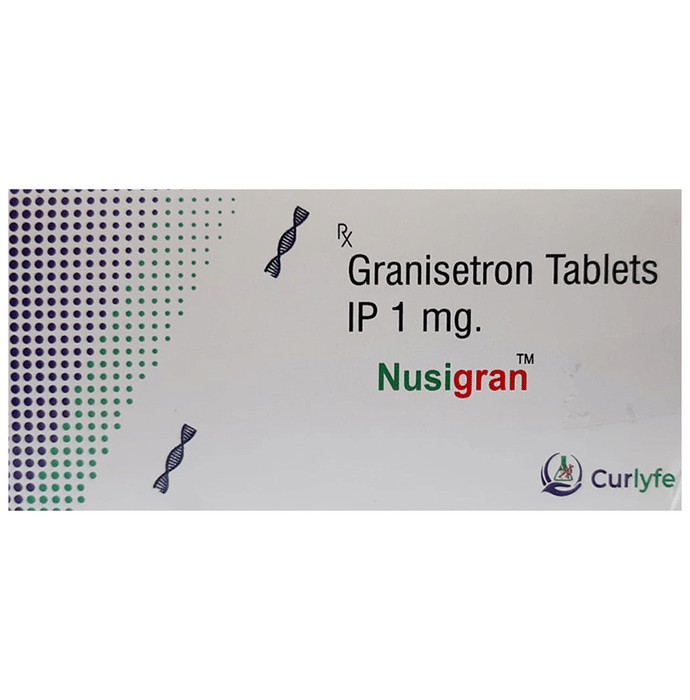

Nusigran Tablet

Marketer
Curlyfe Biosciences Pvt Ltd
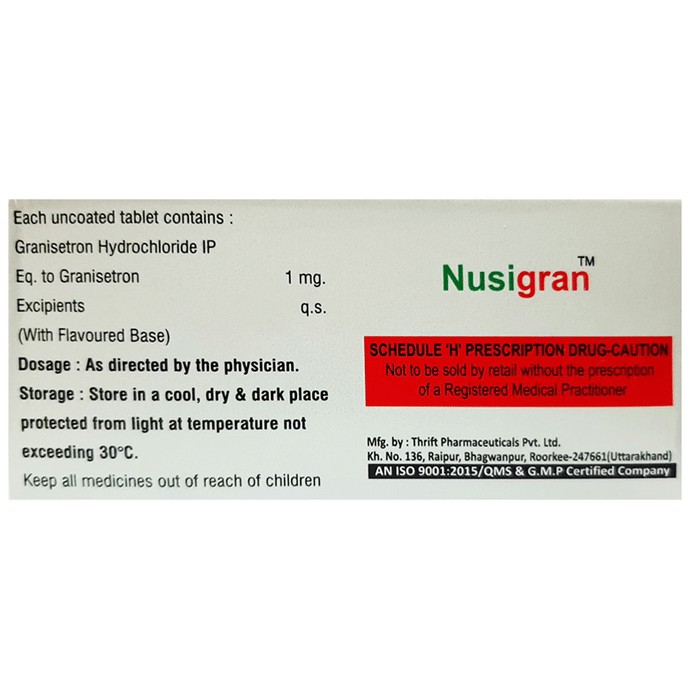
Salt Composition
Granisetron (1mg)
Overview Nusigran Tablet
Granuset tablets are an antiemetic medication frequently prescribed to manage nausea and vomiting resulting from surgery, cancer chemotherapy, or radiation therapy. Granuset tablets are ineffective against other cancer treatment side effects and offer limited relief from motion sickness-induced vomiting. Always adhere to your physician's prescribed dosage and regimen; consistent timing is recommended. Discontinue use only after consulting your doctor. If vomiting occurs within an hour of ingestion, repeat the dose and avoid large meals that day. Common side effects include headache, constipation, diarrhea, and fatigue. Dizziness and drowsiness may also occur; avoid driving or activities requiring concentration until the effects are known. These symptoms typically subside upon cessation; however, persistent or bothersome side effects should be discussed with your doctor, who can offer management strategies. Prior to commencing treatment, inform your doctor of any existing heart or liver conditions, or gastrointestinal obstructions. Also disclose all other medications, particularly those for epilepsy, heart disease, cancer, or depression, as interactions may occur. Pregnant or breastfeeding individuals should seek guidance from their healthcare provider.
Primary Ingredients of Nusigran Tablet
No text provided. Please provide the text you want me to rephrase.
Uses of Nusigran Tablet
Chemotherapy-induced emesis
Major Benefits of Nusigran Tablet:
Administer this medication precisely as prescribed by your physician, adhering to both the dosage and treatment schedule. Ingest the tablet whole; avoid chewing, crushing, or fracturing it. Nusigran Tablet can be consumed with or without food, though consistent timing is recommended for optimal results.
Common Side effects of Nusigran Tablet:
- Weakness
- Headache
- Constipation
- Diarrhea
- Insomnia (difficulty in sleeping)
How to use Nusigran Tablet:
Follow your doctor's instructions precisely regarding the dosage and treatment length for this medication. Ingest the Nusigran Tablet whole; avoid chewing, crushing, or breaking it. While it can be taken with or without food, consistency is key—take it at the same time each day.
How Nusigran Tablet works:
Nusigran tablets counter nausea and vomiting. This antiemetic medication functions by inhibiting serotonin, a brain chemical triggering these symptoms, often experienced following surgery or during cancer treatment with chemotherapy.
SAFETY ADVICE
 AlcoholCONSULT YOUR DOCTOR
Alcohol consumption alongside Nusigran Tablet lacks established safety data. Physician consultation is advised.
 PregnancySAFE IF PRESCRIBED
The use of Nusigran Tablet during pregnancy is typically regarded as safe. Preclinical trials in animals revealed minimal or no harmful consequences for fetal development; nevertheless, clinical data in humans are scarce.
 Breast feedingSAFE IF PRESCRIBED
Based on available data from breastfeeding mothers, Nusigran Tablet appears to pose a negligible risk to infants. The limited evidence indicates no substantial threat to the nursing child.
 DrivingSAFE
Driving ability is typically unaffected by Nusigran Tablet.
 KidneySAFE IF PRESCRIBED
Nusigran Tablet appears safe for individuals with kidney conditions. Existing evidence indicates dose modification may not be necessary, but physician consultation is recommended.
 LiverSAFE IF PRESCRIBED
Nusigran Tablet appears to pose minimal risk for individuals with hepatic impairment. Current evidence indicates dose modification may be unnecessary; however, physician consultation is recommended.
What if you forget to take Nusigran Tablet :
Should you forget a Nusigran Tablet dose, administer it promptly. Nevertheless, if your next scheduled dose is imminent, omit the missed dose and resume your usual dosing regimen. Avoid taking a double dose.
Facts to Know About Nusigran Tablet
| Label | Value |
|---|---|
| Chemical Type | Indazole-based compound |
| Developing Habits | No. |
| Treatment Category | Gastrointestinal system |
| Action Class | 5-HT3 receptor blockers |
 3,018 People bought this recently