


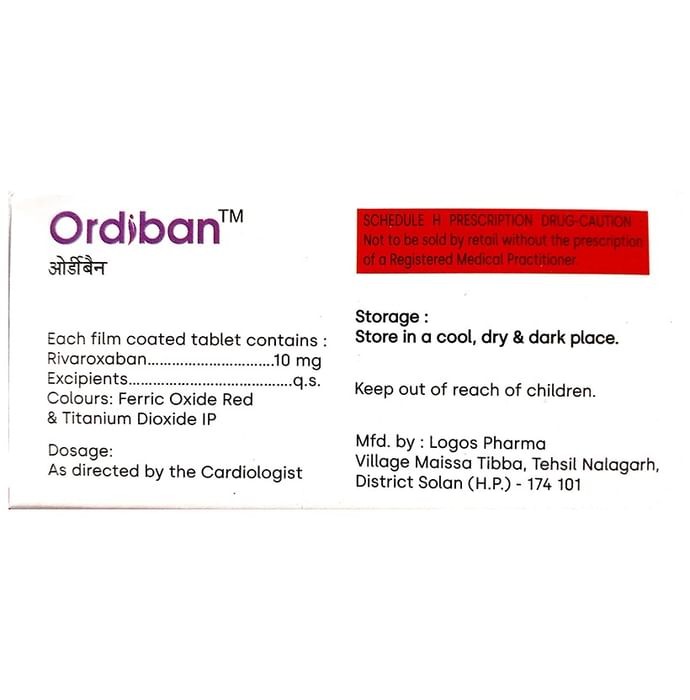
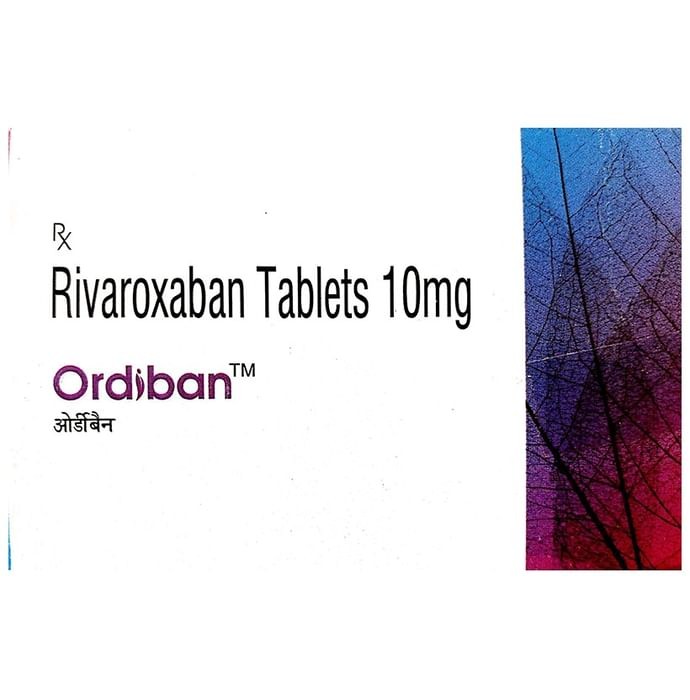
Ordiban Tablet

Marketer
Cheminnova Life Sciences
Salt Composition
Rivaroxaban (10mg)
Overview Ordiban Tablet
CardioGuard tablets function as an anticoagulant, preventing and treating blood clots. This medication mitigates the risk of stroke and heart attack by inhibiting clot formation in leg, lung, brain, and heart veins. Frequently prescribed for patients with atrial fibrillation to prevent clotting, CardioGuard also reduces post-surgical thrombosis risk following knee or hip replacement. It can be administered with or without food, consistently at the same time daily for optimal efficacy. Long-term, even lifelong, use may be necessary; discontinuation or dosage alteration requires physician consultation to avoid increased risk of stroke, heart attack, or thrombosis. Lifestyle modifications, including abstaining from smoking, adopting a healthy diet, regular exercise, and weight management (if needed), further reduce clotting risk. Increased bleeding tendency, such as nosebleeds or easy bruising, is a common side effect; immediate medical attention is warranted for any adverse symptoms. Contraindicated in individuals with severe hepatic or renal impairment, active bleeding, or concurrent use of other anticoagulants. Breastfeeding is not advised during treatment. Unlike some anticoagulants, routine PT-INR monitoring isn't required.
Uses of Ordiban Tablet
Preventing and managing blood clots
Major Benefits of Ordiban Tablet:
Follow your doctor's instructions precisely regarding the dosage and treatment length for Ordiban Tablet. Ingest the tablet whole; avoid chewing, crushing, or breaking it. Ordiban Tablet can be administered with or without food, however, consistent timing is recommended.
Common Side effects of Ordiban Tablet:
- Bleeding
How to use Ordiban Tablet:
Follow your doctor's instructions precisely regarding dosage and treatment length for this medication. The tablet should be swallowed whole; do not break, crush, or chew it. Ordiban Tablets can be taken with or without food, however, consistent timing is recommended.
How Ordiban Tablet works:
Xaban, a new oral anticoagulant, inhibits the activity of factor Xa, a key clotting protein, thus preventing the development of blood clots.
SAFETY ADVICE
 AlcoholCAUTION
Use caution when drinking alcohol while taking Ordiban tablets. Seek medical advice.
 PregnancyCONSULT YOUR DOCTOR
The use of Ordiban Tablet during pregnancy may pose risks. While human data is scarce, animal research indicates potential harm to the fetus. A physician will assess the potential advantages against any risks prior to prescribing. Seek medical advice.
 Breast feedingCONSULT YOUR DOCTOR
Employing Ordiban Tablet while breastfeeding is likely inadvisable. Available human data indicates potential drug transfer to breast milk, posing a possible risk to the infant.
 DrivingUNSAFE
Driving ability may be impaired by Ordiban Tablet side effects, including potential dizziness or fainting.
 KidneyCAUTION
Patients with kidney impairment should exercise caution when using Ordiban Tablets, potentially requiring dosage modification. Consult a physician before use. Ordiban Tablets are contraindicated in patients with severely compromised kidney function.
 LiverUNSAFE
The use of Ordiban Tablet is likely contraindicated in individuals with hepatic impairment and should be avoided. Physician consultation is recommended.
What if you forget to take Ordiban Tablet :
Should you forget to take your Ordiban Tablet, administer it at your earliest convenience. Nevertheless, if your next scheduled dose is imminent, omit the missed dose and resume your usual medication regimen. Avoid taking a double dose.
Facts to Know About Ordiban Tablet
| Label | Value |
|---|---|
| Chemical Type | Morpholine- and thiophene-based derivatives |
| Developing Habits | No. |
| Treatment Category | KINSHIP |
| Action Class | Xa Inhibitors for Oral Administration |
 3,018 People bought this recently