


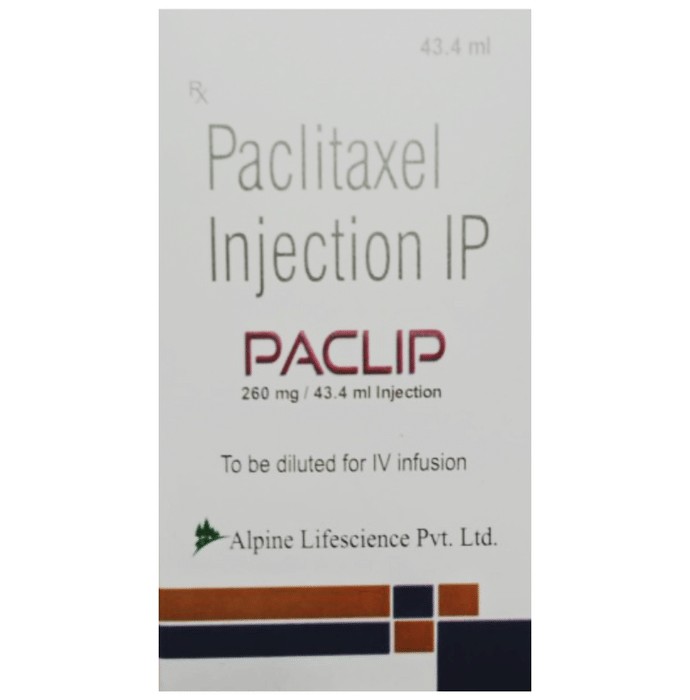
Paclip 260mg Injection

Marketer
Alpine Lifescience Private Limited
Salt Composition
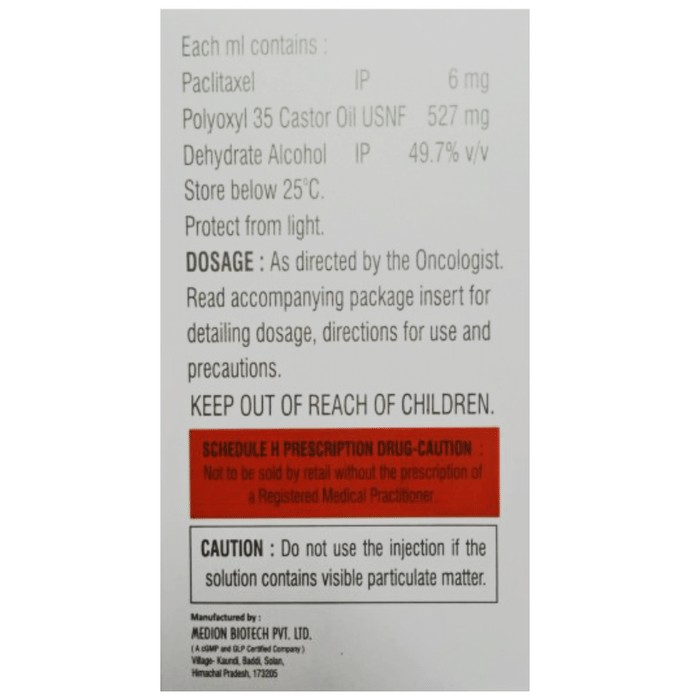
Paclitaxel (6mg/ml)
Overview Paclip 260mg Injection
Oncaspar 260mg injection is a chemotherapy agent indicated for breast, pancreatic, and non-small cell lung cancers. Administered intravenously by a healthcare professional, the dosage and frequency are determined by your physician based on your condition and may vary. Strictly adhere to your prescribed regimen; incorrect usage or overdose can lead to severe adverse reactions. Therapeutic effects might not be apparent for weeks or months; discontinue only under medical supervision. Typical side effects include nausea, vomiting, and fatigue. Severe reactions such as edema (hand and lip swelling), alopecia, and weight increase are possible. Concomitant medications may mitigate these effects; however, report any unusual bruising, bleeding, pharyngitis, mouth sores, or fever. This medication can suppress bone marrow function, reducing blood cell counts and increasing infection risk, necessitating regular blood tests to monitor blood cell levels and liver function. Prior to treatment, disclose any pre-existing cardiac, hepatic, or renal conditions, or concurrent use of anti-infective agents. Drug interactions are possible; inform your doctor of all medications. Use during pregnancy or breastfeeding is contraindicated; effective contraception is crucial for both partners throughout treatment.
Primary Ingredients of Paclip 260mg Injection
No text provided to rephrase.
Uses of Paclip 260mg Injection
Cancers of the breast, lung (non-small cell), and pancreas
Major Benefits of Paclip 260mg Injection:
This medication will be administered by your physician or registered nurse; self-medication is strictly prohibited.
Common Side effects of Paclip 260mg Injection:
- Nausea
- Vomiting
- Weakness
- Low blood platelets
- Rash
- Upper respiratory tract infection
- Urinary tract infection
- Bleeding
- Anemia (low number of red blood cells)
- Flushing (sense of warmth in the face, ears, neck and trunk)
- Hair loss
- Decreased blood pressure
- Peripheral neuropathy (tingling and numbness of feet and hand)
- Diarrhea
- Decreased white blood cell count (neutrophils)
How to use Paclip 260mg Injection:
This medication will be administered by your physician or their designated nurse; self-medication is strictly prohibited.
How Paclip 260mg Injection works:
Oncaspar 260mg injection is a chemotherapeutic agent that disrupts microtubule assembly, a process essential for cancer cell proliferation. This action inhibits cancer cell growth, ultimately leading to their demise.
SAFETY ADVICE
 AlcoholUNSAFE
Combining alcohol and Paclip 260mg Injection is inadvisable.
 PregnancyCONSULT YOUR DOCTOR
Administering Paclip 260mg Injection during pregnancy poses a confirmed risk to fetal development and is therefore contraindicated. In exceptional circumstances involving immediate danger to the mother's life, a physician might prescribe it, weighing potential benefits against known hazards. Physician consultation is mandatory.
 Breast feedingUNSAFE
Administering Paclip 260mg Injection while breastfeeding is contraindicated. Evidence indicates potential infant toxicity from this medication.
 DrivingUNSAFE
The injectable medication Paclip 260mg may induce adverse reactions that could impair driving ability. While driving between treatment cycles isn't inherently prohibited, the presence of alcohol in this formulation suggests caution regarding operating a vehicle.
 KidneySAFE IF PRESCRIBED
In patients with kidney disease, Paclip 260mg Injection is considered safe and requires no dosage modification. Nevertheless, consult your physician regarding any pre-existing renal conditions.
 LiverCAUTION
Patients with liver impairment should use Paclip 260mg Injection cautiously, potentially requiring dose modification. Consult a physician before use. Paclip 260mg Injection is contraindicated in individuals with severe hepatic dysfunction.
What if you forget to take Paclip 260mg Injection :
NA
Facts to Know About Paclip 260mg Injection
| Label | Value |
|---|---|
| Type of Compound | Taxane-based medications |
| Potential for Dependence | None. |
| Type of Medication | Cancer-fighting drugs |
| Mechanism of Action | Microtubule-targeting drugs: Taxane class |
 3,018 People bought this recently