


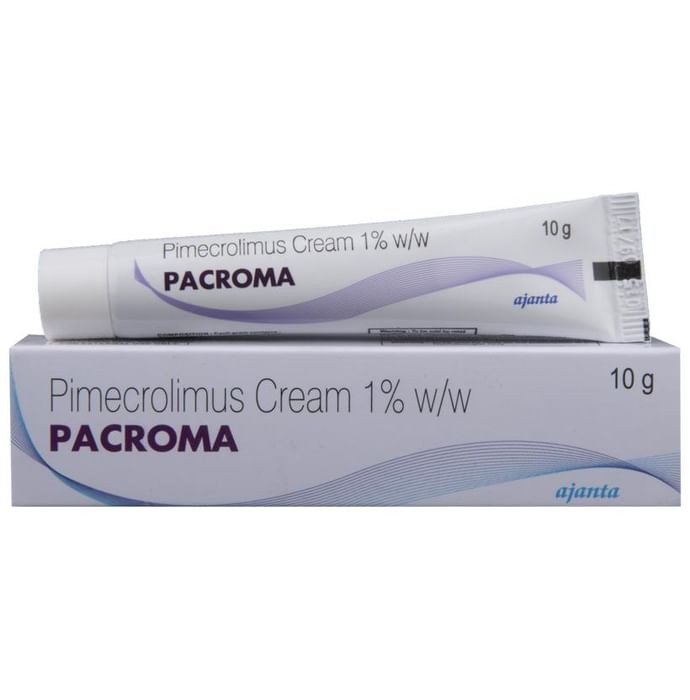
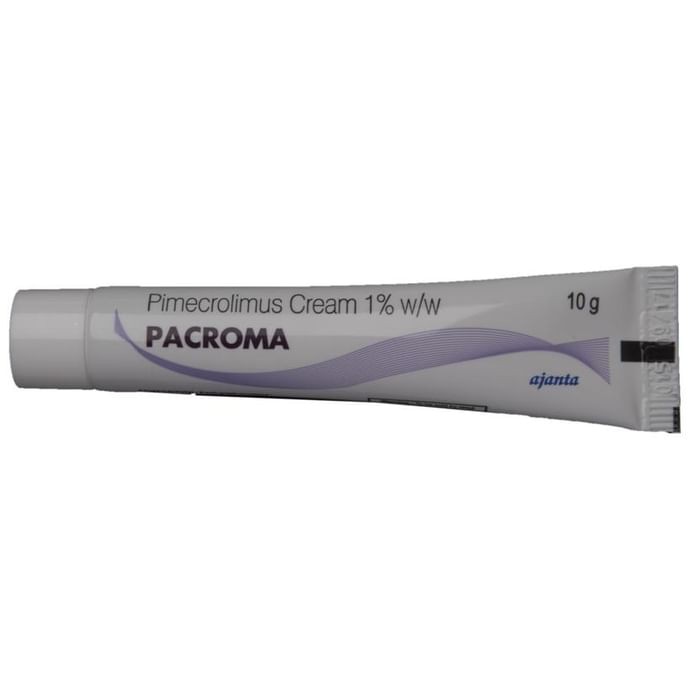
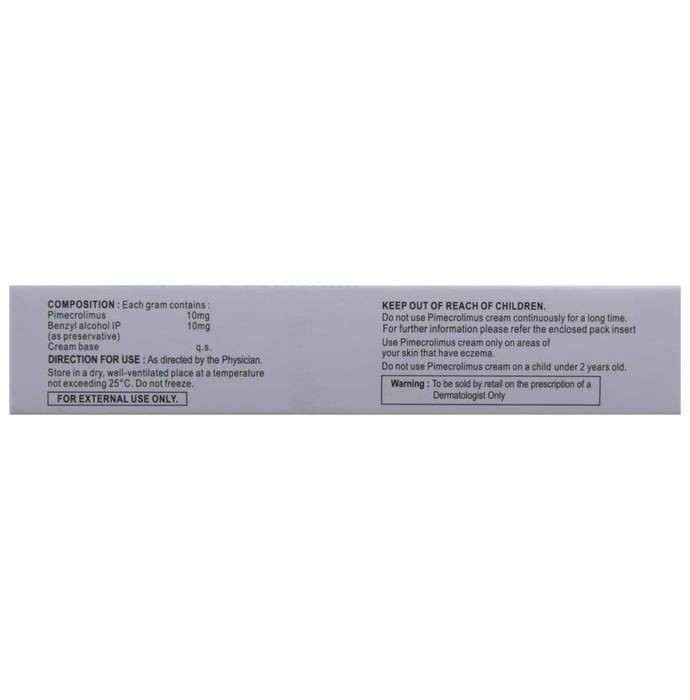
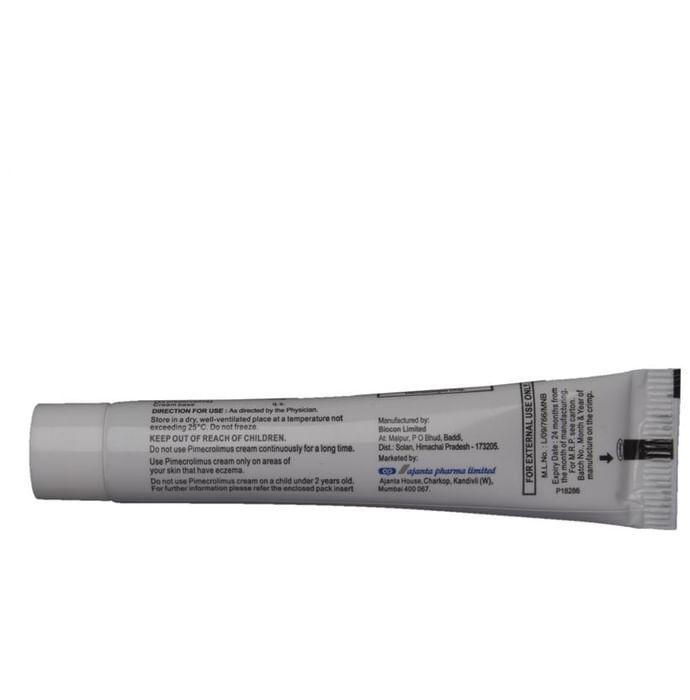
Pacroma Cream

Marketer
Ajanta Pharma Ltd
Salt Composition
Pimecrolimus (1% w/w)
Overview Pacroma Cream
Eczema (atopic dermatitis) is treated with Dermacalm Cream, which reduces inflammation (skin redness and swelling) by modulating the activity of specific immune cells. This soothes itching and improves rash symptoms in atopic dermatitis. Dermacalm Cream is for external use only, applied thinly and evenly 2-4 times daily to affected skin, or as directed by a physician. Avoid overuse and do not bandage or cover treated areas. Consult your doctor if no improvement is seen after two weeks, or if skin condition worsens. Common side effects may include headache, nasopharyngitis, cough, influenza, fever, and viral infection. Application site reactions such as burning, irritation, itching, and redness are also possible. Use during pregnancy or breastfeeding is generally not advised unless deemed essential by a healthcare professional.
Uses of Pacroma Cream
Eczema
Major Benefits of Pacroma Cream:
Apply this medication solely to the skin's surface. Follow your physician's instructions precisely regarding dosage and treatment length. Always consult the product label for application guidelines. Ensure the affected area is clean and dry before applying the cream. Wash your hands thoroughly afterwards, except when the hands themselves are the affected area.
Common Side effects of Pacroma Cream:
- Application site reactions (burning, irritation, itching and redness)
How to use Pacroma Cream:
Apply this medication topically only. Follow your physician's instructions regarding dosage and treatment length. Always refer to the product label for application details. Before applying, ensure the affected skin is clean and dry. Wash your hands thoroughly afterward, unless the affected area is on your hands.
How Pacroma Cream works:
Pacroma Cream is an immunomodulator that reduces the activity of the body's immune system.
SAFETY ADVICE
 AlcoholNone
No known drug interactions.
 PregnancyCONSULT YOUR DOCTOR
Using Pacroma Cream during pregnancy may pose risks. While human research is scarce, animal studies indicate potential harm to a developing fetus. A physician will assess the advantages against possible dangers prior to prescribing. Seek medical advice before use.
 Breast feedingCONSULT YOUR DOCTOR
The use of Pacroma Cream while breastfeeding is likely inadvisable. Available human data indicates potential transfer of the medication into breast milk, posing a possible risk to the infant.
 DrivingNone
No known drug interactions.
 KidneyNone
No known drug interactions.
 LiverNone
No known drug interactions.
What if you forget to take Pacroma Cream :
Apply Pacroma Cream as soon as you remember if you've missed a dose.
Facts to Know About Pacroma Cream
| Label | Value |
|---|---|
| Type of Compound | Large-ring lactone antibiotics |
| Addictive | None. |
| Type of Medication | CUTANEOUS |
 3,018 People bought this recently