



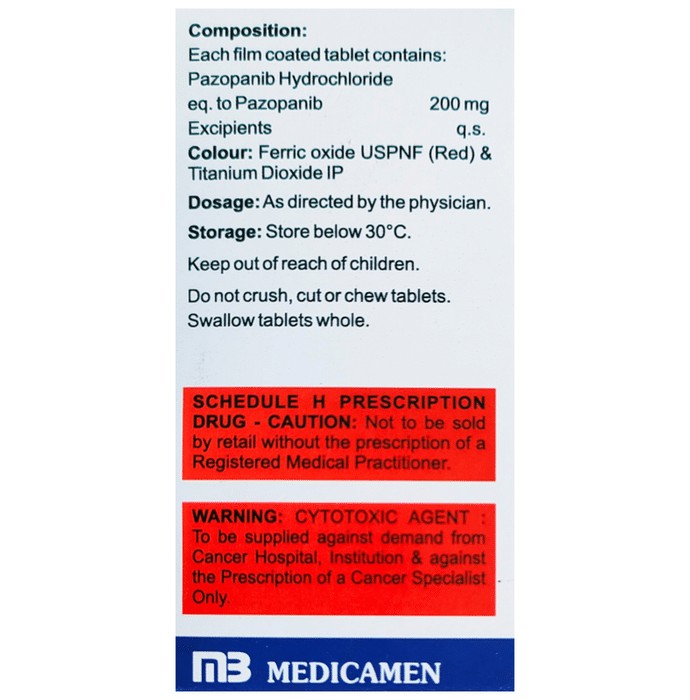

Pazocam 200mg Tablet

Marketer
Medicamen Biotech Ltd
Salt Composition
Pazopanib (200mg)
Overview Pazocam 200mg Tablet
Oncaspar 200mg tablets, a protein kinase inhibitor, are indicated for kidney cancer and soft tissue sarcoma. For optimal absorption, take this medication on an empty stomach, consistently at the same time daily. Dosage and frequency are determined by your physician based on your condition and may be adjusted. Strictly adhere to your doctor's prescribed regimen; incorrect usage or overdose can lead to severe adverse reactions. Therapeutic effects may not be apparent for weeks or months; discontinue only under medical supervision. Common side effects include elevated blood pressure and diarrhea. Your doctor might recommend regular blood pressure checks. Manage diarrhea by increasing fluid intake or contacting your physician if it worsens. This medication can lower blood cell counts, increasing infection risk. Report fever, flu-like symptoms, or breathlessness immediately. Inform your doctor of pre-existing heart, liver, or kidney conditions, and all other medications, including antibiotics, before commencing treatment; drug interactions are possible. This medication is contraindicated during pregnancy and breastfeeding; reliable contraception is crucial for both partners throughout the treatment period.
Uses of Pazocam 200mg Tablet
Renal cell carcinoma or soft tissue sarcoma.
Major Benefits of Pazocam 200mg Tablet:
Consume this medication precisely as your physician directs, adhering to the prescribed dosage and timeframe. Ingest the tablet whole; avoid chewing, crushing, or fracturing it. Administer Pazocam 200mg Tablet on an empty stomach.
Common Side effects of Pazocam 200mg Tablet:
- Headache
- Nausea
- Vomiting
- Musculoskeletal (bone, muscle or joint) pain
- Fatigue
- Change in color of hair
- Diarrhea
- High blood pressure
- Decreased appetite
- Weight loss
- Taste change
- Abnormal skin pigmentation
- Hair discoloration
- Tumor pain
- Breathlessness
How to use Pazocam 200mg Tablet:
Consume this medication precisely as prescribed by your physician, adhering to both the dosage and treatment length. Ingest the entire tablet; avoid chewing, crushing, or fracturing it. Administer Pazocam 200mg Tablet on an empty stomach.
How Pazocam 200mg Tablet works:
Pazocam 200mg tablets are an anti-neoplastic agent. Their mechanism of action involves targeted inhibition of tyrosine kinase enzyme receptors, thus suppressing cancerous cell growth. The medication also counteracts tumor angiogenesis, limiting the development of the tumor's blood supply. This dual effect contributes to its anti-cancer properties.
SAFETY ADVICE
 AlcoholCONSULT YOUR DOCTOR
Alcohol consumption alongside Pazocam 200mg Tablets may pose unknown risks. Seek medical advice before combining them.
 PregnancyCONSULT YOUR DOCTOR
Using Pazocam 200mg tablets during pregnancy poses a confirmed risk to the fetus. Therefore, it's contraindicated. Nevertheless, a physician might exceptionally prescribe it in critical circumstances where the potential advantages outweigh the known hazards. Physician consultation is essential.
 Breast feedingUNSAFE
Nursing mothers should avoid Pazocam 200mg tablets. Evidence indicates potential infant toxicity from this medication.
 DrivingUNSAFE
Taking a 200mg Pazocam tablet might cause drowsiness, blurred vision, or dizziness. Refrain from driving if you experience these effects.
 KidneySAFE IF PRESCRIBED
Pazocam 200mg tablets are considered safe for use by individuals with kidney disease; no alteration of the prescribed dosage is necessary.
 LiverCAUTION
Patients with liver impairment should use Pazocam 200mg tablets cautiously, potentially requiring dosage modification. A physician's consultation is recommended. Pazocam 200mg tablets are contraindicated for individuals with moderate to severe hepatic dysfunction.
What if you forget to take Pazocam 200mg Tablet :
NA
Facts to Know About Pazocam 200mg Tablet
| Label | Value |
|---|---|
| Chemical Type | Diarylalkylamines |
| Developing Habits | No. |
| Treatment Category | Cancer Medications |
| Actions | Kinase inhibitors targeting tyrosine |
 3,018 People bought this recently