


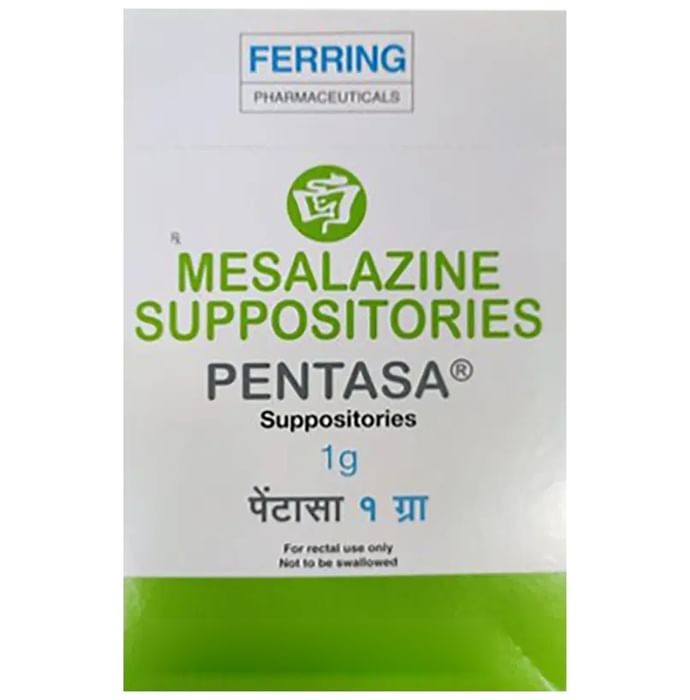
Pentasa 1gm Suppository

Marketer
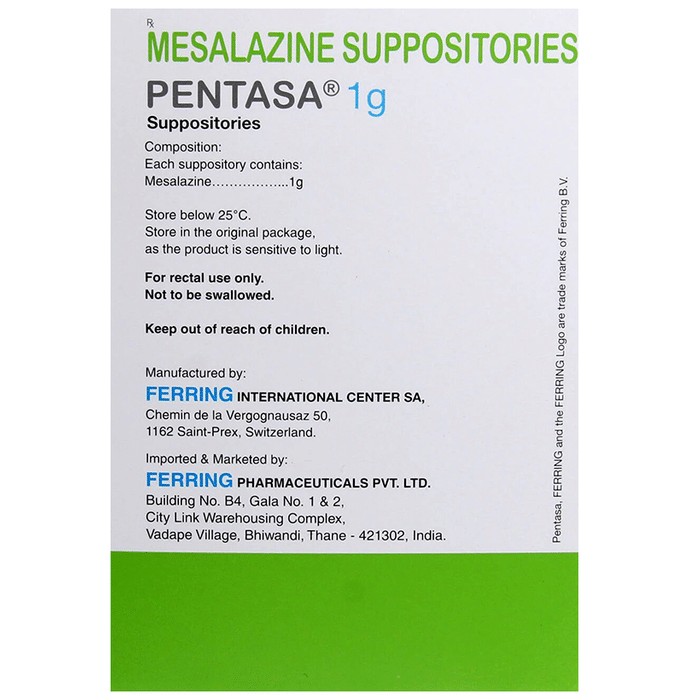
Ferring Pharmaceuticals
Salt Composition
Mesalazine (1gm)
Overview Pentasa 1gm Suppository
Mesalamine 1g rectal suppository is an anti-inflammatory medication indicated for ulcerative colitis, specifically proctitis (inflammation of the rectal lining). It alleviates symptoms like diarrhea, rectal bleeding, and abdominal pain by targeting bowel inflammation. Administered rectally only, this medication should never be ingested. Use is strictly under a physician's guidance. Remain recumbent for at least 15 minutes post-insertion. Dosage is determined by your condition and prescribed by your doctor; adhere precisely to this prescription. Continue treatment as directed; premature discontinuation may lead to symptom recurrence and disease exacerbation. Common side effects include rectal irritation, skin rashes, itching, and fever. Report any persistent, worsening, or bothersome side effects to your physician; management options may be available. Inform your doctor of any pre-existing kidney or liver disease, gastrointestinal obstruction, or pregnancy/breastfeeding status before commencing treatment. Age may also influence treatment suitability. Disclose all other medications you're using, as potential drug interactions exist. Pre- and post-treatment kidney and liver function tests may be requested.
Uses of Pentasa 1gm Suppository
Managing ulcerative colitis
Major Benefits of Pentasa 1gm Suppository:
Discard the suppository's packaging prior to administration. Remain recumbent for approximately 15 minutes post-insertion to prevent premature expulsion before dissolution.
Common Side effects of Pentasa 1gm Suppository:
- Rectal discomfort
- Flatulence
- Headache
- Vomiting
- Diarrhea
- Nausea
- Abdominal pain
- Rash
How to use Pentasa 1gm Suppository:
Discard the suppository's packaging prior to administration. Remain recumbent for approximately fifteen minutes post-insertion to prevent premature expulsion.
How Pentasa 1gm Suppository works:
Mesalamine 1g rectal suppository, an aminosalicylate, delivers targeted anti-inflammatory action to the lower gastrointestinal tract (colon and rectum), offering swift symptom relief during ulcerative colitis flares. By inhibiting the formation of pro-inflammatory prostaglandins, it diminishes intestinal inflammation, thereby alleviating ulceration, hemorrhage, and associated discomfort.
SAFETY ADVICE
 AlcoholNone
No known drug interactions.
 PregnancyCONSULT YOUR DOCTOR
Mesalamine 1g suppositories may pose risks during pregnancy. While human data is scarce, animal research indicates potential harm to the fetus. A physician will assess the potential advantages against any possible dangers prior to prescribing. Seek medical advice.
 Breast feedingCONSULT YOUR DOCTOR
The use of Pentasa 1gm suppositories while breastfeeding may pose risks. Studies in humans show a potential for the medication to transfer to breast milk, potentially harming the infant. Mothers using Pentasa 1gm suppositories should carefully observe their babies for diarrhea.
 DrivingNone
No known drug interactions.
 KidneyCAUTION
Patients with impaired kidney function should use Pentasa 1gm suppositories cautiously, potentially requiring dosage modification. Individuals with severe kidney disease should avoid Pentasa 1gm suppositories; physician consultation is advised.
 LiverCAUTION
Patients with hepatic impairment should use mesalazine 1g suppositories cautiously. Dosage modification may be necessary; physician consultation is advised.
What if you forget to take Pentasa 1gm Suppository :
Should you forget a Pentasa 1gm Suppository, administer it at your earliest convenience. Nevertheless, if your next scheduled dose is imminent, omit the missed dose and resume your usual dosing regimen. Avoid taking a double dose.
Facts to Know About Pentasa 1gm Suppository
| Label | Value |
|---|---|
| Chemical Type | Salicylic Acid Derivative |
| Developing Habits | No. |
| Type of Therapy | Digestive System |
| Behavioral Class | Mesalamine |
 3,018 People bought this recently