


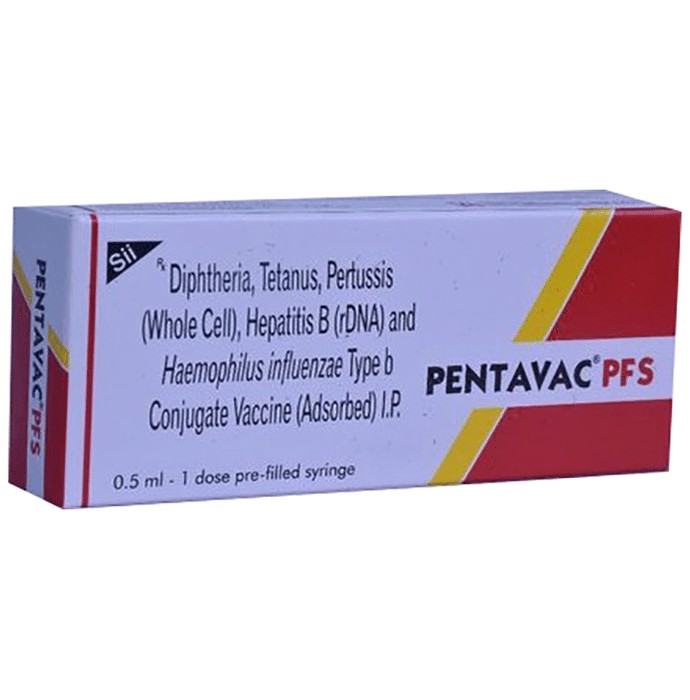
Pentavac PFS Vaccine

Marketer
Serum Institute Of India Ltd
Salt Composition
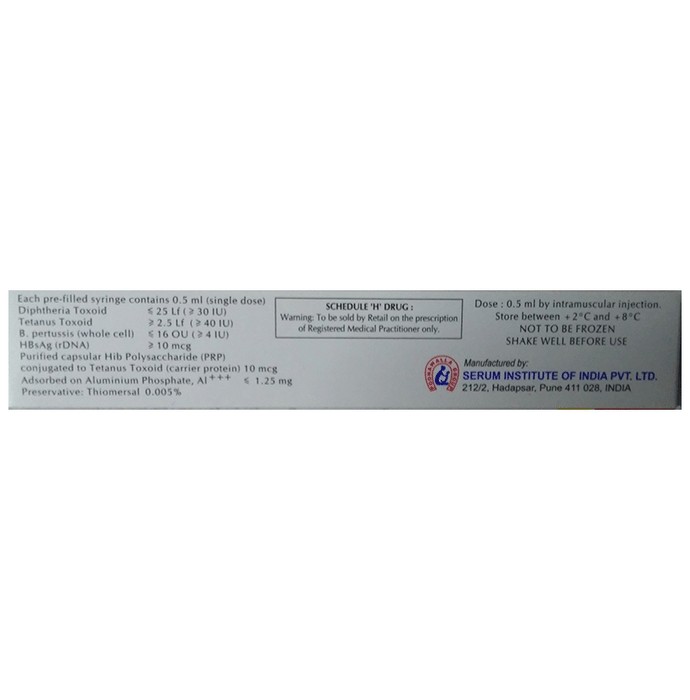
Diphtheria Toxoid (30IU) + Tetanus Toxoid (40IU) + Pertussis Toxoid (4IU) + Hepatitis B Vaccine (rDNA) (10mcg) + Haemophilus Type B Conjugate Vaccine (10mcg)
Overview Pentavac PFS Vaccine
Infanrix Penta is a combined vaccine protecting against five serious childhood illnesses: diphtheria, tetanus, pertussis, Hepatitis B, and Haemophilus influenzae type b. This five-in-one injection actively stimulates the immune system to develop protective antibodies. Administration is exclusively by a pediatrician, intramuscularly; infants receive it in the thigh, older children in the arm. The recommended schedule involves three doses, each separated by four weeks, ideally completed before six months of age (typically at six, ten, and fourteen weeks). For children who miss the initial six-week timeframe, immediate vaccination is advised, with scheduling determined by their physician. Minor, temporary side effects like fever, reduced appetite, injection site discomfort (pain, swelling, redness), and rash may occur, typically resolving spontaneously. However, persistent concerns warrant medical attention. Prior to vaccination, parents should inform the doctor of any pre-existing conditions including liver or kidney disease, blood disorders, congenital defects, cardiac or pulmonary issues, severe limb pain or swelling, Guillain-Barré syndrome, prior severe allergic reactions, coma, or neurological problems such as seizures. This information helps tailor a safe and effective vaccination plan.
Uses of Pentavac PFS Vaccine
Protecting against tetanus, pertussis, diphtheria, hepatitis B, and Haemophilus influenzae type b infection.
Major Benefits of Pentavac PFS Vaccine:
This medication will be administered by your healthcare provider. Self-medication is strictly prohibited.
Common Side effects of Pentavac PFS Vaccine:
- Irritation
- Loss of appetite
- Injection site reactions (pain, swelling, redness)
- Skin rash
- Fever
How to use Pentavac PFS Vaccine:
This medication will be administered by your healthcare provider. Self-medication is strictly prohibited.
How Pentavac PFS Vaccine works:
Pentavac PFS Vaccine combines five separate vaccines into a single formulation. This multivalent approach triggers a low-level immune response, mimicking a mild infection without causing disease. This process prompts the body to generate protective antibodies, thus bolstering immunity against specific future illnesses.
SAFETY ADVICE
 AlcoholCONSULT YOUR DOCTOR
Alcohol consumption alongside Pentavac PFS Vaccine lacks established safety data. Physician consultation is advised.
 PregnancyCONSULT YOUR DOCTOR
Pregnancy and the Pentavac PFS Vaccine: Data on its use during pregnancy are currently lacking. Seek medical advice from your physician.
 Breast feedingCONSULT YOUR DOCTOR
Data on Pentavac PFS Vaccine use while breastfeeding is lacking. Seek your physician's advice.
 DrivingCONSULT YOUR DOCTOR
The impact of Pentavac PFS Vaccine on driving ability is undetermined. Refrain from driving if you develop symptoms impairing concentration or reaction time.
 KidneySAFE IF PRESCRIBED
Pentavac PFS Vaccine poses no safety concerns for individuals with kidney disorders. No alteration of the Pentavac PFS Vaccine dosage is necessary.
 LiverSAFE IF PRESCRIBED
Pentavac PFS Vaccine poses no safety concerns for patients with hepatic impairment. No alteration to the Pentavac PFS Vaccine dosage is necessary.
What if you forget to take Pentavac PFS Vaccine :
Remain calm. Should your child miss a scheduled Pentavac PFS Vaccine dose, contact their physician promptly to arrange for vaccination.
Facts to Know About Pentavac PFS Vaccine
| Label | Value |
|---|---|
| Developing Habits | No. |
| Treatment Category | Immunizations |
 3,018 People bought this recently