


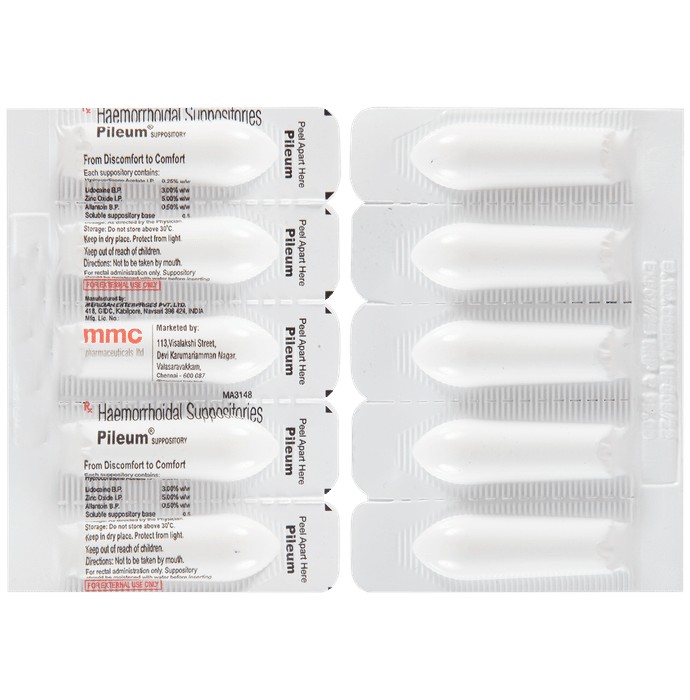
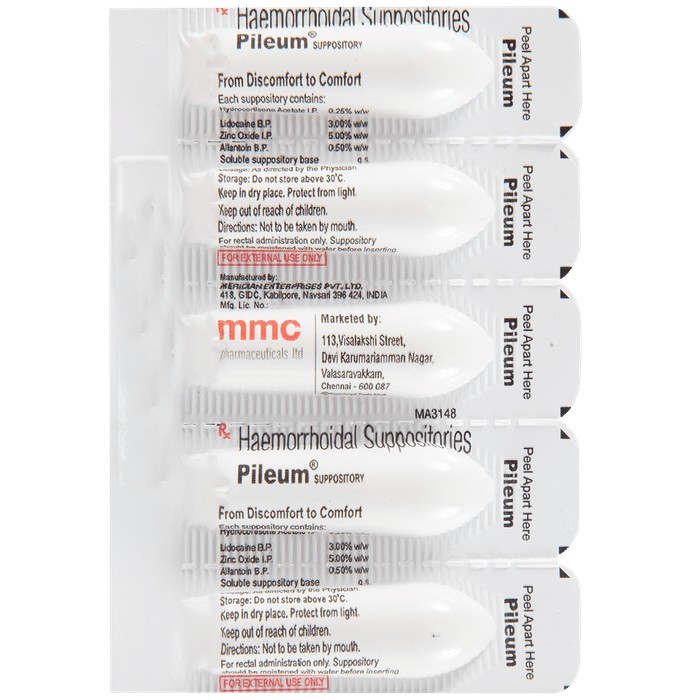
Pileum Suppository

Marketer
MMC Healthcare Ltd
Salt Composition
Hydrocortisone (0.25% w/w) + Zinc Oxide (5% w/w) + Lidocaine (3% w/w) + Allantoin (0.5% w/w)
Overview Pileum Suppository
Anal fissure treatment with Pileum Suppositories, a prescription combination medication, offers relief from associated symptoms like inflammation, itching, and pain. The suppositories soften the affected skin. Always follow your physician's prescribed dosage and duration. Wash hands before application, carefully reading the label's instructions. This medication is for external use only; avoid exceeding the recommended dose. Report any known allergies to this medicine to your doctor. Common side effects may include localized burning, irritation, itching, or redness. Persistent or concerning symptoms necessitate a consultation with your doctor. Disclose any existing medical conditions, including pregnancy, to your healthcare provider. Pileum Suppositories are considered safe for use during breastfeeding.
Uses of Pileum Suppository
Managing anal fissures
Major Benefits of Pileum Suppository:
Discard the suppository's packaging prior to administration. Remain recumbent for approximately fifteen minutes post-insertion to prevent premature expulsion before dissolution.
Common Side effects of Pileum Suppository:
- Application site reactions (burning, irritation, itching and redness)
How to use Pileum Suppository:
Discard the suppository's packaging prior to administration. Remain recumbent for approximately fifteen minutes post-insertion to prevent premature expulsion.
How Pileum Suppository works:
Anal fissures benefit from Pileum Suppository, a four-component medication containing hydrocortisone, zinc oxide, lidocaine, and allantoin. Hydrocortisone, a corticosteroid, reduces inflammation and itching by inhibiting prostaglandin production, the inflammatory mediators causing redness and swelling. Zinc oxide provides antiseptic and astringent effects. Lidocaine, a local anesthetic, numbs the affected area by interrupting nerve pain signals. Finally, allantoin, a skin protectant, soothes and hydrates the skin.
SAFETY ADVICE
 AlcoholNone
No drug interactions identified.
 PregnancyCONSULT YOUR DOCTOR
The use of Pileum Suppository during pregnancy may pose risks. While human research is scarce, animal studies indicate potential harm to the fetus. A physician will assess the potential advantages against any possible risks prior to prescribing. Physician consultation is advised.
 Breast feedingSAFE IF PRESCRIBED
Use of Pileum suppositories while breastfeeding is likely safe. Available human data indicates minimal risk to the infant.
 DrivingNone
No known drug interactions.
 KidneySAFE IF PRESCRIBED
Use of Pileum Suppositories in patients with kidney disease appears to pose minimal risk. Current evidence indicates dose modification may be unnecessary, however, physician consultation is recommended.
 LiverSAFE IF PRESCRIBED
The use of Pileum Suppositories in patients with liver conditions appears to pose minimal risk. Current evidence indicates dose modification may be unnecessary, but physician consultation is recommended.
What if you forget to take Pileum Suppository :
Should you forget to administer a Pileum Suppository, use it at your earliest convenience. Nevertheless, if your next scheduled dose is imminent, omit the missed one and resume your usual dosing regimen. Avoid taking a double dose.
Facts to Know About Pileum Suppository
| Label | Value |
|---|---|
| Developing Habits | No. |
| Treatment Category | Urological Care |
 3,018 People bought this recently