


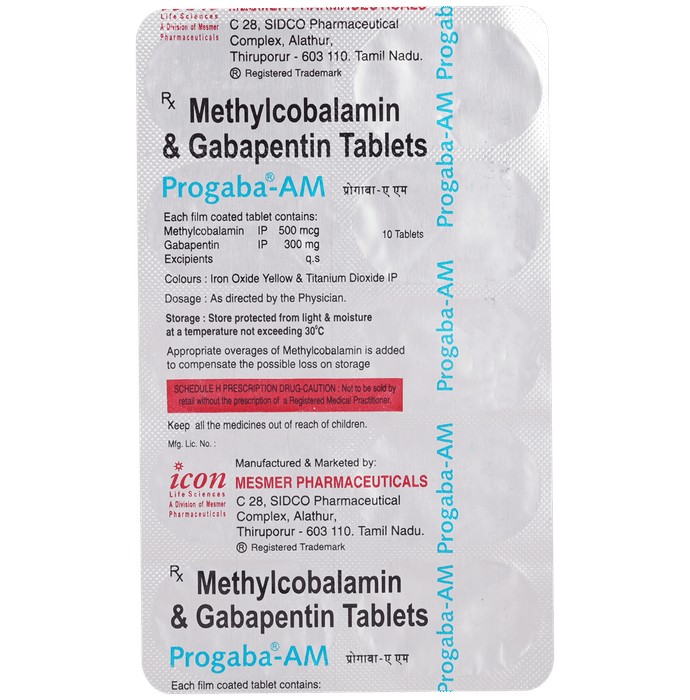
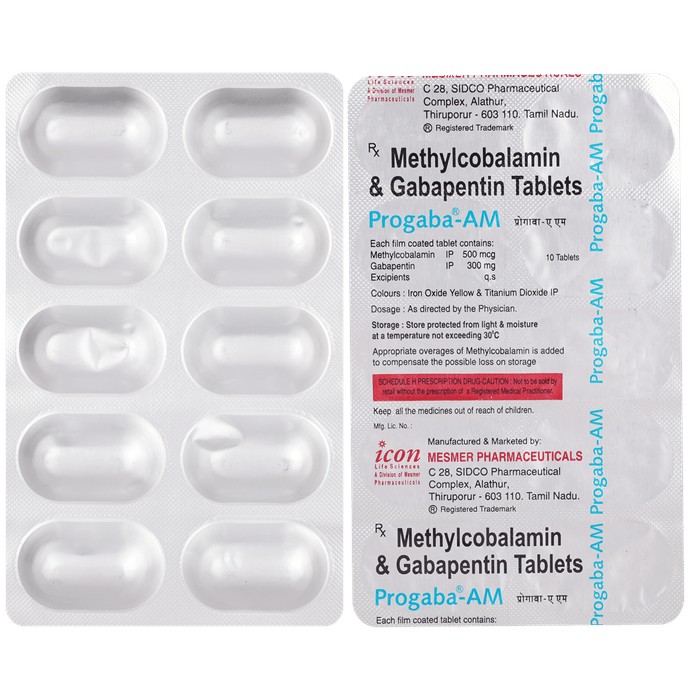
Progaba AM Tablet

Marketer
Icon Life Sciences
Salt Composition
Gabapentin (300mg) + Methylcobalamin (500mcg)
Overview Progaba AM Tablet
Neuropathic pain is effectively managed with Progaba AM Tablet, a combined medication. Its mechanism involves modulating nerve cell calcium channel activity to reduce pain perception. Administered orally, Progaba AM is taken with or without food, ideally before sleep, consistently at the same time daily for optimal blood levels. Dosage and duration should strictly adhere to your physician's instructions. Missed doses should be taken immediately upon recall. Complete the prescribed course, even with symptom improvement. Discontinuation requires prior consultation with your doctor. Common side effects include nausea, swelling in the extremities (peripheral edema), uncoordinated movement (ataxia), blurred vision, fever, and involuntary eye movement (nystagmus). Dizziness and drowsiness are possible; avoid activities requiring alertness until its effects are known. Report any unusual mood shifts, new or worsening depression, or suicidal ideation to your physician immediately. Pregnant or breastfeeding individuals, or those planning pregnancy, must inform their doctor before use. While generally compatible with other medications, certain drugs (including antacids and alcohol) can interfere with its efficacy and heighten adverse reactions.
Primary Ingredients of Progaba AM Tablet
No information provided. A rephrased version cannot be created.
Uses of Progaba AM Tablet
Managing neuropathic pain
Major Benefits of Progaba AM Tablet:
Follow your doctor's instructions precisely regarding dosage and treatment length for this medication. The tablet should be swallowed whole; avoid chewing, crushing, or breaking it. Progaba AM Tablet can be ingested with or without food, although consistent timing is recommended.
Common Side effects of Progaba AM Tablet:
- Dizziness
- Sleepiness
- Tiredness
How to use Progaba AM Tablet:
Follow your doctor's instructions precisely regarding dosage and treatment length for this medication. The tablet should be swallowed whole; do not crush, chew, or break it. Progaba AM Tablet can be administered with or without food, although consistent timing is recommended.
How Progaba AM Tablet works:
Progaba AM Tablet unites Gabapentin and Methylcobalamin to alleviate neuropathic pain. Gabapentin, an alpha-2-delta ligand, reduces pain signals by altering calcium channel function in nerve cells. Methylcobalamin, a B vitamin, promotes myelin production, shielding nerve fibers and aiding the repair of damaged neurons. This synergistic action provides relief from nerve-related pain.
SAFETY ADVICE
 AlcoholUNSAFE
Taking Progaba AM Tablet with alcohol can lead to significant sleepiness.
 PregnancyCONSULT YOUR DOCTOR
The use of Progaba AM Tablet during pregnancy may pose risks. While human data is scarce, animal research indicates potential harm to a fetus. A physician will assess the potential advantages against any possible dangers prior to prescribing. Seek medical advice.
 Breast feedingCONSULT YOUR DOCTOR
The use of Progaba AM Tablet while breastfeeding is likely inadvisable. Available human data indicates potential transfer of the medication into breast milk, posing a possible risk to the infant.
 DrivingUNSAFE
Taking Progaba AM Tablets might reduce attentiveness, impair vision, and cause drowsiness or dizziness. Driving should be avoided if these effects are experienced.
 KidneyCAUTION
Patients with impaired kidney function should use Progaba AM Tablets judiciously, potentially requiring dosage modification. Physician consultation is advised.
 LiverCONSULT YOUR DOCTOR
Data regarding Progaba AM Tablet use in individuals with hepatic impairment is scarce. Physician consultation is advised.
What if you forget to take Progaba AM Tablet :
Should you forget a Progaba AM Tablet dose, take it promptly. Nevertheless, if your next dose is imminent, omit the missed one and resume your usual dosing regimen. Avoid taking a double dose.
Facts to Know About Progaba AM Tablet
| Label | Value |
|---|---|
| Developing Habits | No. |
| Treatment Category | Neuroscience (CNS) |
 3,018 People bought this recently