


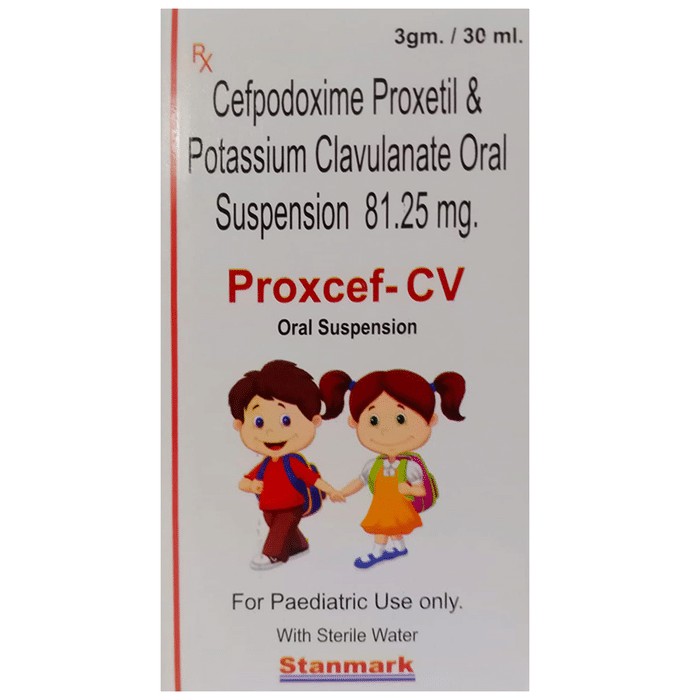
Proxcef-CV Oral Suspension

Marketer
Stanmark Pharmaceuticals
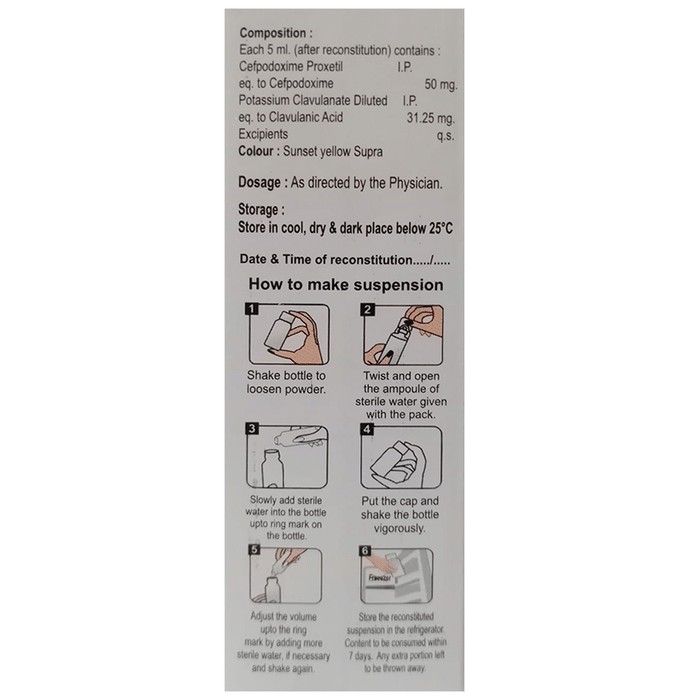
Salt Composition
Cefpodoxime Proxetil (50mg) + Clavulanic Acid (31.25mg)
Overview Proxcef-CV Oral Suspension
Cefprozil and sulbactam oral suspension is a powerful dual-action antibiotic prescribed for children with serious bacterial infections affecting various parts of the body, including the ears, throat, lungs, skin, and urinary system. Its mechanism involves halting bacterial growth, thus controlling infection. Administer this medication to your child one hour before or two hours after meals; however, if stomach upset occurs, give it with food. Always follow the prescribed dosage, tailored to your child's infection, its severity, and their age and weight. If your child vomits the medicine within 30 minutes, repeat the dose; however, avoid doubling the dose if it's near the next scheduled time. Minor, usually transient side effects may include nausea, vomiting, diarrhea, rash, or headache. These typically resolve as your child's body adjusts. Persistent or concerning side effects warrant immediate medical attention. Before starting treatment, fully disclose your child's medical history to their physician, including any allergies, heart conditions, blood disorders, congenital defects, respiratory issues, lung problems, digestive problems, skin conditions, liver dysfunction, or kidney problems. This comprehensive medical information is crucial for accurate dosage and treatment planning.
Uses of Proxcef-CV Oral Suspension
Managing respiratory infections
Major Benefits of Proxcef-CV Oral Suspension:
Follow your doctor's instructions precisely regarding dosage and treatment length for this medication. Always consult the product label for administration guidelines prior to use. Administer the oral suspension using a measuring device and swallow. Ensure thorough shaking before each dose. Proxcef-CV Oral Suspension can be ingested with or without food; however, consistent timing is recommended.
Common Side effects of Proxcef-CV Oral Suspension:
- Nausea
- Diarrhea
- Headache
- Rash
- Abdominal pain
- Vaginal infection
- Fungal infection of vagina
How to use Proxcef-CV Oral Suspension:
Administer this medication precisely as your physician directs, adhering to both the prescribed dosage and duration. Consult the product label for complete instructions prior to consumption. Use a measuring device for accurate dosing and ingest orally. Ensure thorough shaking before each use. Proxcef-CV Oral Suspension can be consumed with or without food; however, consistent timing is recommended.
How Proxcef-CV Oral Suspension works:
Proxcef-CV Oral Suspension blends Cefpodoxime Proxetil, an antibiotic, with Clavulanic Acid, a beta-lactamase inhibitor. Cefpodoxime Proxetil's mechanism involves disrupting bacterial cell wall synthesis, a crucial process for bacterial viability. The Clavulanic Acid component counteracts bacterial resistance mechanisms, thereby boosting Cefpodoxime Proxetil's effectiveness.
SAFETY ADVICE
 KidneySAFE IF PRESCRIBED
Oral Proxcef-CV suspension poses no safety concerns for individuals with kidney impairment; dosage alteration is generally unnecessary. Nevertheless, children exhibiting severe kidney dysfunction might necessitate adjusted dosing. Physician consultation is advised.
 LiverSAFE IF PRESCRIBED
Proxcef-CV Oral Suspension presents no safety concerns for patients with liver disease, and no dosage alteration is necessary. Nevertheless, parental consultation with a physician is advised prior to administering Proxcef-CV Oral Suspension to children with severe hepatic impairment.
What if you forget to take Proxcef-CV Oral Suspension :
Remain calm. If your pediatrician hasn't instructed otherwise, administer the forgotten dose immediately upon recollection. However, omit the missed dose if the next scheduled dose is imminent. Continue adhering to the prescribed medication schedule; avoid doubling the dose to compensate for a missed one.
Facts to Know About Proxcef-CV Oral Suspension
| Label | Value |
|---|---|
| Developing Habits | No. |
| Treatment Category | Infective Agents |
 3,018 People bought this recently