



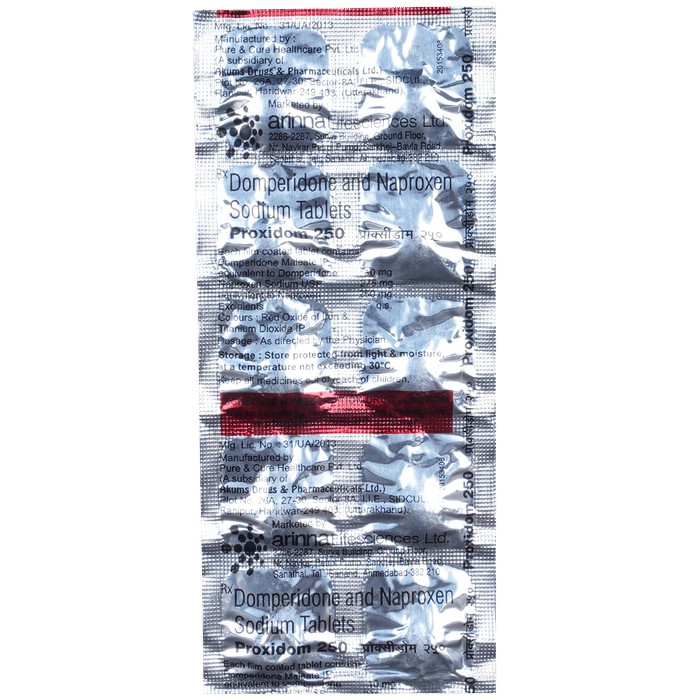
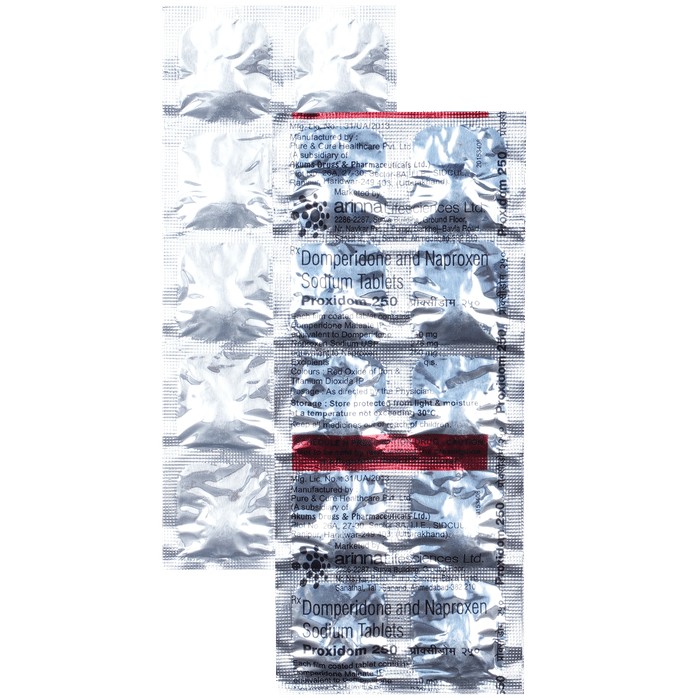
Proxidom 250mg Tablet

Marketer
Arinna Lifescience Pvt Ltd
Salt Composition
Naproxen (250mg)
Overview Proxidom 250mg Tablet
Arthritis Relief 250mg tablets offer effective pain management and inflammation reduction. Beneficial for conditions such as osteoarthritis, rheumatoid arthritis, ankylosing spondylitis, gout, and juvenile arthritis, it also alleviates muscle and joint aches, headaches, toothaches, and menstrual discomfort. For optimal absorption and minimized gastrointestinal upset, consume this medication with food. Always use the lowest effective dose for the shortest duration necessary, maintaining consistent intake to ensure efficacy. Missed doses diminish effectiveness. Common side effects, including upset stomach, abdominal pain, nausea, headache, skin rashes, easy bruising, and swelling, usually resolve spontaneously; however, persistent or worsening symptoms warrant medical attention. Preventive strategies can often be discussed with your physician. While generally well-tolerated, this medication isn't appropriate for everyone. Prior to use, disclose any kidney issues, asthma, blood disorders, or significant alcohol consumption to your doctor. Comprehensive medication disclosure is crucial to ensure safety. Alcohol consumption should be avoided during treatment.
Primary Ingredients of Proxidom 250mg Tablet
No information provided. Please provide the text you wish me to rephrase.
Uses of Proxidom 250mg Tablet
Analgesia
Major Benefits of Proxidom 250mg Tablet:
Follow your doctor's instructions precisely regarding dosage and treatment length for this medication. Ingest the 250mg Proxidom Tablet whole; avoid crushing, chewing, or breaking it. Administer this medication with food.
Common Side effects of Proxidom 250mg Tablet:
- Indigestion
- Abdominal pain
- Nausea
- Headache
- Rash
- Bruise
- Edema (swelling)
How to use Proxidom 250mg Tablet:
Consume this medication precisely as prescribed by your physician, adhering to both the dosage and treatment schedule. Ingest the 250mg Proxidom tablet whole; avoid chewing, crushing, or fracturing it. It should be taken with food.
How Proxidom 250mg Tablet works:
A single Proxidom 250mg tablet contains a non-steroidal anti-inflammatory agent (NSAID) that inhibits the production of specific inflammatory mediators responsible for symptoms such as fever, pain, and localized inflammation (redness and swelling).
SAFETY ADVICE
 AlcoholUNSAFE
Consuming alcohol alongside Proxidom 250mg Tablets poses a safety risk.
 PregnancyCONSULT YOUR DOCTOR
Using Proxidom 250mg tablets during pregnancy may pose risks. While human research is scant, animal studies indicate potential harm to a developing fetus. A physician will assess the advantages against possible risks prior to prescribing. Seek medical advice.
 Breast feedingSAFE IF PRESCRIBED
Using Proxidom 250mg tablets while breastfeeding is considered safe. Research in humans indicates negligible transfer of the medication into breast milk, posing no known risk to the infant.
 DrivingUNSAFE
Taking a 250mg Proxidom tablet can lead to adverse reactions that impair driving. These reactions may include dizziness, depression, drowsiness, fatigue, or sleep disturbances. Visual disturbances are also possible, further impacting driving safety.
 KidneyCAUTION
Individuals with kidney impairment should use Proxidom 250mg tablets cautiously. Dosage modifications for Proxidom 250mg tablets may be necessary. Physician consultation is recommended.
 LiverCAUTION
Patients with liver impairment should use Proxidom 250mg Tablets cautiously; dosage modification may be necessary. A physician's consultation is advised.
What if you forget to take Proxidom 250mg Tablet :
Should you forget a Proxidom 250mg Tablet dose, take it immediately. Nevertheless, if your next dose is imminent, omit the missed dose and resume your usual dosing regimen. Avoid taking a double dose.
Facts to Know About Proxidom 250mg Tablet
| Label | Value |
|---|---|
| Chemical Category | Propionates |
| Developing Good Habits | No. |
| Treatment Category | Pain Relievers |
| Actions | Nonselective COX-1 and COX-2 inhibitors (propionic acid derivatives) |
 3,018 People bought this recently