Search Icon

AUM Pharmacy

Hi there!

Hello, Login
All Categories
VisaVisaVisa
slide-0
slide-1
slide-2
slide-3
slide-4
slide-5

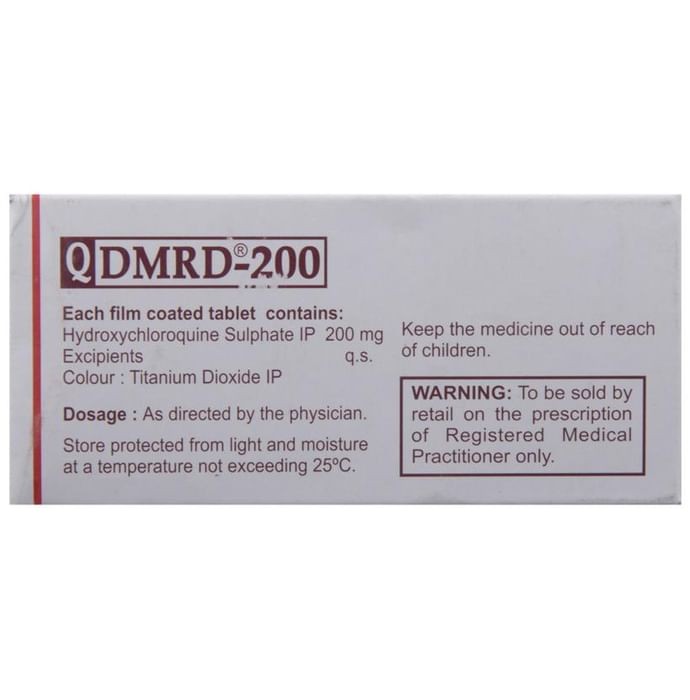
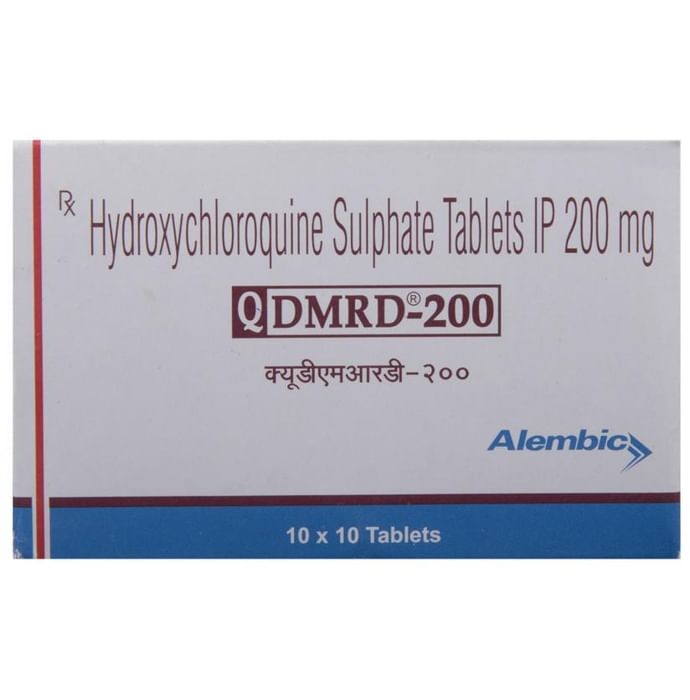
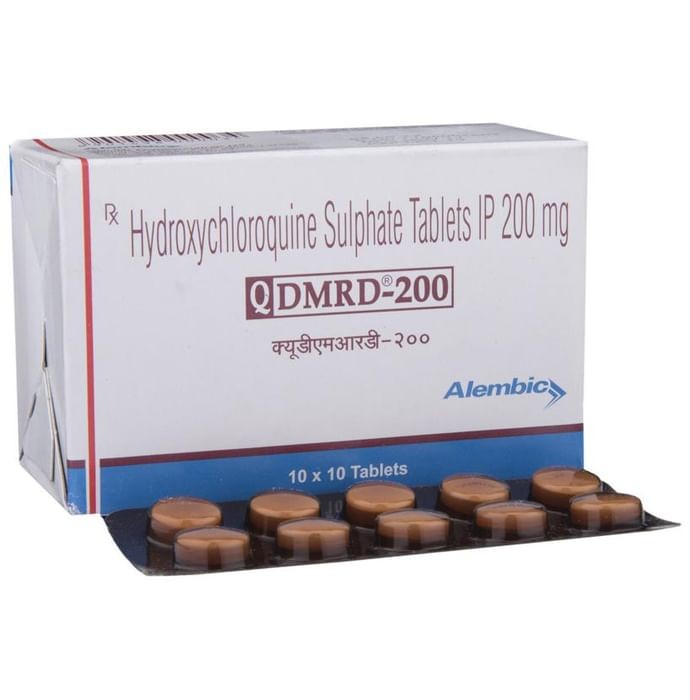
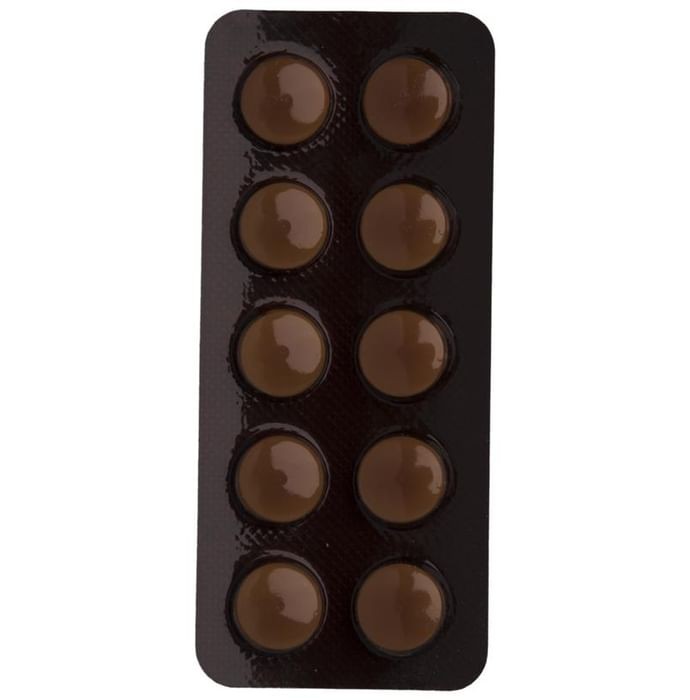
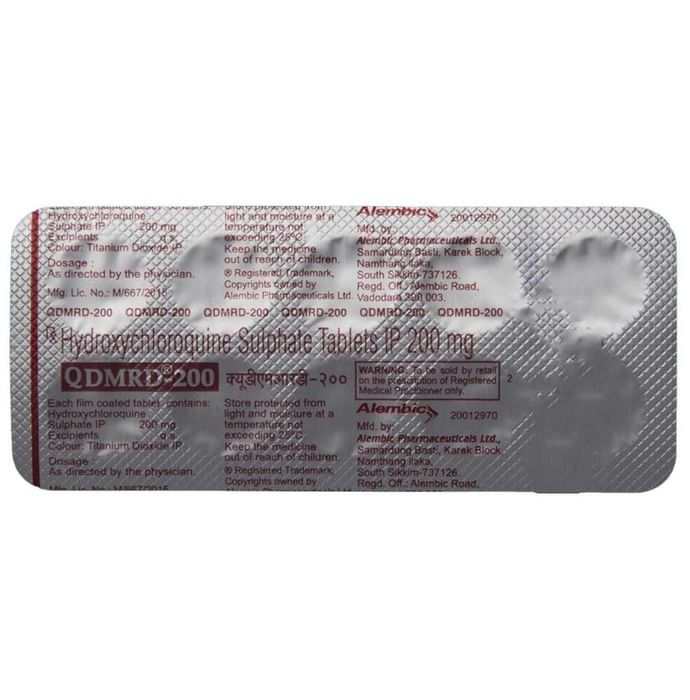
Qdmrd 200 Tablet

Prescription Icon
Prescription Required

Marketer

Alembic Pharmaceuticals Ltd

Salt Composition

Hydroxychloroquine (200mg)

Overview Qdmrd 200 Tablet

Qdmrd 200 Tablets are indicated for managing autoimmune disorders like rheumatoid arthritis and lupus, mitigating disease advancement and alleviating symptoms such as pain, inflammation, and erythema. Furthermore, they enhance glycemic regulation in type 2 diabetes. Administer Qdmrd 200 Tablets with food to minimize gastrointestinal distress. Consistent, daily dosing at the same time maximizes therapeutic efficacy. Continue the prescribed regimen as directed, even with symptom improvement. Common adverse effects include nausea, emesis, diarrhea, and abdominal discomfort. Persistent or worsening side effects warrant medical attention; management strategies may be available to mitigate these. Prior to initiating treatment, disclose any pre-existing cardiac, renal, or hepatic conditions, and detail all concurrent medications. This medication is contraindicated in patients with retinal or visual field abnormalities and is not recommended for long-term pediatric use. Regular ophthalmologic examinations may be advised during treatment. Consult your physician before using this medication during pregnancy or breastfeeding.

Uses of Qdmrd 200 Tablet

Management of type 2 diabetes | Rheumatoid arthritis therapy | Systemic lupus erythematosus (SLE) management

Major Benefits of Qdmrd 200 Tablet:

Consume this medication precisely as directed by your physician, adhering to the prescribed dosage and timeframe. Ingest the tablet whole; avoid chewing, crushing, or fracturing it. It's recommended to take Qdmrd 200 Tablet with a meal.

Common Side effects of Qdmrd 200 Tablet:

  • Skin rash
  • Itching
  • Affect lability
  • Abdominal pain
  • Blurred vision
  • Headache
  • Decreased appetite
  • Diarrhea
  • Vomiting
  • Nausea

How to use Qdmrd 200 Tablet:

Consume this medication precisely as directed by your physician, adhering to both the prescribed dosage and treatment period. Ingest the tablet whole; avoid chewing, crushing, or fracturing it. The Qdmrd 200 Tablet should be administered with a meal.

How Qdmrd 200 Tablet works:

Qdmrd 200 Tablets function as a disease-modifying antirheumatic medication (DMARD), effectively dampening the immune system's excessive response responsible for joint inflammation and pain. This action mitigates the underlying disease's advancement. Furthermore, evidence suggests that its active compound, hydroxychloroquine, might enhance insulin responsiveness and pancreatic beta-cell activity, potentially leading to improved blood sugar management in individuals with type 2 diabetes.

SAFETY ADVICE

AlcoholAlcoholCAUTION

Use of Qdmrd 200 Tablet with alcohol requires careful consideration. Seek medical advice before combining them.

PregnancyPregnancySAFE IF PRESCRIBED

The medication Qdmrd 200 Tablet presents minimal to no documented risk to the fetus during gestation, according to the majority of research.

Breast feedingBreast feedingSAFE IF PRESCRIBED

The medication Qdmrd 200 Tablet poses no known breastfeeding risk. Research in humans indicates minimal drug transfer to breast milk, presenting no apparent infant hazard.

DrivingDrivingUNSAFE

Qdmrd 200 Tablet may induce adverse reactions impacting driving capabilities. Visual disturbances are a potential side effect, potentially impairing driving ability.

KidneyKidneyCAUTION

Patients with kidney impairment should use Qdmrd 200 Tablets cautiously, potentially requiring dosage modification. Physician consultation is advised. This medication may impact vision; routine eye examinations are recommended during treatment.

LiverLiverCAUTION

Individuals with liver impairment should exercise caution when using Qdmrd 200 Tablets. Dosage modification may be necessary; physician consultation is advised.

What if you forget to take Qdmrd 200 Tablet :

Should you forget to take a Qdmrd 200 Tablet, administer it at your earliest convenience. Nevertheless, if your next scheduled dose is imminent, omit the missed dose and resume your usual dosing regimen. Avoid taking a double dose.

Facts to Know About Qdmrd 200 Tablet

LabelValue
Type of Compound Aminoquinoline-based compound
Addiction potential None.
Medication Classification Medications for Pain Relief

FAQs on Qdmrd 200 Tablet

Clinical trials are evaluating Qdmrd 200 Tablet's potential to prevent and treat COVID-19. Preclinical laboratory testing demonstrates some antiviral activity against the novel coronavirus. Nevertheless, conclusive evidence of efficacy in humans is still pending.
India's COVID-19 task force, established by the ICMR, advises using Qdmrd 200 Tablets solely for coronavirus prevention within specific high-risk groups—individuals with heightened virus exposure risk or facing emergencies. This prophylactic measure is suggested for asymptomatic healthcare personnel treating suspected or confirmed COVID-19 patients, and asymptomatic household members of positive cases.
We do not carry Qdmrd 200 Tablets. If you believe you have a novel coronavirus infection, seek immediate medical attention and adhere to your doctor's instructions. Avoid self-medicating with Qdmrd 200 Tablets; this medication should only be used under a physician's direction.
Qdmrd 200 Tablets are indicated for coronavirus prophylaxis solely in specified high-risk populations or urgent circumstances. Adherence to the physician's prescribed dosage, schedule, and treatment length is mandatory.
Qdmrd 200 Tablet is an oral medication administered as a tablet. To minimize stomach discomfort and nausea, ingest it with food or milk. Adhere strictly to the physician's prescribed dosage and duration, completing the entire course. Consistent daily use, as directed by your doctor, is crucial. Discontinue use only after consulting your physician. If also using antacids, separate Qdmrd 200 Tablet administration by at least four hours.
Individuals using Qdmrd 200 Tablets who experience symptoms consistent with COVID-19, including elevated temperature, cough, fatigue, or respiratory distress, must seek immediate medical attention. Their physician will determine the need for coronavirus testing and isolation, and all their recommendations should be followed meticulously.
The therapeutic impact of HCQS unfolds gradually. Significant symptom improvement in rheumatoid arthritis and other autoimmune conditions might not be apparent for several weeks or even months. Consistent medication adherence is crucial. Bridge therapy with supplementary drugs may be provided by your physician to manage symptoms in the meantime.
While infrequent, hydroxychloroquine (HCQS) can impair vision, particularly with high dosages or prolonged use (exceeding five years). Visual disturbances might manifest as difficulty reading or perceiving details (missing words, letters, or object parts), photosensitivity, blurred distance vision, or experiencing flashes or streaks of light. Report any such symptoms to your physician promptly. They may conduct ophthalmological examinations to determine if treatment with HCQS should cease. Regular eye exams may also be recommended for patients on long-term HCQS therapy.
Prior to commencing HCQS therapy, an ophthalmological examination is mandatory and should be repeated annually. Furthermore, routine monitoring of complete blood counts (CBC) and liver function tests (LFTs) may be recommended by your physician. Treatment with HCQS may be ceased if any irregularities are identified.
Qdmrd 200 Tablet, an antimalarial drug, possesses anti-inflammatory and immune-regulating effects. It is distinct from steroids, opioids, and analgesics. In malaria, this medication eradicates the causative parasite. For rheumatoid arthritis, it alleviates joint inflammation, offering symptomatic relief.
Concurrent use of ibuprofen and hydroxychloroquine is acceptable; these medications exhibit no clinically significant interactions.
Discontinuing HCQS treatment prematurely, without physician guidance, could exacerbate your condition. Consequently, do not discontinue HCQS unless advised to do so by your doctor, regardless of any perceived improvement in symptoms.
Individuals with diabetes should exercise caution when taking HCQS, as it can significantly reduce blood glucose, potentially causing severe hypoglycemia and loss of consciousness. Closely monitor blood sugar levels; if they drop, seek immediate medical attention. Your physician may adjust your diabetes medication dosage based on your blood glucose readings.
Confirmation: HCQS can be administered; however, a minimum four-hour interval between HCQS and antacid ingestion is crucial. Failure to observe this interval risks antacid interference with HCQS absorption and efficacy, potentially diminishing the medication's therapeutic effect.
Research is underway to evaluate the potential of Qdmrd 200 Tablets to prevent and treat COVID-19. Human clinical trials are currently investigating its efficacy. Preclinical laboratory testing has demonstrated some antiviral activity against the novel coronavirus; however, additional data are necessary to confirm its effectiveness in combating the virus.
India's COVID-19 task force (established by the ICMR) advises Qdmrd 200 Tablet solely for novel coronavirus prevention within specific high-risk groups (individuals with elevated exposure risk) or emergencies. Prophylactic use is suggested for asymptomatic healthcare personnel treating suspected or confirmed COVID-19 patients, and asymptomatic household members of confirmed cases.
We do not carry Qdmrd 200 Tablets. If you believe you may have COVID-19, seek immediate medical attention and adhere to your physician's instructions. Avoid self-medicating with Qdmrd 200 Tablets; this medication requires a doctor's prescription.
The antiviral medication, Qdmrd 200 Tablet, is indicated for coronavirus prophylaxis solely in specified high-risk populations or during emergencies. Adherence to the physician's prescribed dosage, schedule, and treatment length is mandatory.
Qdmrd 200 Tablet is an oral medication administered as a tablet. To minimize stomach discomfort and nausea, ingestion should be accompanied by food or milk. Adhere strictly to the dosage and treatment schedule prescribed by your physician, completing the entire course. Consistent use of Qdmrd 200 Tablet, as directed by your doctor, is crucial. Discontinuation should only occur following consultation with your physician. If you are concurrently using antacids, ensure a minimum four-hour interval between administration of Qdmrd 200 Tablet and these medications.
Individuals prescribed Qdmrd 200 Tablets experiencing symptoms consistent with COVID-19 (including fever, cough, fatigue, or respiratory distress) during treatment should seek immediate medical attention. A physician will determine the need for coronavirus testing and isolation. Patients must adhere to all physician recommendations.
Hydroxychloroquine's therapeutic impact unfolds gradually. Symptom improvement in rheumatoid arthritis and similar autoimmune conditions might not be apparent for several weeks, or even months. Consistent medication adherence is crucial. Bridge therapy with supplemental drugs for immediate symptom management may be implemented by your physician.
While infrequent, visual disturbances can occur with HCQS, particularly with higher dosages or prolonged use (exceeding five years). These may manifest as difficulty reading or perceiving images (missing words, letters, or parts of objects), photosensitivity, blurred distance vision, and the perception of flashing or streaking lights. Report any such symptoms to your physician promptly. They may conduct ophthalmological examinations and determine the need to cease HCQS treatment (Qdmrd 200 Tablet). Regular eye exams might also be recommended for those prescribed HCQS.
Prior to commencing HCQS therapy, an ophthalmologic examination is mandatory, and should be repeated annually. Periodic monitoring of complete blood counts (CBC) and liver function tests (LFTs) may also be recommended by your physician. Treatment with HCQS may be ceased if any irregularities are identified.
Qdmrd 200 Tablet, possessing anti-inflammatory and immunomodulatory actions, functions as an antimalarial drug. This medication is neither a steroid, opioid, nor analgesic. In cases of malaria, it eradicates the causative parasite. For rheumatoid arthritis, it mitigates joint inflammation, offering symptomatic relief.
Concurrent use of ibuprofen and HCQS is acceptable; these medications lack clinically significant interactions and do not impair each other's efficacy.
Discontinuing HCQS treatment prematurely, without physician guidance, could lead to a worsening of your condition. Consequently, do not discontinue HCQS unless advised to do so by your doctor, regardless of any improvement in symptoms.
Individuals with diabetes should exercise caution when taking HCQS. This medication can significantly reduce blood sugar, potentially causing severe hypoglycemia and loss of consciousness. Closely monitor blood glucose levels; if a drop occurs, seek immediate medical attention. Your physician may adjust your diabetes medication dosage based on your blood sugar readings.
Hydroxychloroquine (HCQS) can be taken, but ensure a minimum four-hour interval separates its administration from any antacid use. Failure to observe this interval could hinder HCQS absorption and efficacy, potentially reducing its therapeutic effect.
Qdmrd 200 Tablet
61
MRP 71
14% off
