


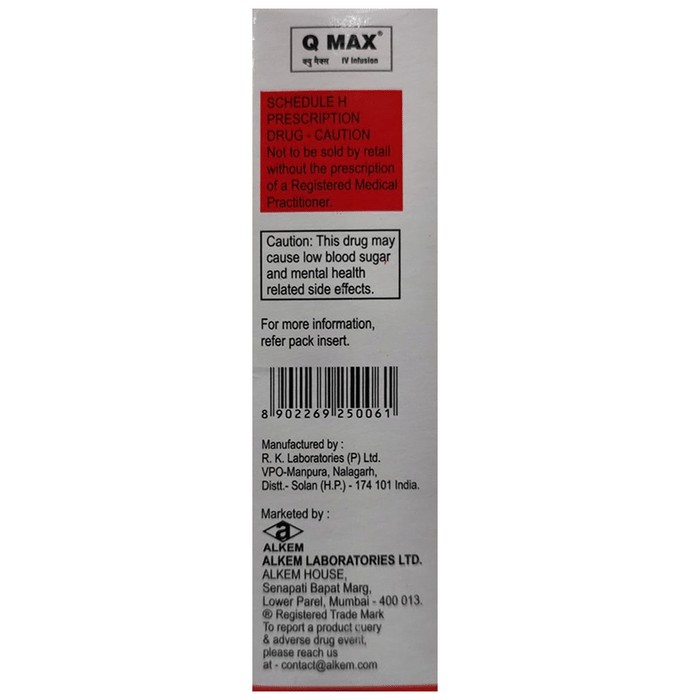
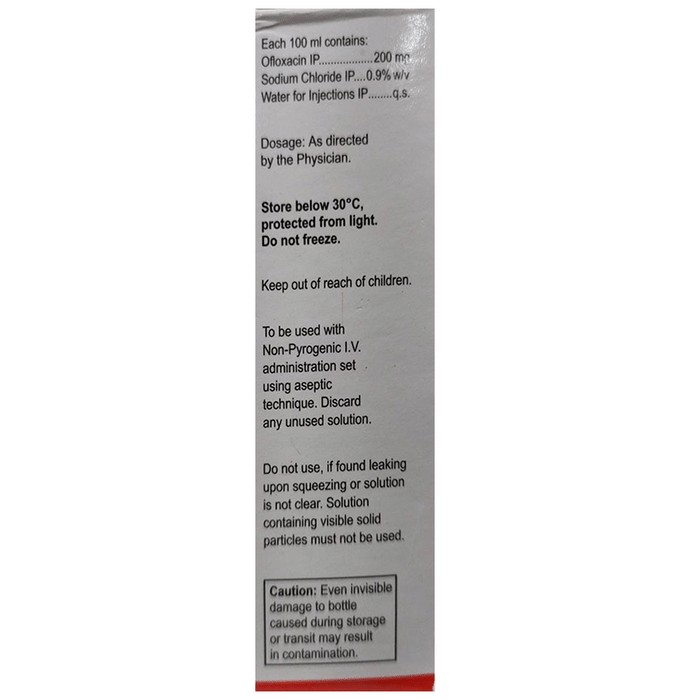
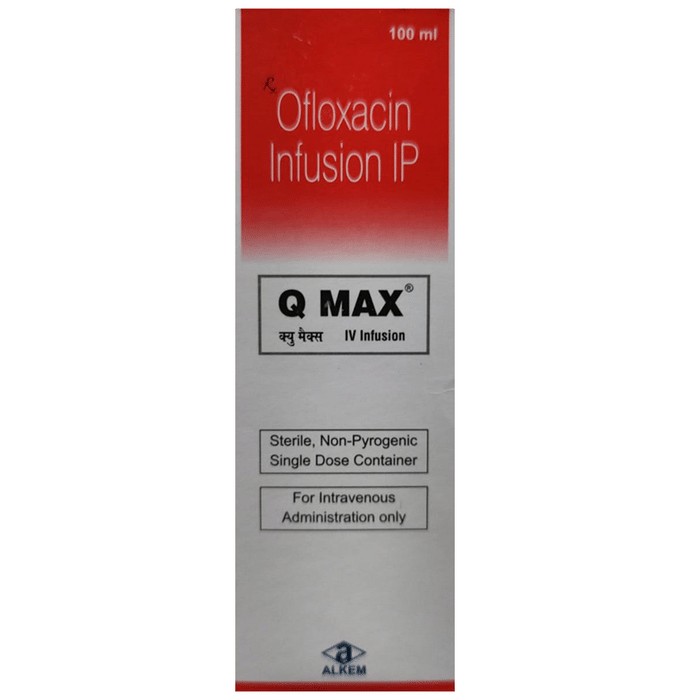
Qmax 200mg Infusion

Marketer
Alkem Laboratories Ltd
Salt Composition
Ofloxacin (200mg)
Overview Qmax 200mg Infusion
Qmax 200mg intravenous infusion combats bacterial infections, effectively treating ailments affecting the urinary tract, respiratory system (including pneumonia), and skin/soft tissues. Its mechanism involves inhibiting the proliferation of infectious agents. Administered intravenously by a healthcare provider – strictly not for self-injection – this antibiotic is reserved for situations where oral intake is impractical (e.g., hospitalized or comatose patients). Complete the prescribed course, even with symptom improvement, to ensure eradication of the infection. Common side effects might include nausea, headache, dizziness, and vomiting, alongside localized injection site reactions (pain, swelling, redness). While typically transient, persistent side effects warrant medical consultation. Diarrhea, another potential side effect, usually subsides upon treatment completion; however, persistent diarrhea or bloody stools necessitate immediate physician notification. Individuals with known allergies to any component should refrain from using this medication. Seek immediate medical help for severe allergic reactions, indicated by rash, facial/lingual swelling, respiratory distress, or breathing difficulties. Patients with impaired kidney function require close monitoring during treatment.
Uses of Qmax 200mg Infusion
Managing bacterial infections
Major Benefits of Qmax 200mg Infusion:
This medication will be administered by your healthcare provider. Self-medication is strictly prohibited.
Common Side effects of Qmax 200mg Infusion:
- Nausea
- Headache
- Dizziness
- Itching
- Insomnia (difficulty in sleeping)
- Rash
- Genital itching
- Vaginal inflammation
- Phlebitis
- Injection site reactions (pain, swelling, redness)
How to use Qmax 200mg Infusion:
This medication will be administered by your healthcare provider. Self-medication is strongly discouraged.
How Qmax 200mg Infusion works:
Qmax 200mg infusion is a bactericidal antibiotic that inhibits the activity of bacterial DNA-gyrase. This enzyme inhibition disrupts bacterial cell replication and repair mechanisms, leading to bacterial cell death.
SAFETY ADVICE
 AlcoholUNSAFE
Alcohol and Qmax 200mg Infusion should not be consumed together due to safety concerns.
 PregnancyCONSULT YOUR DOCTOR
Administering Qmax 200mg Infusion during pregnancy may pose risks. While human data is scarce, animal research indicates potential harm to the fetus. A physician will assess the advantages against possible hazards prior to prescribing. Seek medical advice.
 Breast feedingCONSULT YOUR DOCTOR
Administering Qmax 200mg Infusion while breastfeeding is likely inadvisable. Available human data indicates potential transfer to breast milk, posing a possible risk to the infant.
 DrivingUNSAFE
Administering Qmax 200mg intravenously can induce drowsiness, visual disturbances, and dizziness. Driving should be avoided if these effects manifest.
 KidneyCAUTION
Administering Qmax 200mg Infusion requires careful consideration in individuals with impaired renal function. Dosage modification for Qmax 200mg Infusion might be necessary. Physician consultation is advised.
 LiverCAUTION
Administering Qmax 200mg Infusion to patients with hepatic impairment requires careful consideration. Dosage modification for Qmax 200mg Infusion might be necessary. Physician consultation is advised.
What if you forget to take Qmax 200mg Infusion :
Omit a Qmax 200mg Infusion dose? Seek medical advice immediately.
Facts to Know About Qmax 200mg Infusion
| Label | Value |
|---|---|
| Pharmaceutical Category | Quinolone antibiotic |
| Addictive | None. |
| Medication Classification | Antimicrobial Agents |
| Mechanism of Action | Fluoroquinolone antibiotics |
 3,018 People bought this recently