




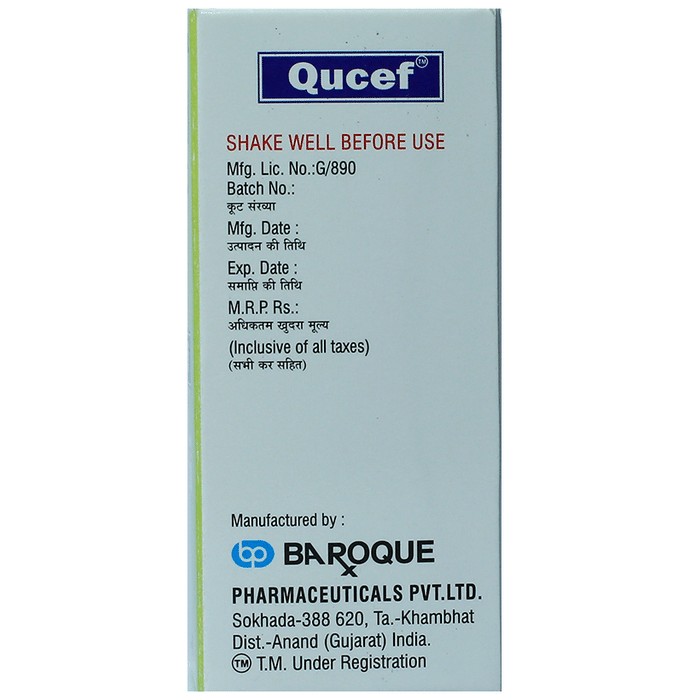
Qucef Oral Suspension

Marketer
Baroque Pharmaceuticals Pvt Ltd
Salt Composition
Cefpodoxime Proxetil (50mg)
Overview Qucef Oral Suspension
Pediacef liquid is an antibacterial medication used to treat various bacterial infections in children. It effectively combats infections affecting the ears, eyes, nose, throat, lungs, skin, digestive system, and urinary tract, including typhoid fever in children and teens. Administer this medication to your child one hour before or two hours after meals; however, if stomach upset occurs, give it with food. Always follow the prescribed dosage, tailored to your child's infection, its severity, age, and weight. If your child vomits the medicine within 30 minutes, repeat the dose; however, avoid doubling the dose if it's near the next scheduled administration. Do not use this antibiotic for typical cold or flu symptoms, as it's ineffective against viral infections. Its use for cough and cold is only warranted when a secondary bacterial infection is confirmed. Minor, transient side effects such as vomiting, diarrhea, nausea, rash, and headache may occur, usually resolving as your child adjusts. Persistent or concerning side effects necessitate immediate medical attention. Ensure your child's doctor has a complete medical history, including allergies, heart conditions, blood disorders, birth defects, respiratory issues, lung problems, digestive issues, skin conditions, liver problems, and kidney function. This comprehensive information is vital for accurate dosing and effective treatment planning.
Uses of Qucef Oral Suspension
Combating Bacterial Infections
Major Benefits of Qucef Oral Suspension:
Administer this medication precisely as prescribed by your physician, adhering to both the dosage and treatment length. Always consult the product label for usage instructions prior to consumption. Use a measuring device for accurate dosing and ingest orally. Ensure thorough shaking before each use. Qucef Oral Suspension should be taken with meals.
Common Side effects of Qucef Oral Suspension:
- Abdominal pain
- Rash
- Nausea
- Diarrhea
How to use Qucef Oral Suspension:
Administer this medication orally, following your physician's prescribed dosage and schedule. Always consult the product label for instructions prior to consumption. Use a measuring device for accurate dispensing and ingest with food. Ensure thorough shaking before each dose. Qucef Oral Suspension requires ingestion with a meal.
How Qucef Oral Suspension works:
Cefixime oral suspension is an antibacterial medication. Its mechanism of action involves disrupting the synthesis of bacterial cell walls, a crucial structural component for bacterial viability. This action halts bacterial proliferation and infection spread, while mitigating the risk of developing antibiotic resistance.
SAFETY ADVICE
 KidneySAFE IF PRESCRIBED
Oral Qucef suspension poses no safety concerns for individuals with kidney impairment and does not necessitate dosage alterations. Nevertheless, children exhibiting severe kidney dysfunction may need adjusted dosages.
 LiverCAUTION
Patients with liver impairment should use Qucef Oral Suspension judiciously; dosage modification may be necessary. Physician consultation is advised.
What if you forget to take Qucef Oral Suspension :
Remain calm. Unless otherwise directed by your pediatrician, administer the forgotten dose immediately upon recollection. Omit the missed dose if the next scheduled dose is imminent. Adhere to the recommended dosage schedule; avoid doubling the dose to compensate for a missed one.
Facts to Know About Qucef Oral Suspension
| Label | Value |
|---|---|
| Type of Compound | Extended-coverage cephalosporins (including third- and fourth-generation agents) |
| Potential for Dependence | None. |
| Medication Classification | Drugs combating infection |
| Mechanism of Action | Third-generation cephalosporin antibiotics. |
 3,018 People bought this recently