


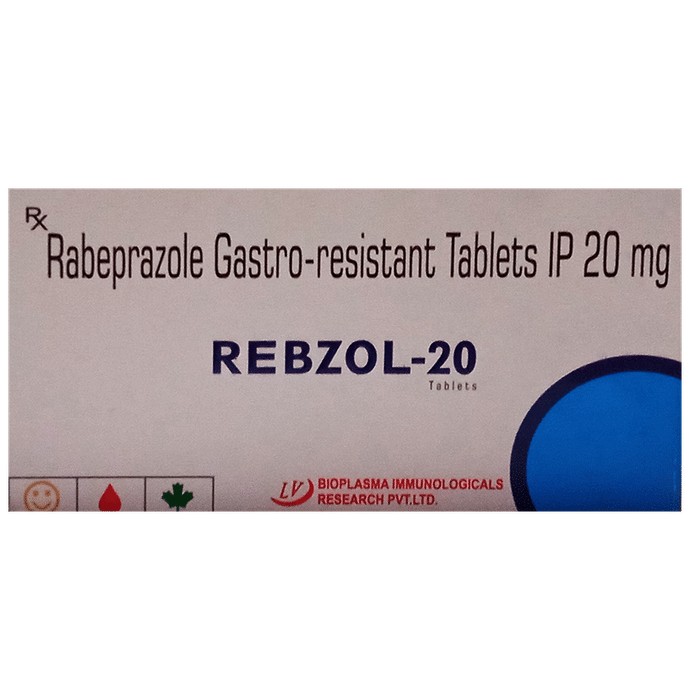
Rebzol 20 Tablet

Marketer
Bioplasma Immunological Research Pvt Ltd
Salt Composition
Rabeprazole (20mg)
Overview Rebzol 20 Tablet
Acidulin 20mg tablets lessen stomach acid production. They treat acid-related disorders of the stomach and intestines, including acid reflux, peptic ulcers, and Zollinger-Ellison syndrome, offering symptom relief and aiding healing. Take one tablet an hour before meals, ideally in the morning, as directed by your physician; dosage depends on your condition and response. Maintain consistent daily timing even if symptoms subside rapidly. Dietary adjustments—smaller, more frequent meals, avoiding caffeine, spicy food, and fatty foods—can be beneficial. Common, usually mild, side effects include nausea, vomiting, headache, dizziness, gas, diarrhea, and abdominal pain. Report persistent or bothersome effects to your doctor. Prolonged use (over a year), particularly at higher doses, may raise fracture risk. Discuss bone health (osteoporosis) prevention, including calcium and vitamin D supplementation, with your doctor. Hypomagnesemia (low magnesium) can occur after three months or more of use; symptoms may include fatigue, confusion, dizziness, muscle spasms, and irregular heartbeat. Your doctor may monitor your magnesium levels. Acidulin 20mg is unsuitable for those with severe liver disease, those taking HIV medications, those with a history of similar medication allergies, or those with osteoporosis. Pregnant or breastfeeding individuals should consult their doctor. Alcohol should be avoided as it increases stomach acid. Refrain from operating machinery if dizziness or drowsiness occurs.
Uses of Rebzol 20 Tablet
Managing gastroesophageal reflux, peptic ulcers, and Zollinger-Ellison syndrome.
Major Benefits of Rebzol 20 Tablet:
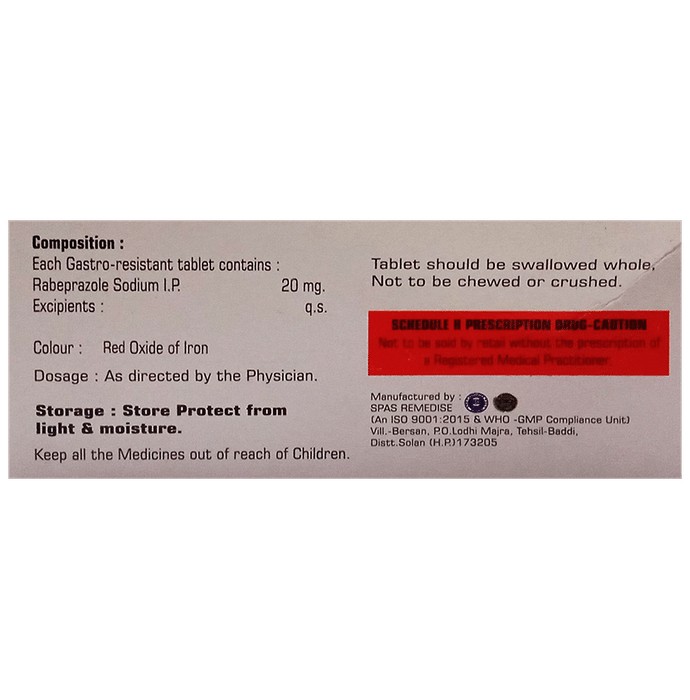
Consume this medication precisely as your physician directs, adhering to the prescribed dosage and timeframe. Ingest the tablet whole; avoid chewing, crushing, or fracturing it. Administer Rebzol 20 Tablet on an empty stomach.
Common Side effects of Rebzol 20 Tablet:
- Diarrhea
- Dizziness
- Flatulence
- Headache
- Nausea
- Sore throat
- Stomach pain
- Vomiting
How to use Rebzol 20 Tablet:
Consume this medication precisely as your physician directs, adhering to both the prescribed dosage and treatment length. Ingest the tablet whole; avoid chewing, crushing, or fracturing it. Administer Rebzol 20 Tablet on an empty stomach.
How Rebzol 20 Tablet works:
Acid reflux and indigestion symptoms find relief with Rebzol 20 Tablet, a proton pump inhibitor (PPI) that diminishes stomach acid production.
SAFETY ADVICE
 AlcoholCAUTION
It's recommended to avoid alcohol while taking Rebzol 20 Tablet. Seek medical advice before combining them.
 PregnancyCONSULT YOUR DOCTOR
Pregnancy and the use of Rebzol 20 Tablet may pose risks. While human research is scarce, animal studies indicate potential harm to a fetus. A physician will assess the advantages against possible dangers prior to prescription. Seek medical advice.
 Breast feedingCONSULT YOUR DOCTOR
The use of Rebzol 20 Tablet while breastfeeding is likely inadvisable. Preliminary data from human studies indicate potential transfer of the medication into breast milk, posing a possible risk to the infant.
 DrivingUNSAFE
Taking Rebzol 20 Tablet might reduce attentiveness, impair vision, and cause drowsiness or dizziness. Driving should be avoided if these effects are experienced.
 KidneySAFE IF PRESCRIBED
Patients with kidney disease can safely take Rebzol 20 Tablets without requiring any modification to the prescribed dosage.
 LiverSAFE IF PRESCRIBED
Patients with liver disease can safely use Rebzol 20 Tablets without any necessary dosage modifications.
What if you forget to take Rebzol 20 Tablet :
Should you forget a Rebzol 20 Tablet dose, take it immediately. Nevertheless, if your next dose is imminent, omit the missed dose and resume your usual dosing regimen. Avoid taking a double dose.
Facts to Know About Rebzol 20 Tablet
| Label | Value |
|---|---|
| Pharmaceutical Classification | Benzimidazole sulfoxide |
| Potential for Dependence | None. |
| Type of Medication | Gastrointestinal tract |
| Mechanism of Action | Gastric acid secretion suppressants |
 3,018 People bought this recently