


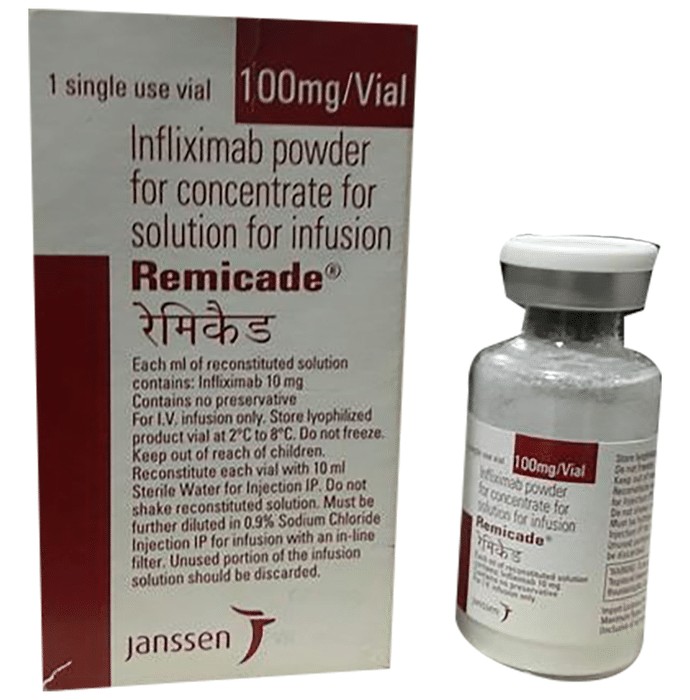
Remicade Injection

Marketer
Janssen Pharmaceuticals
Salt Composition
Infliximab (100mg)
Overview Remicade Injection
Infliximab (Remicade) is administered intravenously to manage inflammatory disorders affecting the joints (rheumatoid, psoriatic, and ankylosing spondylitis), skin (psoriasis), and intestines (Crohn's disease and ulcerative colitis). Its mechanism involves TNF-alpha inhibition, reducing inflammation. Infusion is performed under medical supervision with continuous patient monitoring. Dosage and frequency are determined individually by your physician to optimize symptom control; adherence to the prescribed injection schedule is crucial for effective symptom relief. Common adverse effects include headache, sinusitis, upper respiratory infections, abdominal discomfort, and sore throat. Infusion reactions, manifested as fever, chills, or sweating, can occur. Persistent or troublesome side effects warrant immediate medical consultation. Increased susceptibility to infections is a potential risk; promptly report any infection symptoms (fever, cough, rash, diarrhea, or influenza-like illness). Prior to treatment, disclose any history of heart failure, tuberculosis, other significant infections (e.g., pneumonia), or hepatitis B. Pregnant or breastfeeding individuals require physician consultation. Interactions with other medications are possible; inform your doctor of all concurrent medications. Regular blood tests will monitor blood cell counts and treatment efficacy. A patient support program, facilitated by Tata 1mg, is available in India; contact your physician or call 1800-102-1618 for details.
Uses of Remicade Injection
Inflammatory joint disease | Spinal inflammatory arthritis | Psoriatic skin condition | Inflammatory bowel disease with rectal involvement | Inflammatory bowel disease with transmural involvement
Major Benefits of Remicade Injection:
This medication will be administered by your healthcare provider. Self-medication is not advised.
Common Side effects of Remicade Injection:
- Headache
- Sinus inflammation
- Upper respiratory tract infection
- Infusion reaction
- Abdominal pain
- Sore throat
How to use Remicade Injection:
This medication will be administered by your healthcare provider. Self-medication is not advised.
How Remicade Injection works:
Infliximab, administered via injection, is a targeted antibody therapy neutralizing tumor necrosis factor (TNF), an inflammatory protein within the immune system, thereby alleviating joint pain and swelling.
SAFETY ADVICE
 AlcoholSAFE
There are no known adverse reactions associated with the concomitant use of Remicade Injection and alcohol.
 PregnancyCONSULT YOUR DOCTOR
Infliximab (Remicade) injection may pose pregnancy risks. While human data is scarce, animal research indicates potential harm to a fetus. A physician will assess the advantages against possible risks prior to prescribing. Physician consultation is advised.
 Breast feedingCAUTION
Infliximab injection necessitates careful consideration while breastfeeding. Lactation should be temporarily discontinued throughout the mother's treatment course and until the medication is fully cleared from her system.
 DrivingCONSULT YOUR DOCTOR
The effect of Remicade Injection on driving ability is unknown. Refrain from driving if you experience symptoms impairing concentration or reaction time.
 KidneyCONSULT YOUR DOCTOR
Data regarding Remicade Injection use in individuals with renal impairment is scarce. Physician consultation is advised.
 LiverCONSULT YOUR DOCTOR
Data regarding Remicade Injection use in individuals with hepatic impairment is scarce. Physician consultation is advised.
What if you forget to take Remicade Injection :
Should you forget a Remicade Injection, contact your physician for guidance.
Facts to Know About Remicade Injection
| Label | Value |
|---|---|
| Chemical Category | Monoclonal antibody |
| Developing Habits | No. |
| Type of Therapy | Pain Relievers |
| Action Category | Biologic Disease-Modifying Antirheumatic Drugs (DMARDs) |
 3,018 People bought this recently