


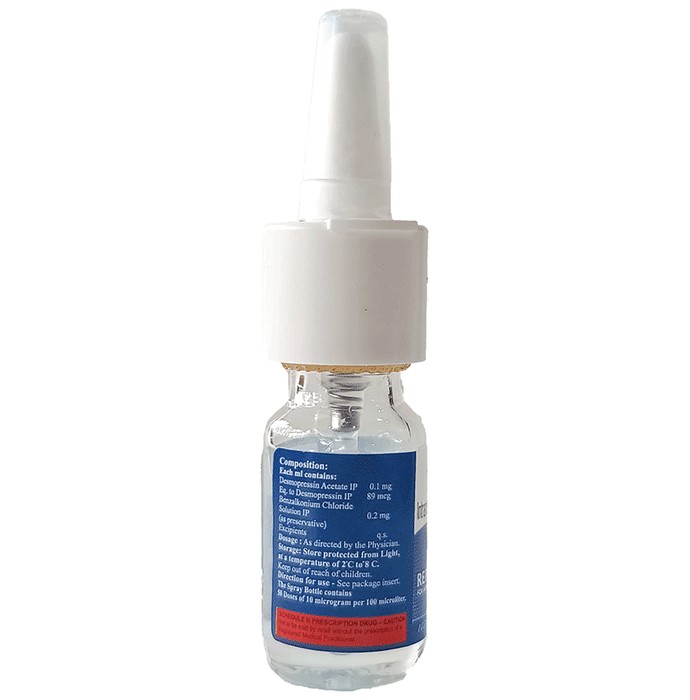
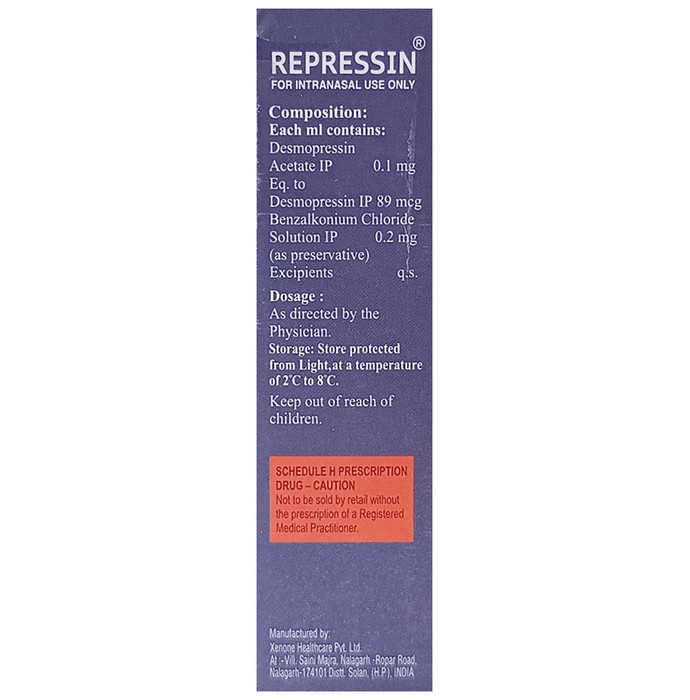
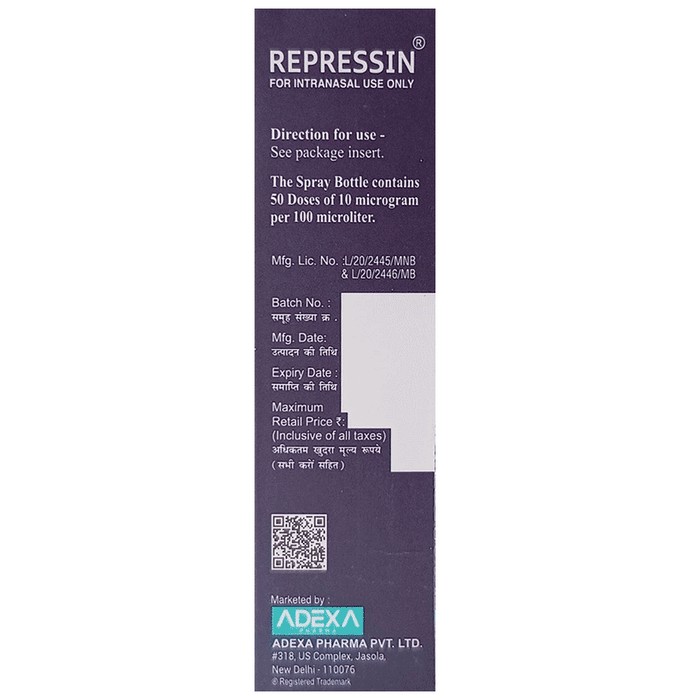
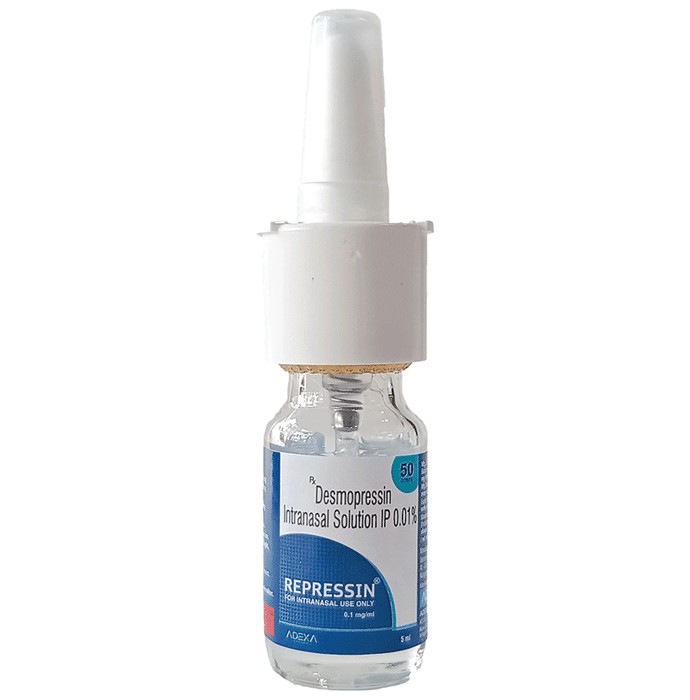
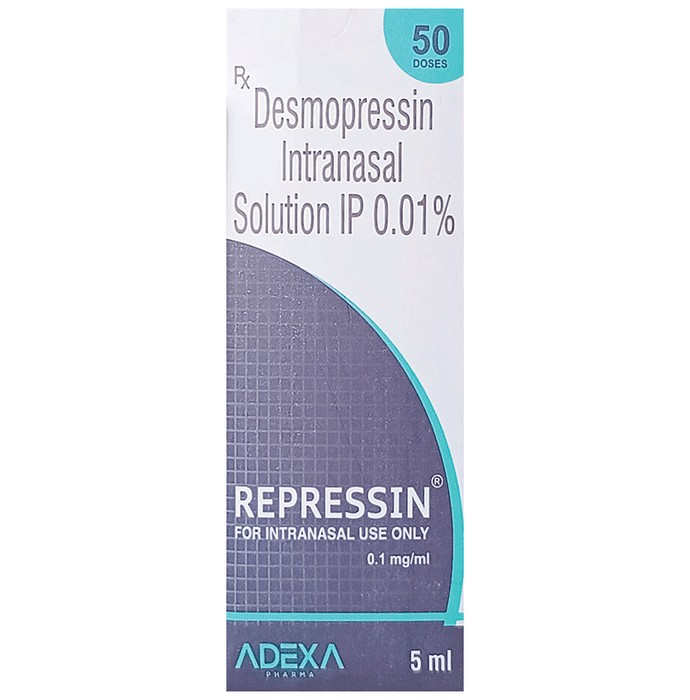
Repressin Intranasal Spray

Marketer
Adexa Pharma Private Ltd
Salt Composition
Desmopressin (0.1mg)
Overview Repressin Intranasal Spray
Desmopressin nasal spray is indicated for managing diabetes insipidus and nocturnal enuresis. This medication reduces urinary frequency, facilitating a more typical daily routine. It's typically prescribed for individuals unable to tolerate oral formulations. Administer Desmopressin nasal spray precisely as directed by your physician. Before each use, gently clear your nasal passages. Occlude one nostril, administer the spray into the other, and sniff deeply to ensure proper distribution; repeat for the other nostril. Commonly reported side effects include nasal irritation, nasopharyngitis, nasal stuffiness, sneezing, headache, nausea, and cough. While usually mild, persistent or bothersome symptoms should be discussed with your doctor, who can offer management strategies. While generally well-tolerated, consult your doctor before use if you have pre-existing conditions like heart disease, hypertension, hyperthyroidism, glaucoma, or benign prostatic hyperplasia. Similarly, disclose all other medications you are currently using to ensure safe concurrent use. Pregnant or breastfeeding individuals should seek medical counsel prior to commencing treatment.
Uses of Repressin Intranasal Spray
Managing diabetes insipidus and nocturnal enuresis
Common Side effects of Repressin Intranasal Spray:
- Nasal discomfort
- Nasopharyngitis (inflammation of the throat and nasal passages)
- Nasal congestion (stuffy nose)
- Sneezing
- Nosebleeds
- Dizziness
- Headache
- Nausea
- Cough
How Repressin Intranasal Spray works:
Nasal Repressin spray, a manufactured vasopressin analog, delivers rapid bloodstream absorption via the nasal mucosa. This synthetic hormone promotes renal water reabsorption, thereby managing polydipsia and polyuria associated with diabetes insipidus. Additionally, it mitigates nocturia in patients with multiple sclerosis.
SAFETY ADVICE
 AlcoholNone
No drug interactions identified.
 PregnancyCONSULT YOUR DOCTOR
Data on Repressin Intranasal Spray use in pregnancy are lacking. Seek your physician's advice.
 Breast feedingCAUTION
The use of Repressin Intranasal Spray while breastfeeding requires careful consideration. Mothers should discontinue breastfeeding for the duration of treatment and until the medication is fully cleared from their system.
 DrivingNone
No known drug interactions.
 KidneyNone
No known drug interactions.
 LiverNone
No known drug interactions.
What if you forget to take Repressin Intranasal Spray :
Omit any missed dose of Repressin Intranasal Spray and resume your regular dosing regimen. Avoid taking a double dose.
Facts to Know About Repressin Intranasal Spray
| Label | Value |
|---|---|
| Chemical Type | Synthetic vasopressin |
| Developing Habits | No. |
| Treatment Category | Endocrine Signals |
| Action Class | Synthetic vasopressin |
 3,018 People bought this recently