


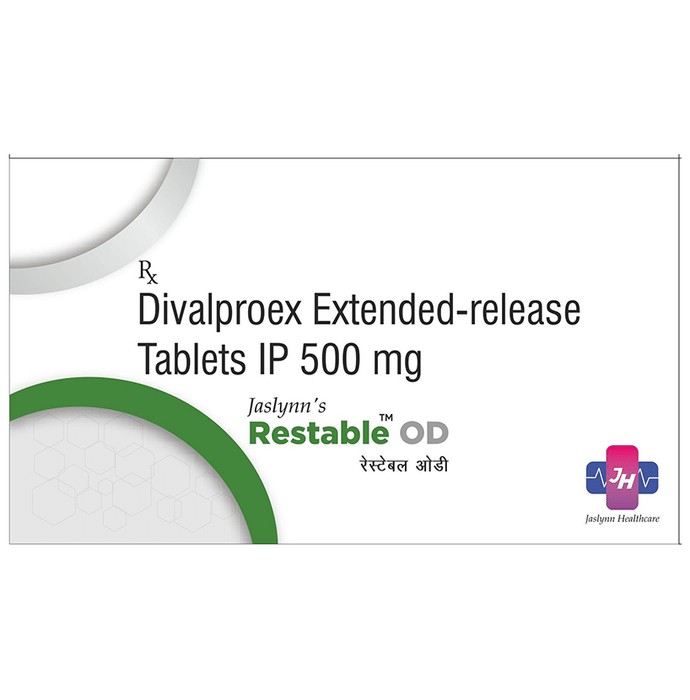
Restable OD Tablet ER

Marketer
Jaslynn Healthcare
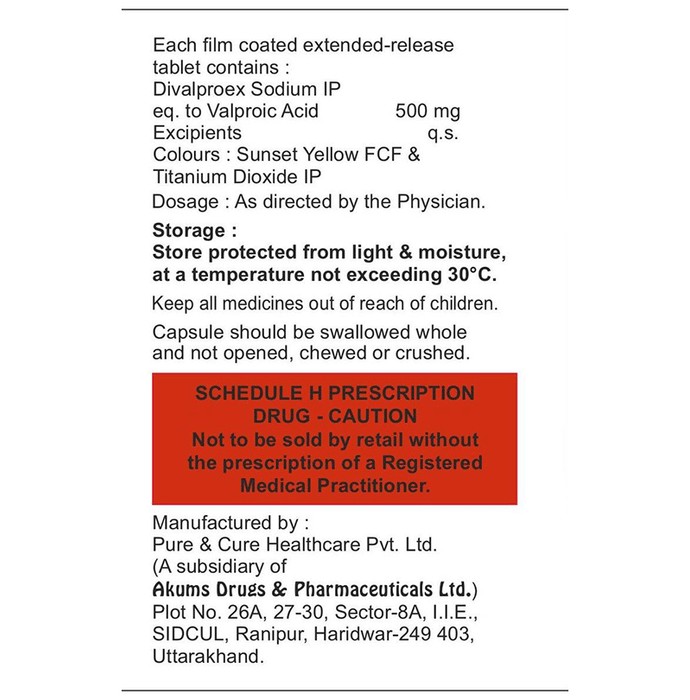
Salt Composition
Divalproex (500mg)
Overview Restable OD Tablet ER
Epilegard XR tablets are prescribed for managing epilepsy, effectively preventing and controlling seizures. This medication also offers preventative care against migraines and, in some cases, assists in managing bipolar disorder. Epilegard XR may be administered alone or alongside other medications; dosage and frequency are determined by your physician to optimize symptom control. Consume the medication with or without food, maintaining a consistent daily schedule for maximum efficacy. Therapeutic effects typically manifest within a couple of weeks. Continuous use, as directed, is crucial; missed doses can provoke seizures, and abrupt cessation may exacerbate your condition. Discontinuation should always be gradual and under medical supervision. Common side effects, often mild, include headache, visual disturbances, nausea, vomiting, dizziness, fatigue, imbalance, easy bruising, and reduced body temperature. While these generally don't require treatment cessation, discuss any persistent or bothersome symptoms with your doctor. Report any skin rash or redness immediately. Prolonged use can contribute to osteoporosis, increasing fracture risk. Suicidal ideation and behavior are rare but possible; inform your doctor of any mood changes. This medication isn't universally suitable. Prior to commencing treatment, disclose any history of cardiac issues, kidney or liver disease, urinary difficulties, depression, or suicidal tendencies. Numerous drug interactions exist; provide your doctor with a complete list of all medications to ensure safety and compatibility. Pregnant individuals should consult their physician before initiating or discontinuing this medication. Alcohol consumption is discouraged due to potential side effect intensification and increased seizure risk. Regular blood tests, both pre- and post-treatment, are often necessary for optimal dose adjustment.
Uses of Restable OD Tablet ER
Managing epileptic seizures and bipolar disorder; migraine prophylaxis.
Major Benefits of Restable OD Tablet ER:
Follow your doctor's instructions precisely regarding the dosage and treatment length for Restable OD Tablet ER. Ingest the tablet whole; avoid crushing, chewing, or breaking it. While you may consume it with or without food, consistent timing is recommended.
Common Side effects of Restable OD Tablet ER:
- Decreased body temperature
- Dizziness
- Sleepiness
- Tremors
- Paresthesia (tingling or pricking sensation)
- Anemia (low number of red blood cells)
- Decreased sodium level in blood
- Liver injury
- Gastrointestinal disturbance
- Hypersensitivity
- Deafness
- Urinary incontinence
- Increase in body weight
- Pain during periods
How to use Restable OD Tablet ER:
Follow your doctor's instructions precisely regarding the dosage and treatment length for Restable OD Tablet ER. The tablet should be swallowed whole; do not crush, chew, or break it. While it can be taken with or without food, consistent timing is recommended for optimal results.
How Restable OD Tablet ER works:
Restable OD Tablet ER, an anticonvulsant, manages epileptic seizures by reducing hyperactivity within the brain's neuronal network.
SAFETY ADVICE
 AlcoholUNSAFE
Concomitant use of Restable OD Tablet ER and alcohol may induce significant somnolence.
 PregnancyCONSULT YOUR DOCTOR
Using Restable OD Tablet ER during pregnancy poses a confirmed risk to the fetus. Its use should only be considered in exceptional, life-threatening circumstances where the potential benefits demonstrably outweigh the known hazards, as determined by a physician. Always seek medical advice before taking this medication.
 Breast feedingSAFE IF PRESCRIBED
Use of Restable OD Tablet ER while breastfeeding is considered safe. Research in humans indicates minimal drug transfer to breast milk, posing no known risk to the infant.
 DrivingUNSAFE
Driving ability may be impaired by the side effects of Restable OD Tablet ER.
 KidneySAFE IF PRESCRIBED
Restable OD Tablet ER presents no contraindications for use in patients with renal impairment; dosage modification is unnecessary.
 LiverUNSAFE
The use of Restable OD Tablet ER is potentially hazardous for individuals with hepatic impairment and should be omitted. Seek medical advice.
What if you forget to take Restable OD Tablet ER :
Should you forget a Restable OD Tablet ER dose, administer it promptly. Nevertheless, if your next scheduled dose is imminent, omit the missed dose and resume your usual dosing regimen. Avoid taking a double dose.
Facts to Know About Restable OD Tablet ER
| Label | Value |
|---|---|
| Chemical Type | Derivatives of Aliphatic Carboxylic Acids |
| Developing Habits | No. |
| Type of Therapy | Neuroscience Central Nervous System |
| Action Class | Sodium channel-blocking antiepileptic drugs |
 3,018 People bought this recently