


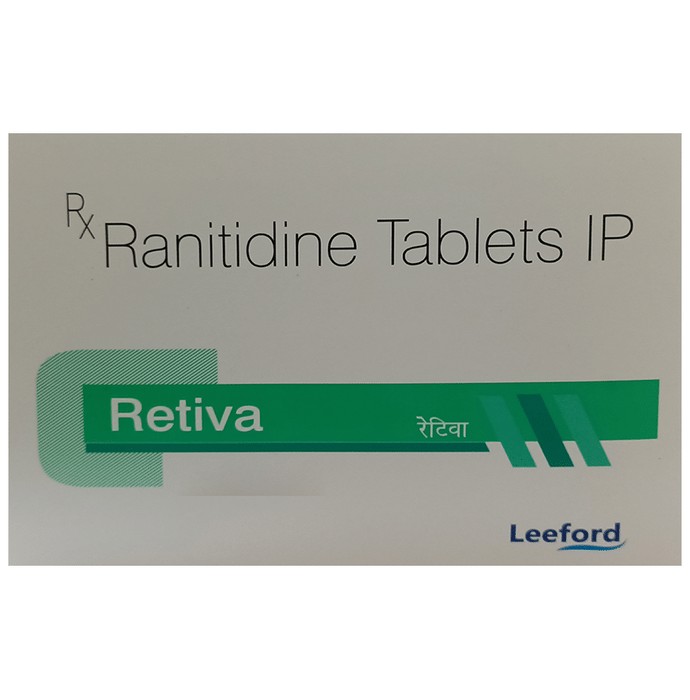
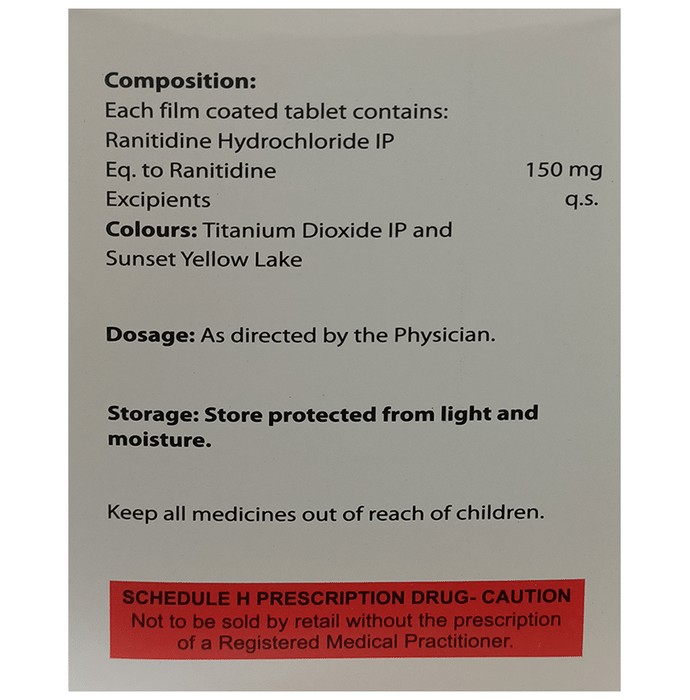
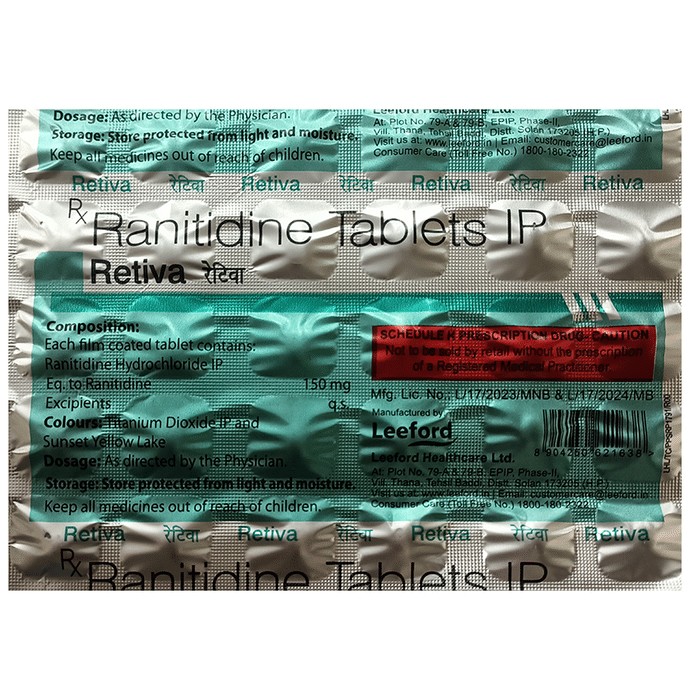
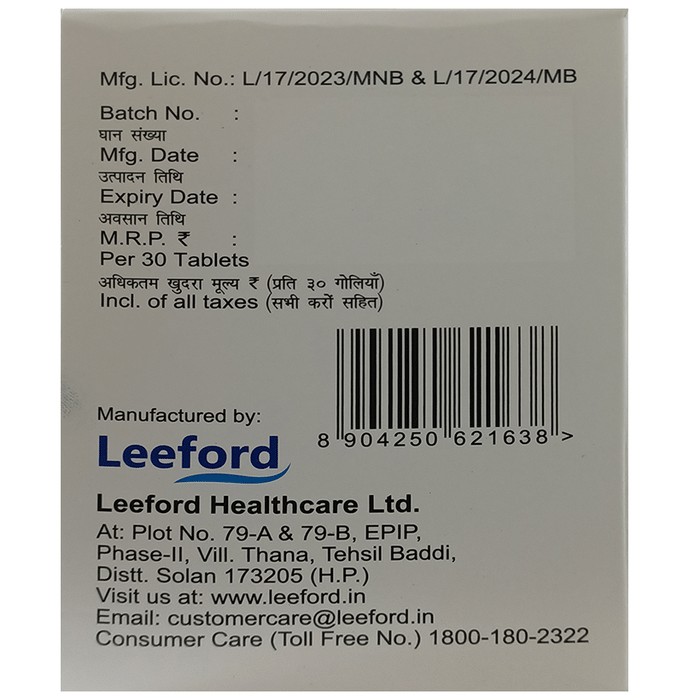
Retiva Tablet

Marketer
Leeford Healthcare Ltd
Salt Composition
Ranitidine (150mg)
Overview Retiva Tablet
AcidGard tablets lessen stomach acid production. They treat and prevent heartburn, indigestion, and related acid-excess symptoms. They also manage and prevent stomach ulcers, acid reflux, and certain less common conditions. AcidGard is frequently prescribed to avoid ulcers and heartburn associated with pain relievers. Dosage and treatment duration should strictly follow your physician's instructions; frequency and quantity depend on your specific condition. Always adhere to your doctor's guidance. Relief from indigestion and heartburn typically occurs within hours, with short-term use often sufficient for symptomatic relief. For ulcer prevention and other conditions, longer-term use may be necessary. Consistent intake helps prevent future issues. Dietary modifications, such as smaller, more frequent meals and avoiding rich or spicy foods, can complement treatment. While side effects are uncommon, the most frequent include headache, constipation, fatigue, and diarrhea. Most side effects are mild and resolve upon cessation or adjustment. Consult your doctor if side effects persist or are bothersome. Prior to commencing treatment, inform your doctor of any liver or kidney issues, as this may influence dosage or suitability. Disclose all other medications you are taking, as interactions are possible. AcidGard is generally considered safe for pregnant and breastfeeding individuals under a doctor's supervision. Alcohol consumption should be avoided as it may worsen symptoms by increasing stomach acid.
Primary Ingredients of Retiva Tablet
No information provided. Please provide the text you wish me to rephrase.
Uses of Retiva Tablet
Managing gastroesophageal reflux and peptic ulcers.
Major Benefits of Retiva Tablet:
Consume this medication precisely as your physician directs, adhering to both the prescribed dosage and treatment length. Ingest the tablet whole; avoid chewing, crushing, or fracturing it. Retiva Tablets can be taken with or without food; however, consistent daily timing is recommended.
Common Side effects of Retiva Tablet:
- Headache
- Diarrhea
- Gastrointestinal disturbance
How to use Retiva Tablet:
Consume this medication according to your physician's prescribed dosage and schedule. Ingest the tablet whole; avoid chewing, crushing, or fracturing it. Retiva Tablet can be administered with or without food, although consistent timing is recommended.
How Retiva Tablet works:
Histamine H2 receptor antagonist Retiva Tablet diminishes gastric acid production, offering relief from heartburn and acid indigestion.
SAFETY ADVICE
 AlcoholUNSAFE
Avoid alcohol while taking Retiva Tablets.
 PregnancyCONSULT YOUR DOCTOR
The use of Retiva Tablets during pregnancy may pose risks. While human research is scarce, animal studies indicate potential harm to the unborn child. A physician will assess the potential benefits against any risks prior to prescribing. Patient consultation with their doctor is advised.
 Breast feedingCONSULT YOUR DOCTOR
Use of Retiva Tablets while breastfeeding is likely inadvisable. Available human data indicate potential transfer of the medication into breast milk, posing a possible risk to the infant.
 DrivingSAFE
Driving ability is typically unaffected by Retiva Tablet.
 KidneyCAUTION
Patients with kidney impairment should exercise caution when using Retiva Tablets. Dosage modification may be necessary; physician consultation is advised.
 LiverCAUTION
Patients with hepatic impairment should exercise caution when using Retiva Tablets. Dosage modification may be necessary; physician consultation is advised.
What if you forget to take Retiva Tablet :
Should you forget a Retiva Tablet dose, administer it immediately. Nevertheless, if your next scheduled dose is imminent, omit the missed dose and resume your usual regimen. Avoid taking a double dose.
Facts to Know About Retiva Tablet
| Label | Value |
|---|---|
| Chemical Type | Aralkyl Amine Derivative |
| Developing Habits | No. |
| Treatment Category | Gastrointestinal system |
 3,018 People bought this recently