


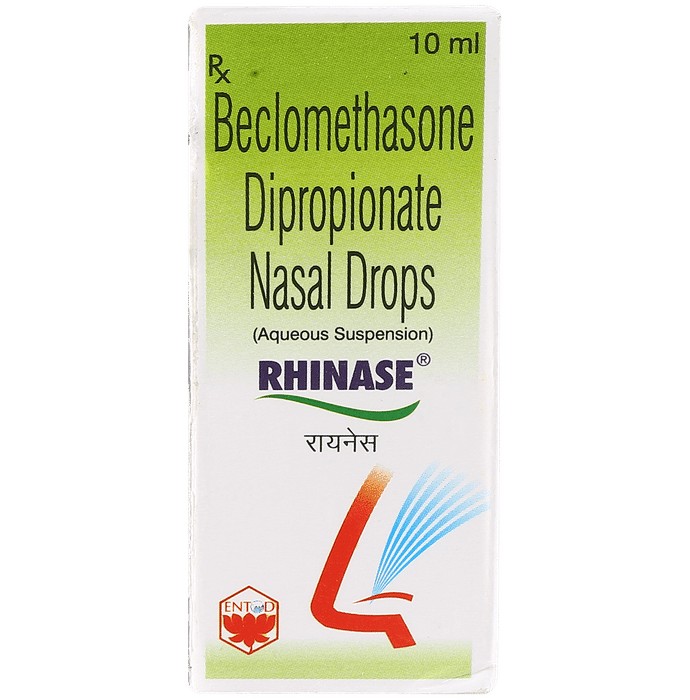
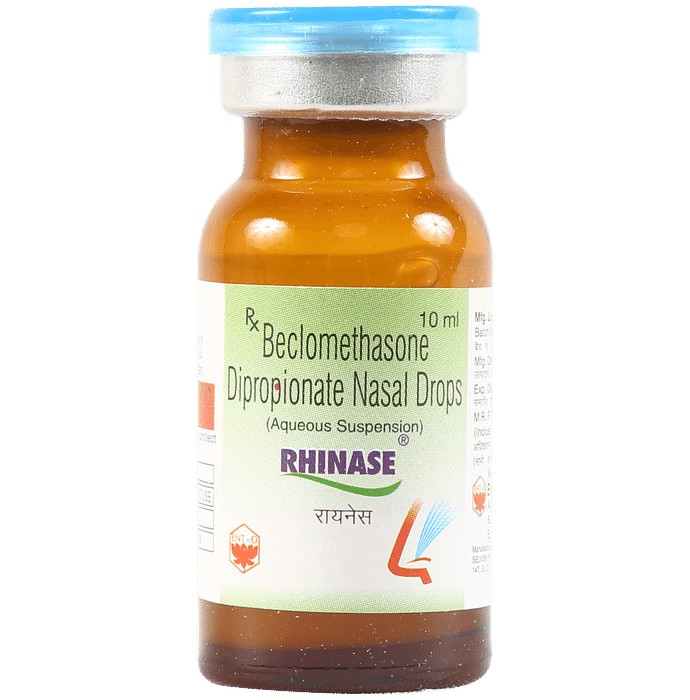
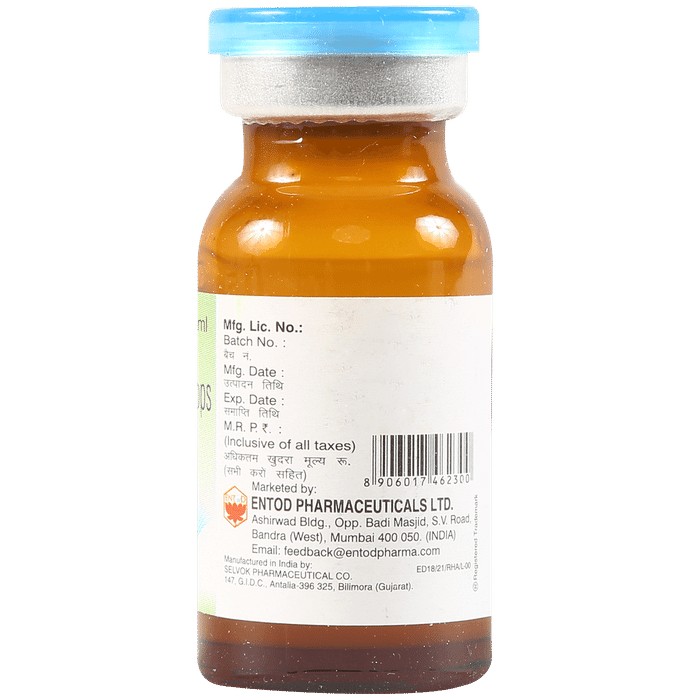
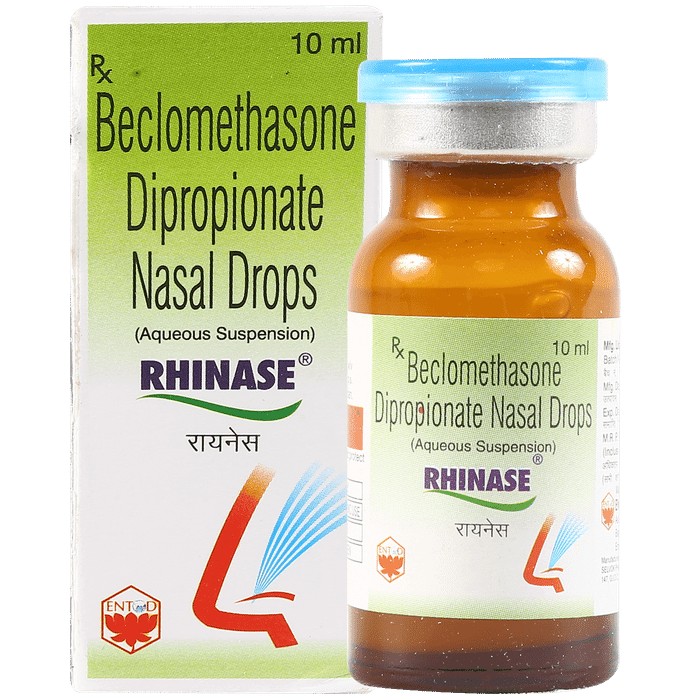
Rhinase Nasal Drops

Marketer
Entod Pharmaceuticals Ltd
Salt Composition
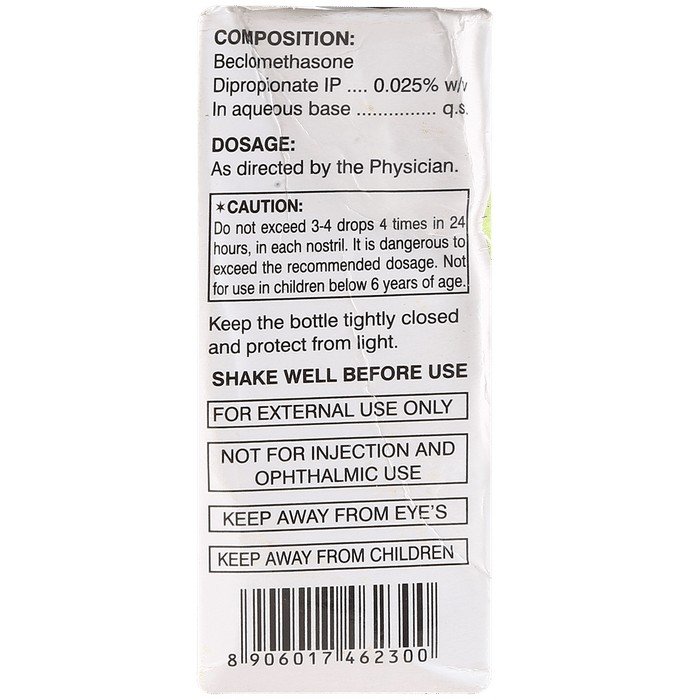
Beclometasone (0.025% w/v)
Overview Rhinase Nasal Drops
Allergic rhinitis symptoms, including nasal discharge, sneezing, and sinus pressure, find relief with the steroid nasal spray, NasalEase. This medication reduces inflammation by inhibiting the release of inflammatory mediators, thus alleviating nasal irritation and discomfort. Always follow your physician's instructions. Proper administration involves gently clearing your nasal passages before application. Insert the spray into one nostril, close the other, and sniff deeply to ensure proper distribution; repeat for the other nostril. Full effectiveness may take several days. Consult your doctor if symptoms persist after seven days. Potential side effects, including skin rash, hives, itching, redness, epistaxis, nasal dryness, throat irritation, and dryness, should be reported if they worsen or persist. Corticosteroid use, such as with NasalEase, may increase susceptibility to viral infections; avoid contact with infected individuals. Minimize exposure to irritants like pollen and dust mites, and abstain from smoking. Inform your doctor about pregnancy or breastfeeding before use; a discussion of risks and benefits is crucial. Prolonged use may necessitate regular medical monitoring to assess treatment progress.
Uses of Rhinase Nasal Drops
Allergic rhinitis and asthma management
Major Benefits of Rhinase Nasal Drops:
Administer this medication precisely as your physician prescribes, adhering to both dosage and treatment length. Always consult the product label for application instructions prior to use. Position your head in a fully reclined posture, keeping the dropper near, but not contacting, your nostril. Carefully dispense the medication into your nose by gently compressing the dropper. Afterwards, maintain a forward head tilt for several minutes.
Common Side effects of Rhinase Nasal Drops:
- Nosebleeds
- Nasal dryness
- Hoarseness of voice
- Nasal irritation
- Dry throat
- Throat irritation
- Thrush
- Pharyngitis
- Abnormal taste
- Nasopharyngeal irritation
How to use Rhinase Nasal Drops:
Administer this medication precisely as your physician directs, adhering to the prescribed dosage and treatment period. Always consult the product labeling for complete instructions prior to use. Position your head in a fully reclined posture, keeping the dropper near, but not touching, your nostrils. Carefully dispense the medication into your nose by gently compressing the dropper. Remain with your head tilted forward for several minutes afterward.
How Rhinase Nasal Drops works:
Rhinase Nasal Drops, a corticosteroid nasal spray, exerts its effects by penetrating nasal lining cells. Its mechanism of action involves suppressing the synthesis of inflammatory mediators, thereby alleviating nasal congestion, rhinorrhea, sneezing, and sinus pain associated with allergic reactions.
SAFETY ADVICE
 AlcoholNone
No known drug interactions.
 PregnancyCONSULT YOUR DOCTOR
The use of Rhinase Nasal Drops during pregnancy may pose risks. While human research is scarce, animal studies indicate potential harm to the fetus. A physician will assess the potential advantages against any possible dangers prior to recommending its use. Medical advice is recommended.
 Breast feedingCONSULT YOUR DOCTOR
The use of Rhinase Nasal Drops while breastfeeding is likely inadvisable. Available evidence from humans indicates potential transfer of the medication into breast milk, posing a possible risk to the infant.
 DrivingNone
No known drug interactions.
 KidneyNone
No known drug interactions.
 LiverNone
No known drug interactions.
What if you forget to take Rhinase Nasal Drops :
Should you forget a dose of Rhinase Nasal Drops, administer it at your earliest convenience. If, however, your next dose is imminent, omit the missed dose and resume your usual dosing regimen.
Facts to Know About Rhinase Nasal Drops
| Label | Value |
|---|---|
| Chemical Category | Glucocorticoids, mineralocorticoids, progestins, and their derivatives |
| Developing Habits | No. |
| Type of Therapy | Breathing |
 3,018 People bought this recently