


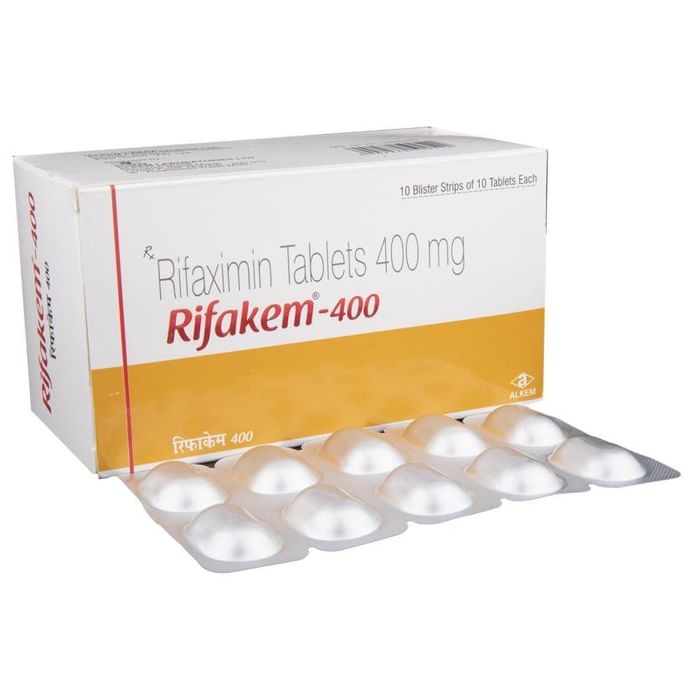
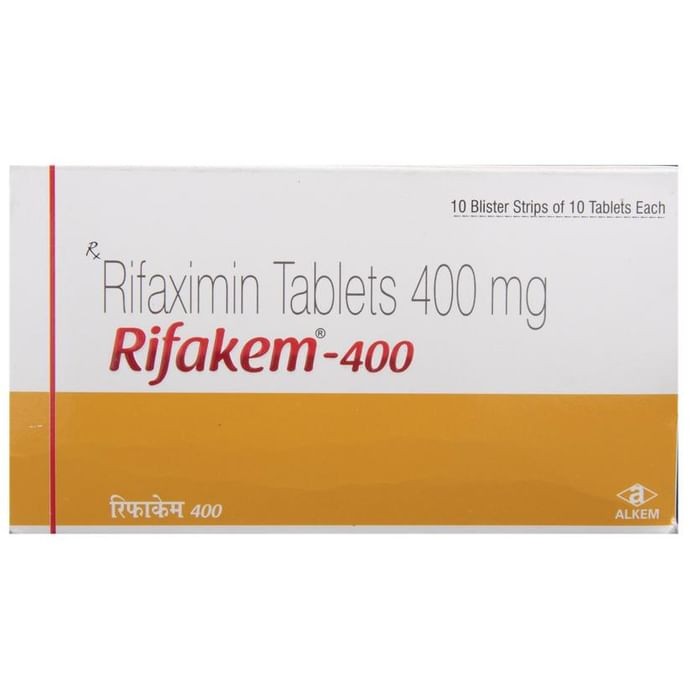
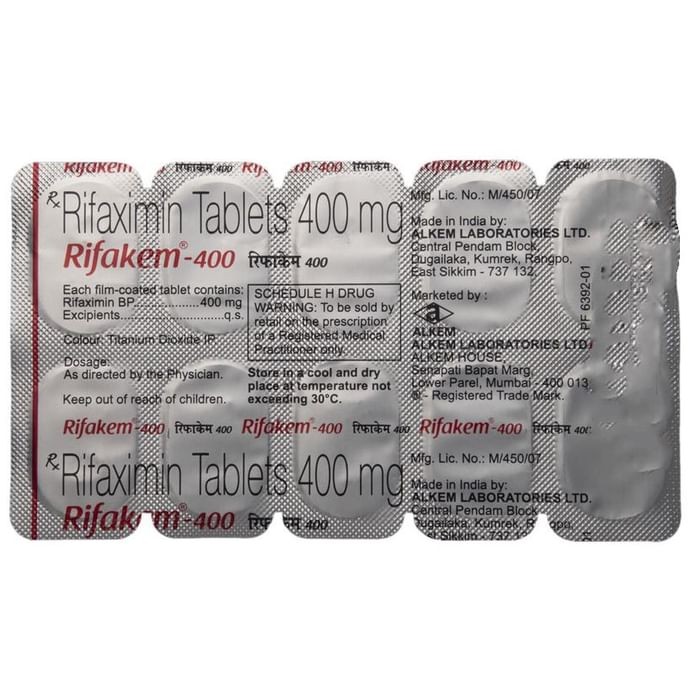
Rifakem 400 Tablet

Marketer
Alkem Laboratories Ltd
Salt Composition
Rifaximin (400mg)
Overview Rifakem 400 Tablet
Hepatic encephalopathy, a liver-related condition causing toxin buildup in the bloodstream and subsequent brain impairment, is treated with Rifakem 400mg tablets. This antibiotic also combats infectious diarrhea. Its mechanism involves eliminating and inhibiting intestinal bacteria growth. Administered alone or alongside other medications, Rifakem 400mg can be taken with or without food, ideally at a consistent time daily. Dosage and treatment length should strictly adhere to your physician's instructions for optimal efficacy. Consistent daily intake is crucial; premature discontinuation risks infection recurrence and treatment complications. Potential side effects include nausea, vomiting, headache, dizziness, skin rashes, arthralgia, and depressive symptoms—generally transient and resolving with continued therapy. Persistent or bothersome side effects necessitate medical consultation. Note that Rifakem 400mg may temporarily discolor urine reddish-brown; this is a benign effect. Prior to commencing treatment, disclose any pregnancy, breastfeeding, liver, kidney, or heart conditions, or known drug allergies to your doctor.
Uses of Rifakem 400 Tablet
Managing hepatic encephalopathy and infectious diarrhea.
Major Benefits of Rifakem 400 Tablet:
Consume this medication precisely as your physician directs, adhering to both the prescribed dosage and treatment length. Ingest the tablet whole; avoid chewing, crushing, or fracturing it. Rifakem 400 Tablets can be administered with or without food, though consistent timing is recommended.
Common Side effects of Rifakem 400 Tablet:
- Dizziness
- Nausea
- Peripheral edema
- Ascites (accumulation of fluid in the abdominal cavity)
- Fatigue
- Depression
- Nasopharyngitis (inflammation of the throat and nasal passages)
- Joint pain
- Rash
- Muscle pain
How to use Rifakem 400 Tablet:
Administer this medication precisely as your physician directs, adhering to both the prescribed dosage and treatment length. Ingest the tablet whole; avoid chewing, crushing, or fracturing it. Rifakem 400 Tablets can be consumed with or without food, although consistent timing is recommended.
How Rifakem 400 Tablet works:
Rifaximin 400mg tablets are a prescription antibiotic medication. Their mechanism of action involves eliminating ammonia-generating bacteria within the gastrointestinal system. This combats infection and alleviates hepatic encephalopathy symptoms such as disorientation, cognitive impairment, and neuromuscular dysfunction. Furthermore, this medication contributes to a lower frequency of future hepatic encephalopathy occurrences.
SAFETY ADVICE
 AlcoholCONSULT YOUR DOCTOR
Alcohol consumption alongside Rifakem 400 Tablet may pose unknown safety risks. Seek medical advice before combining them.
 PregnancyCONSULT YOUR DOCTOR
The use of Rifakem 400 Tablet during pregnancy may pose risks. While human research is scant, animal studies indicate potential harm to the fetus. A physician will assess the advantages against possible risks prior to prescribing. Medical advice is recommended.
 Breast feedingSAFE IF PRESCRIBED
The use of Rifakem 400 Tablet while breastfeeding is likely safe. Available human data indicates minimal risk to the infant.
 DrivingSAFE
Driving ability is typically unaffected by Rifakem 400 Tablet.
 KidneySAFE IF PRESCRIBED
Using Rifakem 400 Tablet in individuals with kidney impairment is likely safe. Preliminary findings indicate dose modification may not be necessary, however, physician consultation is recommended.
 LiverCAUTION
Patients with severe hepatic impairment should use Rifakem 400mg tablets cautiously. Dosage modification may be necessary; physician consultation is advised.
What if you forget to take Rifakem 400 Tablet :
Should you forget a Rifakem 400 Tablet dose, take it immediately. If, however, your next dose is imminent, omit the missed dose and resume your usual regimen. Never take a double dose.
Facts to Know About Rifakem 400 Tablet
| Label | Value |
|---|---|
| Type of Compound | Rifamycin-based antibiotics |
| Addictive | None. |
| Medication Classification | Digestive system |
| Mechanism of Action | Rifamycin antibiotics: inhibitors of RNA polymerase. |
 3,018 People bought this recently