


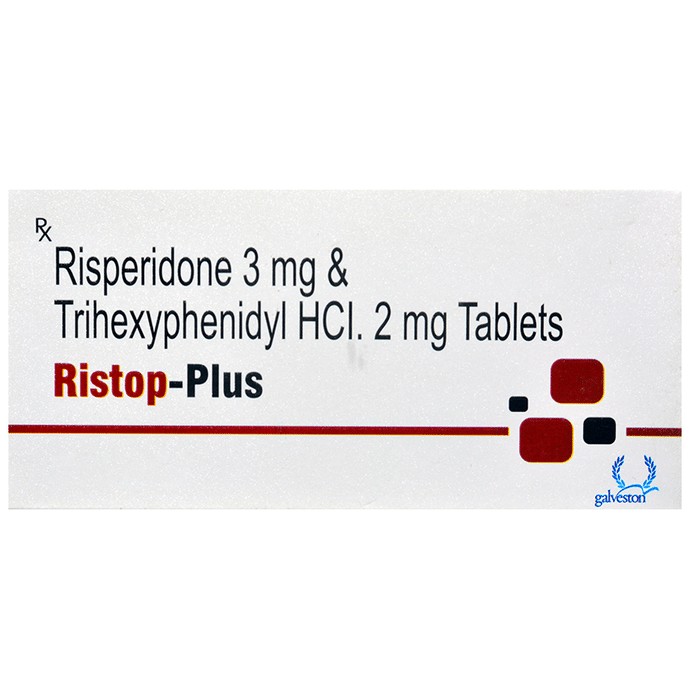
Ristop-Plus Tablet

Marketer
Galveston Healthcare Pvt. Ltd.
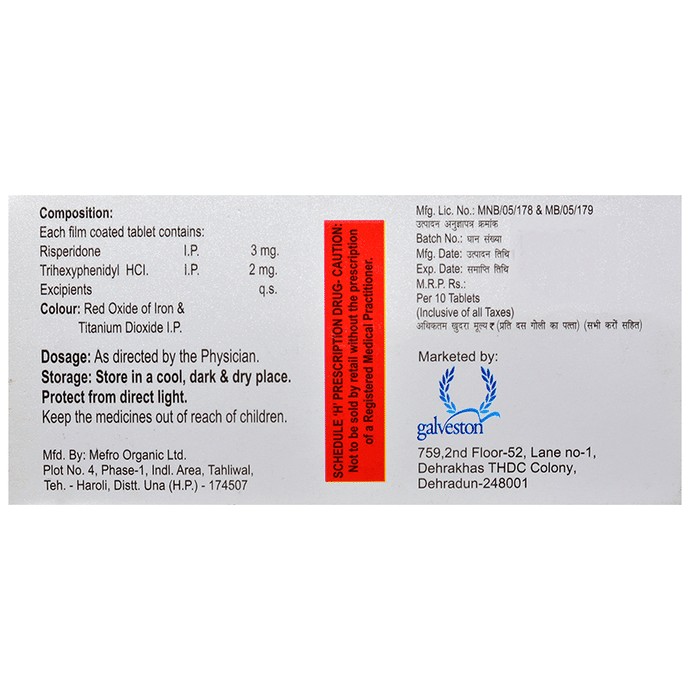
Salt Composition
Risperidone (3mg) + Trihexyphenidyl (2mg)
Overview Ristop-Plus Tablet
Combiplus is a dual-action medication indicated for schizophrenia management. Its mechanism involves regulating neurotransmitters impacting cognitive function. Combiplus can be ingested with or without food, ideally at bedtime for consistent serum levels. Adhere strictly to your physician's prescribed dosage and schedule. If a dose is missed, take it immediately upon recall. Abrupt cessation is strongly discouraged; consult your doctor before discontinuing. Common adverse effects include nausea, bowel irregularity, and xerostomia. Postural hypotension may occur initially; rise slowly from seated or supine positions. Drowsiness and vertigo are also possible; avoid driving or activities requiring alertness until effects are known. Weight gain, hyperglycemia, and hyperlipidemia may occur, but lifestyle adjustments like diet and exercise can mitigate these. Comprehensive disclosure of all other medications is crucial, as interactions may impact efficacy or pharmacokinetics. Notify your physician of pregnancy, pregnancy plans, or breastfeeding.
Uses of Ristop-Plus Tablet
Split personality disorder
Major Benefits of Ristop-Plus Tablet:
Consume this medication precisely as your physician directs, adhering to both the prescribed dosage and duration. Ingest the tablet whole; avoid chewing, crushing, or fracturing it. Ristop-Plus Tablets can be taken with or without food, although consistent timing is recommended.
Common Side effects of Ristop-Plus Tablet:
- Nausea
- Constipation
- Dryness in mouth
- Weight gain
- Sleepiness
- Orthostatic hypotension (sudden lowering of blood pressure on standing)
- Increased prolactin level in blood
- Nervousness
How to use Ristop-Plus Tablet:
Administer this medication precisely as prescribed by your physician, adhering to both the dosage and treatment length. Ingest the tablet whole; avoid chewing, crushing, or fracturing it. Ristop-Plus Tablets can be consumed with or without food, though consistent timing is recommended.
How Ristop-Plus Tablet works:
Ristop-Plus tablets contain Risperidone and Trihexyphenidyl, two distinct medications. Risperidone, an atypical antipsychotic, regulates neurotransmitters dopamine and serotonin, thereby improving cognitive function, mood, and behavior. Trihexyphenidyl, an anticholinergic agent, acts on the nervous system, mitigating chemical imbalances associated with Parkinson's disease and certain adverse effects of antipsychotic medications.
SAFETY ADVICE
 AlcoholUNSAFE
Concurrent use of Ristop-Plus tablets and alcohol can lead to increased sleepiness.
 PregnancyCONSULT YOUR DOCTOR
The use of Ristop-Plus Tablets during pregnancy may pose risks. While human research is scarce, animal studies indicate potential harm to a developing fetus. A physician will assess the advantages against possible dangers prior to prescribing. Seek medical advice.
 Breast feedingCONSULT YOUR DOCTOR
Using Ristop-Plus tablets while breastfeeding may pose a risk. Available evidence from human studies indicates a potential for the medication to transfer to breast milk, possibly harming the infant.
 DrivingUNSAFE
Driving may be impaired by side effects of Ristop-Plus Tablets. These side effects can include blurred vision, dizziness, mild nausea, and, in some instances, cognitive impairment.
 KidneyCAUTION
Patients with kidney impairment should exercise caution when using Ristop-Plus Tablets, as dosage modification may be necessary. Physician consultation is advised.
 LiverCAUTION
Patients with liver impairment should exercise caution when using Ristop-Plus Tablets. Dosage modification may be necessary; physician consultation is advised.
What if you forget to take Ristop-Plus Tablet :
Should you forget a Ristop-Plus Tablet dose, administer it promptly. However, if your next dose is imminent, omit the missed dose and resume your usual dosing regimen. Avoid taking a double dose.
Facts to Know About Ristop-Plus Tablet
| Label | Value |
|---|---|
| Developing Habits | No. |
| Treatment Category | Central Nervous System (CNS) Neuro |
 3,018 People bought this recently