


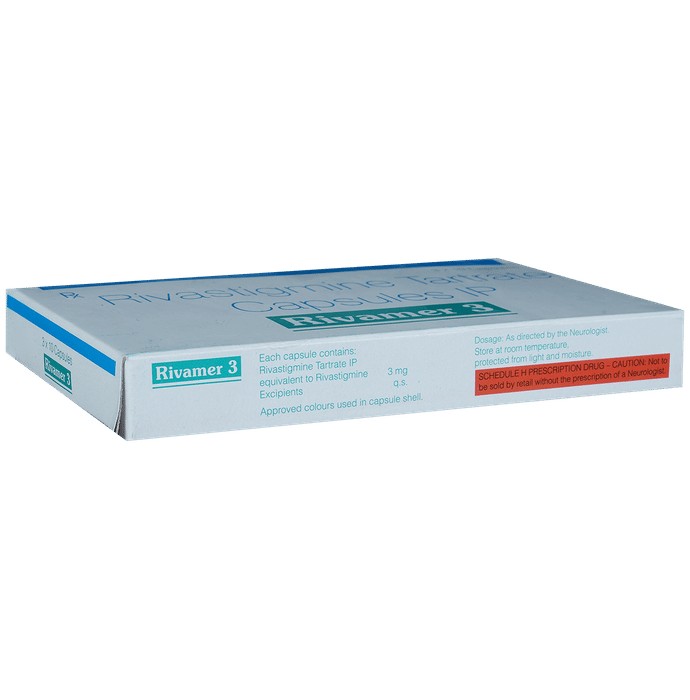
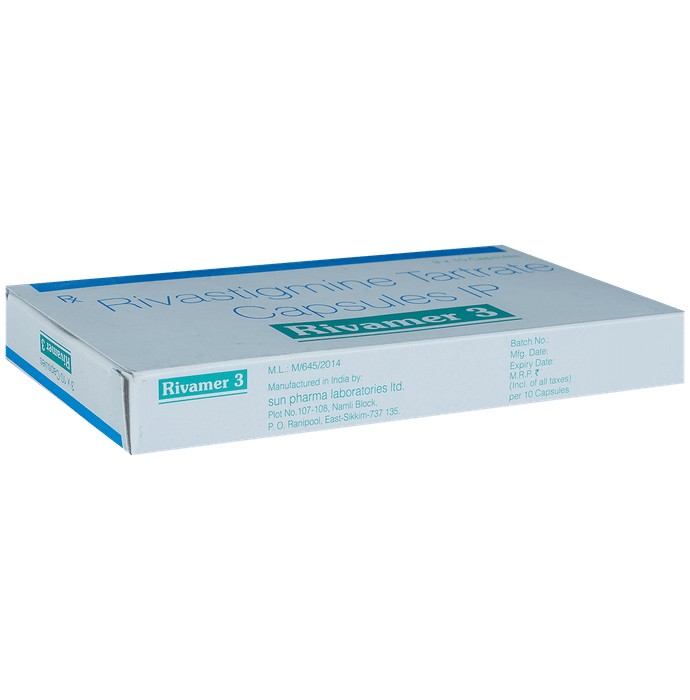
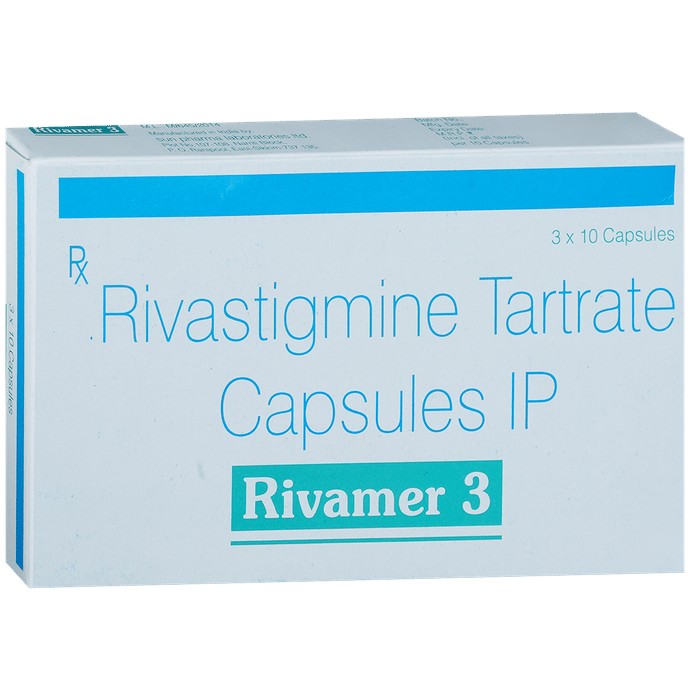
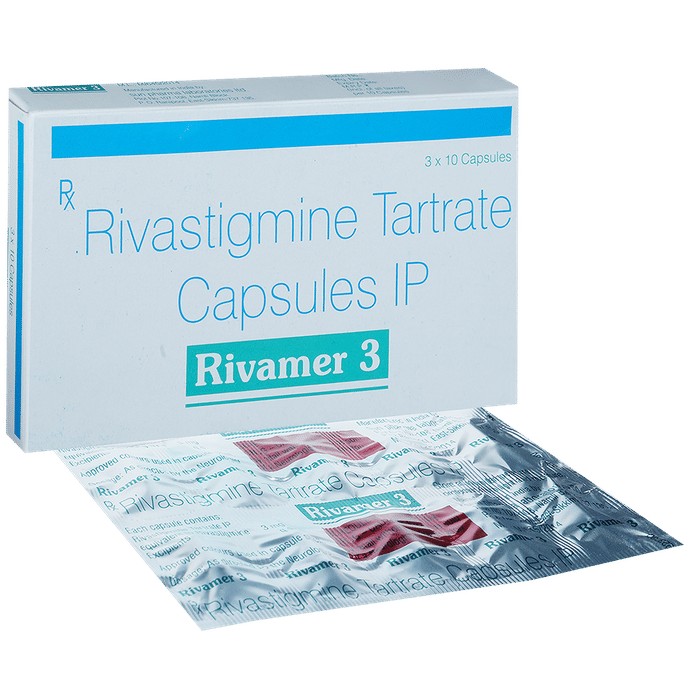
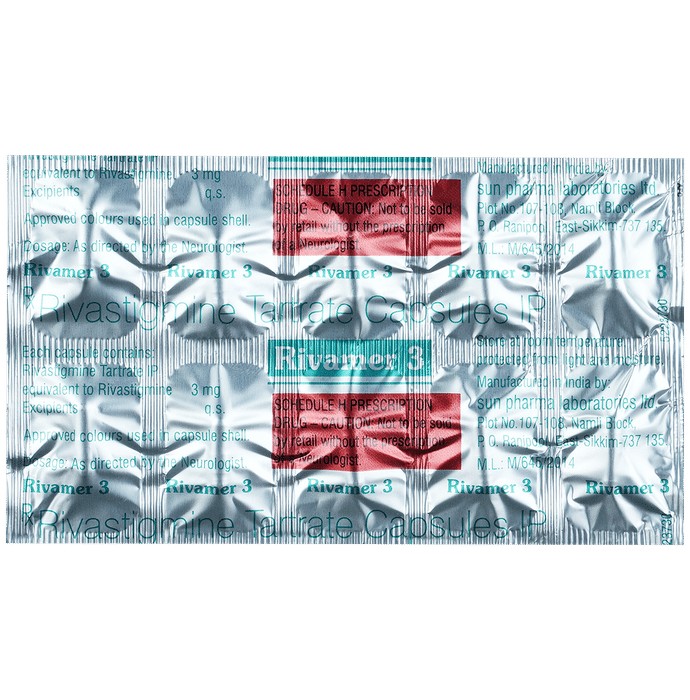
Rivamer 3 Capsule

Marketer
Sun Pharmaceutical Industries Ltd
Salt Composition
Rivastigmine (3mg)
Overview Rivamer 3 Capsule
Alzamer-3 capsules are indicated for managing mild to moderate dementia associated with Alzheimer's disease, a degenerative condition progressively impairing cognitive function. This medication also finds application in Parkinson's disease-related dementia. While not a cure, Alzamer-3 may alleviate symptoms, enhancing memory and cognitive clarity. Dosage and administration will be outlined by your physician; adhere strictly to their guidance for optimal therapeutic outcomes. Dosage adjustments may be necessary based on individual response. Consider taking the capsule with food, ideally before bedtime. Symptom improvement might take several weeks; consistent use is crucial. Discontinuation should only occur under medical supervision. Common adverse effects include nausea, vomiting, weight loss, dyspepsia, and fatigue. These effects may be more pronounced initially or following dosage increases, typically subsiding with continued use. Severe or persistent side effects warrant immediate medical attention. Prior to commencing treatment, inform your doctor of any pre-existing heart conditions, peptic ulcers, seizures, or respiratory illnesses (such as asthma). Potential drug interactions exist; disclose all medications currently in use. Use during pregnancy is conditional upon explicit medical recommendation.
Primary Ingredients of Rivamer 3 Capsule
No information provided. Please provide the text you wish me to rephrase.
Uses of Rivamer 3 Capsule
Managing dementia in Parkinson's and Alzheimer's disease
Major Benefits of Rivamer 3 Capsule:
Follow your doctor's instructions precisely regarding dosage and treatment length for this medication. Consume Rivamer 3 Capsules with food.
Common Side effects of Rivamer 3 Capsule:
- Loss of appetite
- Nausea
- Vomiting
- Indigestion
How to use Rivamer 3 Capsule:
Follow your physician's instructions precisely regarding dosage and treatment length for this medication. Consume Rivamer 3 Capsules with a meal.
How Rivamer 3 Capsule works:
Cognitive decline characteristic of Alzheimer's results from impaired neuronal communication. Rivamer 3 Capsules function as a cholinesterase inhibitor, elevating acetylcholine—a neurotransmitter crucial for neural signaling—thereby enhancing cognitive function and memory.
SAFETY ADVICE
 AlcoholCONSULT YOUR DOCTOR
Alcohol consumption with Rivamer 3 Capsules may be unsafe; seek medical advice before combining them.
 PregnancyCONSULT YOUR DOCTOR
Use of Rivamer 3 Capsules is contraindicated in pregnancy due to established risks to fetal development. In exceptional, life-threatening circumstances, a physician might prescribe it if the potential benefits outweigh the known hazards. Physician consultation is mandatory.
 Breast feedingCONSULT YOUR DOCTOR
Using Rivamer 3 Capsules while breastfeeding is likely inadvisable. Available evidence indicates potential transfer of the medication into breast milk, posing a possible risk to the infant.
 DrivingUNSAFE
Taking Rivamer 3 Capsules might cause drowsiness, blurred vision, or dizziness. Refrain from driving if you experience these effects.
 KidneySAFE IF PRESCRIBED
Renal impairment does not necessitate a Rivamer 3 Capsule dosage change; it's considered safe for use in such patients. Nevertheless, disclosure of pre-existing kidney conditions is crucial, as careful observation is recommended during treatment.
 LiverSAFE IF PRESCRIBED
Rivamer 3 Capsules may be used by patients with liver conditions without altering the prescribed dosage. Nevertheless, disclosure of pre-existing liver disease to your physician is crucial, as careful observation during treatment is recommended.
What if you forget to take Rivamer 3 Capsule :
Omit any missed Rivamer 3 Capsule dose and resume your usual medication regimen. Avoid taking a double dose.
Facts to Know About Rivamer 3 Capsule
| Label | Value |
|---|---|
| Chemical Type | Carbamate-based Compound |
| Developing Habits | No. |
| Type of Therapy | Neuroscience of the Central Nervous System |
 3,018 People bought this recently