


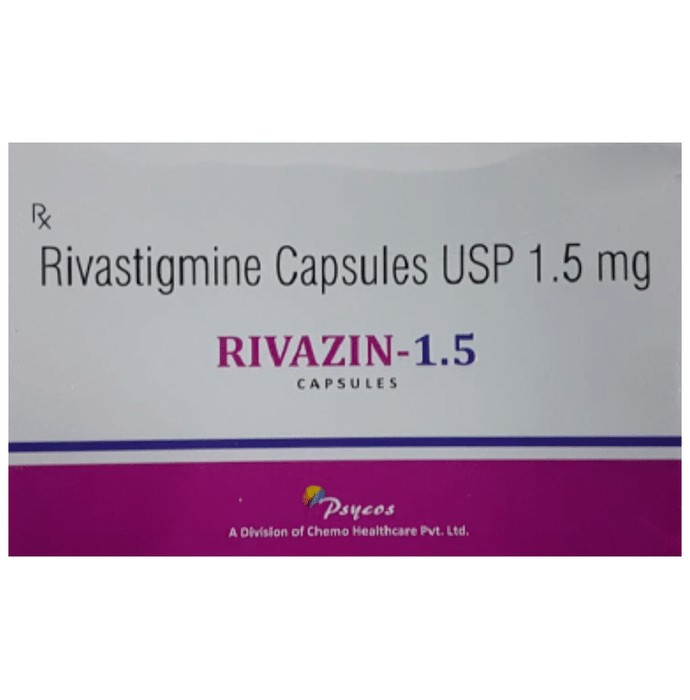
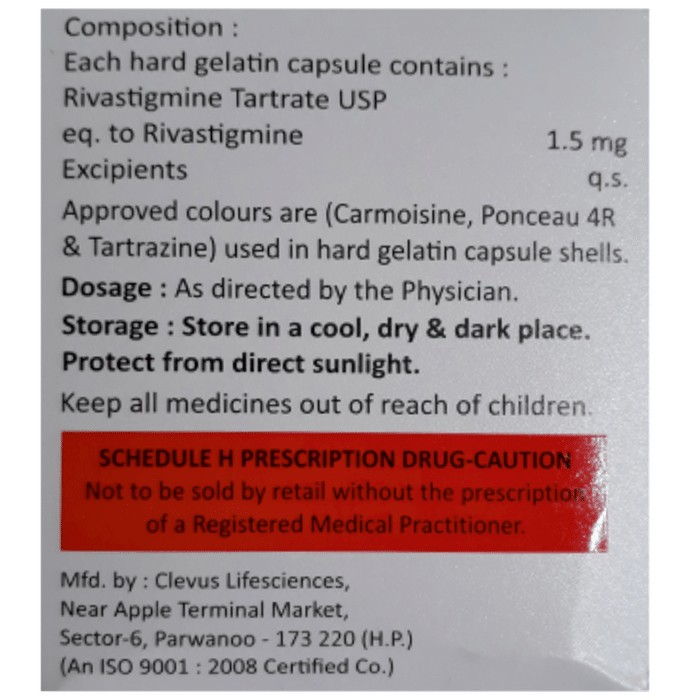
Rivazin 1.5mg Tablet

Marketer
Chemo Healthcare Pvt Ltd
Salt Composition
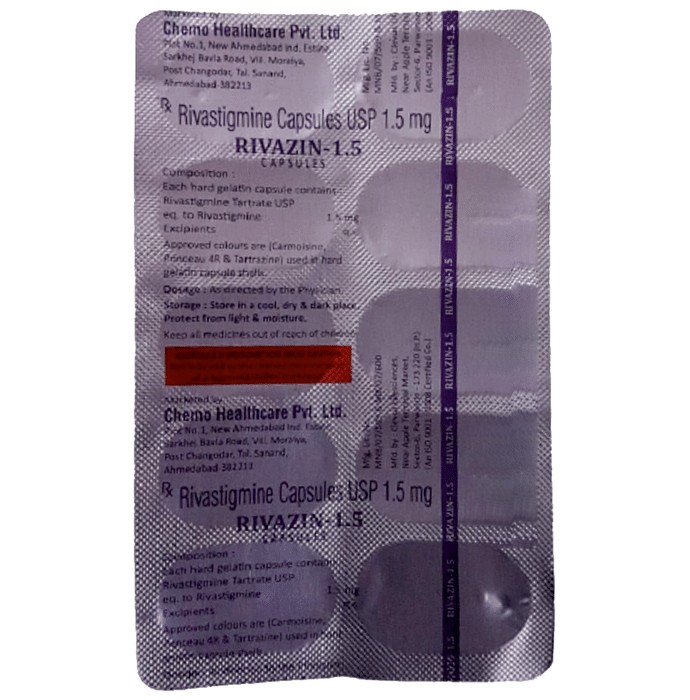
Rivastigmine (1.5mg)
Overview Rivazin 1.5mg Tablet
Alzex 1.5mg tablets are indicated for managing mild to moderate dementia associated with Alzheimer's disease, a degenerative condition impacting cognitive function and memory. They are also prescribed for dementia in Parkinson's disease. While not a cure, this medication can potentially alleviate symptoms, enhancing memory and cognitive clarity. Dosage and administration will be determined by your physician; adhere strictly to their instructions for optimal results. Your prescribed dose may be adjusted as needed. It's recommended to take Alzex 1.5mg with food, ideally before bedtime. Symptom improvement may take several weeks; consistent use is crucial. Discontinue use only after consulting your doctor. Common side effects include nausea, vomiting, weight loss, dyspepsia, and fatigue. These effects may be more pronounced initially or following dose increases, typically subsiding with continued use. Report persistent or severe side effects to your physician immediately. Prior to commencing treatment, inform your doctor of any history of cardiac issues, peptic ulcers, seizures, or respiratory conditions like asthma. Potential interactions with other medications exist; disclose all current medications to ensure safety. Use during pregnancy should be strictly under medical supervision.
Uses of Rivazin 1.5mg Tablet
Managing Dementia in Parkinson's and Alzheimer's Disease
Major Benefits of Rivazin 1.5mg Tablet:
Consume this medication precisely as directed by your physician, adhering to the prescribed dosage and timeframe. Ingest the tablet whole; avoid chewing, crushing, or fracturing it. Rivazin 1.5mg tablets should be administered with a meal.
Common Side effects of Rivazin 1.5mg Tablet:
- Loss of appetite
- Nausea
- Vomiting
- Indigestion
How to use Rivazin 1.5mg Tablet:
Consume this medication precisely as prescribed by your physician, adhering to both the dosage and treatment length. Ingest the tablet whole; avoid chewing, crushing, or fracturing it. Rivazin 1.5mg Tablets should be administered with a meal.
How Rivazin 1.5mg Tablet works:
Cognitive decline characteristic of Alzheimer's stems from impaired neuronal communication. Rivazin 1.5mg Tablets function as a cholinesterase inhibitor, elevating acetylcholine—a neurotransmitter crucial for nerve signal propagation—thus enhancing cognitive function and memory.
SAFETY ADVICE
 AlcoholCONSULT YOUR DOCTOR
The safety of alcohol consumption alongside Rivazin 1.5mg Tablet is undetermined. Seek medical advice.
 PregnancyCONSULT YOUR DOCTOR
Using Rivazin 1.5mg tablets during pregnancy poses a confirmed risk to the fetus. Nevertheless, a physician might exceptionally prescribe it in critical circumstances where the potential advantages outweigh the dangers. Physician consultation is essential.
 Breast feedingCONSULT YOUR DOCTOR
Lactation and the use of Rivazin 1.5mg tablets are likely incompatible. Available evidence from human studies indicates potential transfer to breast milk, posing a possible risk to the infant.
 DrivingUNSAFE
Taking a 1.5mg Rivazin tablet could reduce alertness, impair vision, and cause drowsiness or dizziness. Driving should be avoided if these effects are experienced.
 KidneySAFE IF PRESCRIBED
For individuals with kidney impairment, Rivazin 1.5mg tablets are considered safe, and no dosage modification is necessary. Nevertheless, disclosure of pre-existing kidney conditions to your physician is crucial, as careful observation during treatment is recommended.
 LiverSAFE IF PRESCRIBED
Patients with liver conditions can safely use Rivazin 1.5mg tablets without requiring a dosage change. Nevertheless, disclosure of pre-existing liver disease to your physician is crucial, as careful observation is recommended during treatment.
What if you forget to take Rivazin 1.5mg Tablet :
Omit any missed Rivazin 1.5mg Tablet dose and resume your usual medication regimen. Avoid taking a double dose.
Facts to Know About Rivazin 1.5mg Tablet
| Label | Value |
|---|---|
| Chemical Type | Carbamate-based compound |
| Developing Habits | No. |
| Treatment Category | Neuroscience and Central Nervous System |
 3,018 People bought this recently