


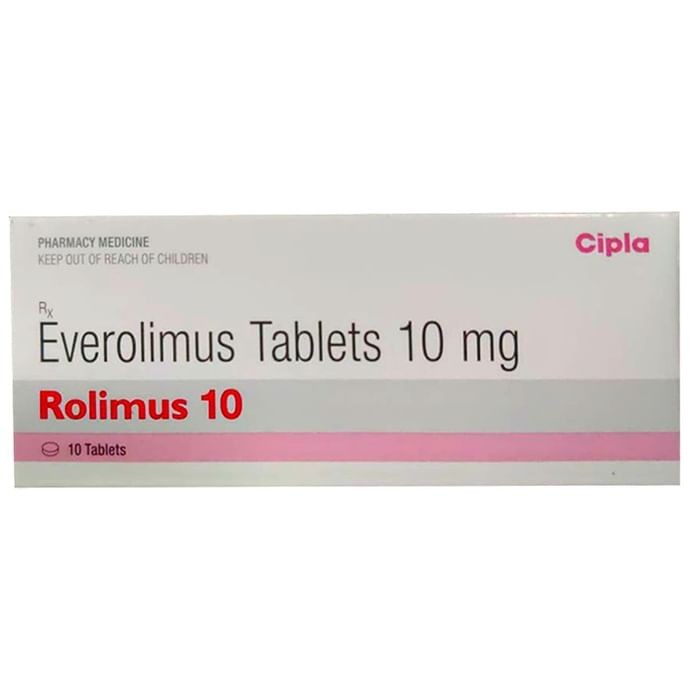
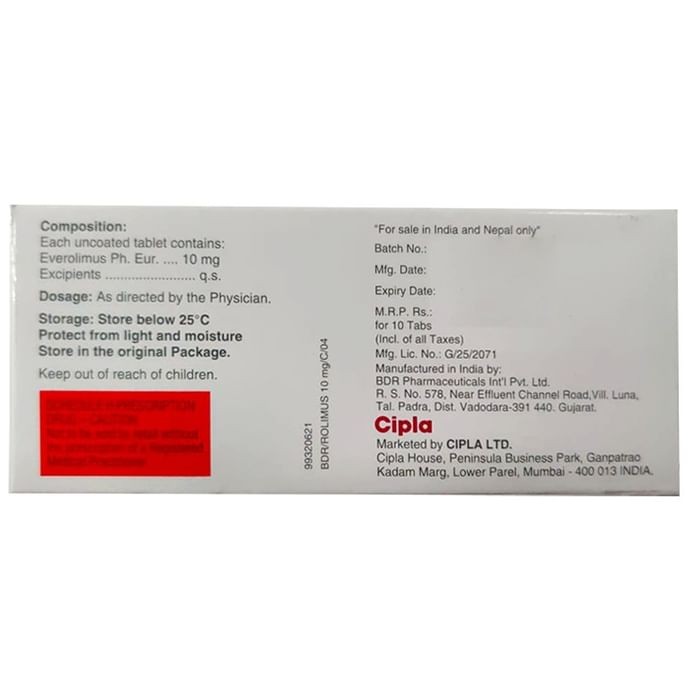
Rolimus 10 Tablet

Marketer
Cipla Ltd
Salt Composition
Everolimus (10mg)
Overview Rolimus 10 Tablet
Everol 10mg tablets prevent organ rejection following transplantation by modulating the immune system to facilitate organ acceptance. This medication also features in combination therapies for breast, pancreatic, lung, and kidney cancers. Dosage and duration should strictly adhere to your physician's instructions. It can be taken with or without food, but consistent daily timing is crucial. Overdosage can lead to severe adverse effects. Common side effects include fatigue, sinusitis, infections, pyrexia, and cough. Persistent or bothersome side effects necessitate immediate medical attention. Report any allergic reaction (rash, dyspnea, cough, edema, etc.) immediately. Seek medical counsel for increased thirst or urination frequency, dyspnea, cough, fever, or before receiving any vaccination. Pre-existing conditions and current medications should be disclosed to your doctor before commencing treatment. Pregnant or breastfeeding individuals must inform their physician before starting Everol 10mg. Regular blood tests may be recommended to monitor treatment efficacy. This medication may impact fertility in both men and women; discuss family planning with your doctor. A patient support program is available in India through Tata 1mg; contact your doctor or call 1800-102-1618 for details.
Primary Ingredients of Rolimus 10 Tablet
No text was provided to rephrase. Please provide the text you wish me to rewrite.
Uses of Rolimus 10 Tablet
Preventing graft rejection in transplant recipients
Major Benefits of Rolimus 10 Tablet:
Follow your doctor's instructions precisely regarding dosage and treatment length for this medication. Ingest the tablet whole; avoid chewing, crushing, or breaking it. Rolimus 10 Tablet can be consumed with or without food, though consistent timing is recommended.
Common Side effects of Rolimus 10 Tablet:
- Infection
- Fever
- Cough
- Fatigue
- Diarrhea
- Upper respiratory tract infection
How to use Rolimus 10 Tablet:
Follow your doctor's instructions precisely regarding dosage and treatment length for this medication. Ingest the tablet whole; avoid chewing, crushing, or fracturing it. Rolimus 10 Tablet can be administered with or without food, although consistent timing is recommended.
How Rolimus 10 Tablet works:
Rolimus 10mg tablets modulate the body's immune response, thus reducing the risk of transplant rejection.
SAFETY ADVICE
 AlcoholCONSULT YOUR DOCTOR
Alcohol consumption alongside Rolimus 10 Tablet may pose safety risks; seek medical advice before combining them.
 PregnancyCONSULT YOUR DOCTOR
Taking Rolimus 10 Tablet during pregnancy poses a confirmed risk to the fetus. Its use is discouraged except in exceptional circumstances where a physician deems the potential benefits outweigh the known dangers to the mother's life. Always seek medical advice.
 Breast feedingCONSULT YOUR DOCTOR
The use of Rolimus 10 Tablet while breastfeeding is likely inadvisable. Studies in humans indicate a potential for the medication to transfer to breast milk, posing a possible risk to the infant.
 DrivingUNSAFE
Taking Rolimus 10 Tablets might lead to adverse reactions that impair driving ability. This is because tiredness is a frequent side effect of Rolimus 10 Tablets, potentially affecting driving safety.
 KidneySAFE IF PRESCRIBED
For individuals with kidney disease, Rolimus 10 Tablet is considered safe for administration. No alteration of the Rolimus 10 Tablet dosage is necessary.
 LiverCAUTION
Patients with hepatic impairment should use Rolimus 10 Tablet cautiously, potentially requiring dosage modification. Physician consultation is advised. Rolimus 10 Tablet is contraindicated in patients with severe liver disease.
What if you forget to take Rolimus 10 Tablet :
NA
Facts to Know About Rolimus 10 Tablet
| Label | Value |
|---|---|
| Chemical Category | Macrolide Antibiotics |
| Developing Habits | No. |
| Treatment Category | Cancer Medications |
 3,018 People bought this recently