


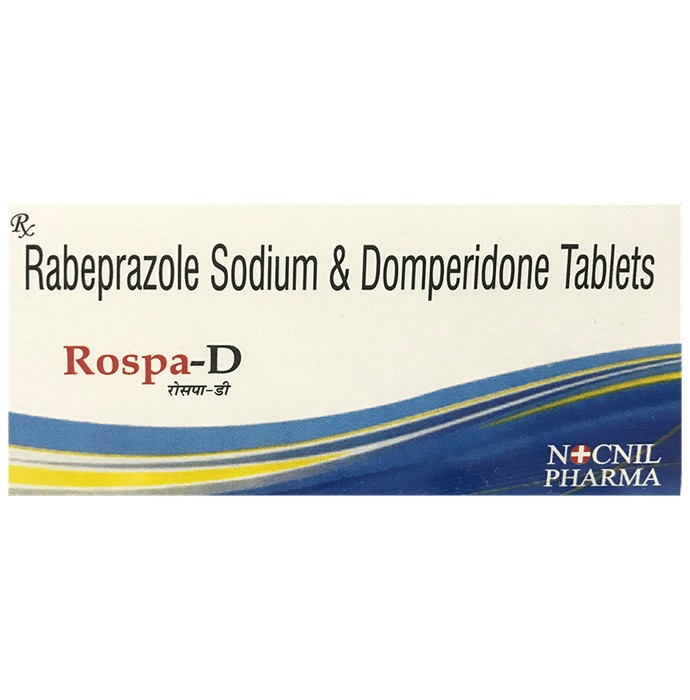
Rospa-D Tablet

Marketer
Nocnil Pharma
Salt Composition
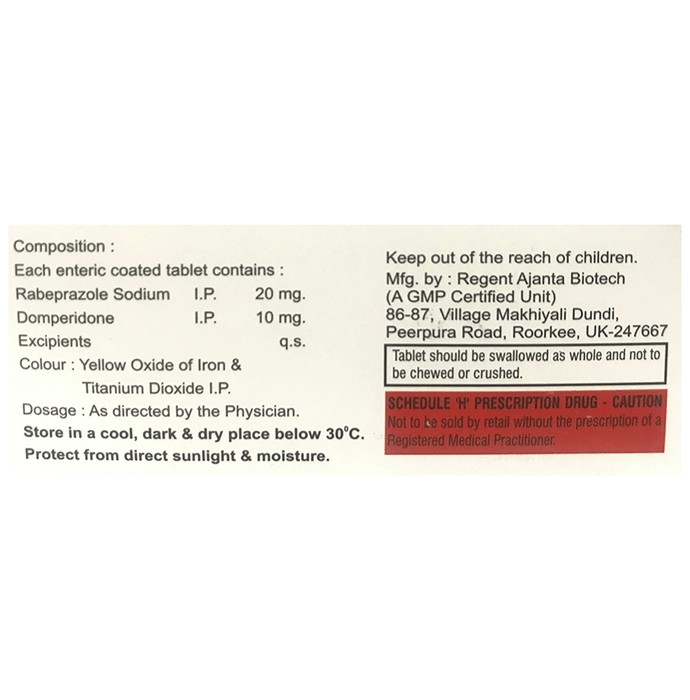
Domperidone (10mg) + Rabeprazole (20mg)
Overview Rospa-D Tablet
Acid reflux medication, Rospa-D Tablet, combines active ingredients to alleviate gastroesophageal reflux disease (GERD) symptoms. It addresses heartburn, stomach upset, and irritation by neutralizing stomach acid and facilitating gas expulsion. Rospa-D should be taken on an empty stomach, following your doctor's prescribed dosage and duration. Treatment length depends on individual response and condition severity; premature discontinuation may lead to symptom recurrence or worsening. Inform your healthcare provider of all other medications you're using, as interactions are possible. Common, usually transient, side effects include diarrhea, abdominal pain, dry mouth, headache, gas, and fatigue. Report any concerning side effects immediately. Drowsiness and dizziness are potential effects; avoid driving or mentally demanding tasks until their impact is known. Alcohol consumption should be avoided due to increased drowsiness risk. Dietary changes, such as consuming cold milk and avoiding caffeine, spicy foods, and chocolate, can enhance treatment efficacy. Prior to starting Rospa-D, disclose any kidney or liver conditions, pregnancy, pregnancy plans, or breastfeeding to your physician.
Uses of Rospa-D Tablet
Managing gastroesophageal reflux and peptic ulcers.
Major Benefits of Rospa-D Tablet:
Follow your doctor's instructions precisely regarding dosage and treatment length for Rospa-D Tablets. Ingest the tablet whole; do not crush, chew, or break it. Administer this medication on an empty stomach.
Common Side effects of Rospa-D Tablet:
- Cough
- Headache
- Diarrhea
- Dizziness
- Inflammation of the nose
- Abdominal pain
- Vomiting
- Weakness
- Nasal congestion (stuffy nose)
- Insomnia (difficulty in sleeping)
- Fundic gland polyps
- Nausea
- Constipation
- Flatulence
- Back pain
- Pharyngitis
How to use Rospa-D Tablet:
Follow your physician's instructions precisely regarding dosage and treatment length for this medication. Ingest the Rospa-D Tablet whole; avoid chewing, crushing, or fracturing it. Administer on an empty stomach.
How Rospa-D Tablet works:
Rospa-D tablets contain Domperidone and Rabeprazole, two medications working synergistically. Domperidone, a prokinetic agent, enhances gastrointestinal motility, facilitating smoother food passage through the stomach. Rabeprazole, a proton pump inhibitor (PPI), decreases gastric acid production, providing relief from heartburn and acid indigestion.
SAFETY ADVICE
 AlcoholCAUTION
Exercise caution when using Rospa-D Tablet with alcohol. Seek medical advice before combining them.
 PregnancyCONSULT YOUR DOCTOR
Taking Rospa-D tablets during pregnancy may pose risks. While human research is scarce, animal studies indicate potential harm to the unborn child. A physician will assess the advantages against possible dangers prior to prescribing. Seek medical advice.
 Breast feedingCONSULT YOUR DOCTOR
Using Rospa-D tablets while breastfeeding is likely inadvisable. Available human data indicate potential transfer of the medication into breast milk, posing a possible risk to the infant.
 DrivingUNSAFE
Taking Rospa-D tablets might reduce attentiveness, impair vision, and cause drowsiness or dizziness. Driving should be avoided if these effects are experienced.
 KidneyCAUTION
Patients with kidney impairment should use Rospa-D Tablets cautiously, as dose modification may be necessary. Physician consultation is advised.
 LiverCAUTION
Individuals with liver impairment should exercise caution when using Rospa-D Tablets, as dose modification may be necessary. Medical advice is recommended. Rospa-D Tablets are contraindicated for patients exhibiting moderate to severe hepatic dysfunction.
What if you forget to take Rospa-D Tablet :
Should you forget a Rospa-D Tablet dose, administer it promptly. Nevertheless, if your next dose is imminent, omit the missed dose and resume your usual dosing regimen. Avoid taking a double dose.
Facts to Know About Rospa-D Tablet
| Label | Value |
|---|---|
| Developing Habits | No. |
| Treatment Category | Gastrointestinal system |
 3,018 People bought this recently