


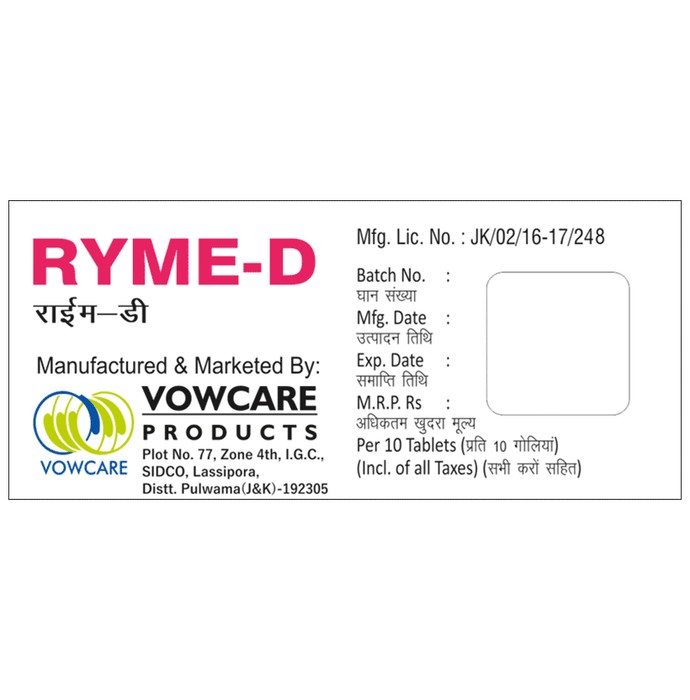
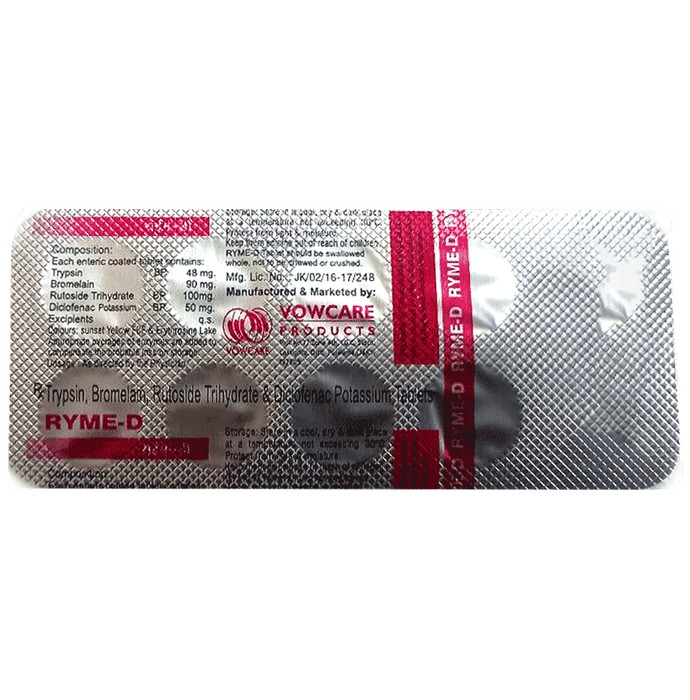
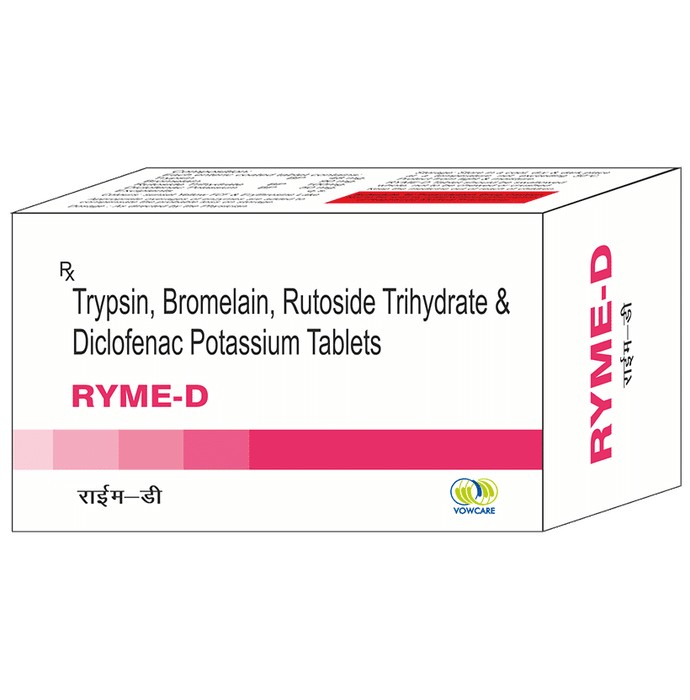
Ryme D Tablet

Marketer
Vowcare Products Pvt Ltd
Salt Composition
Trypsin (48mg) + Bromelain (90mg) + Rutoside (100mg) + Diclofenac (50mg)
Overview Ryme D Tablet
Alieve-D tablets offer pain relief and reduce inflammation associated with conditions such as rheumatoid arthritis, ankylosing spondylitis, and osteoarthritis. This medication can also alleviate fever, muscle aches, back pain, toothaches, and ear or throat pain. For optimal stomach comfort, take Alieve-D tablets with food, following your doctor's prescribed dosage and duration precisely. Avoid exceeding the recommended amount or extending the treatment period. Potential side effects include nausea, vomiting, heartburn, diarrhea, appetite loss, and indigestion. Report any persistent or bothersome side effects to your physician, who can advise on mitigating strategies. Prior to use, consult your doctor if you have pre-existing heart, kidney, liver, or stomach ulcer issues. Ensure your doctor is aware of all other medications you're taking to ensure safe and effective use. Pregnant or breastfeeding women should seek medical advice before using Alieve-D tablets.
Uses of Ryme D Tablet
Analgesia
Major Benefits of Ryme D Tablet:
Consume this medication according to your physician's prescribed dosage and schedule. Ingest the tablet whole; avoid chewing, crushing, or fracturing it. It's recommended to take Ryme D Tablet with a meal.
Common Side effects of Ryme D Tablet:
- Nausea
- Vomiting
- Heartburn
- Indigestion
- Diarrhea
- Loss of appetite
- Stomach pain
How to use Ryme D Tablet:
Consume this medication according to your physician's prescribed dosage and regimen. Ingest the tablet whole; avoid chewing, crushing, or fracturing it. It's recommended to take Ryme D Tablet with a meal.
How Ryme D Tablet works:
Ryme D Tablet unites four active components: the enzymes trypsin and bromelain, the antioxidant rutoside, and the NSAID diclofenac. Trypsin and bromelain enhance circulation and stimulate the body's natural pain and inflammation-reducing mechanisms. Rutoside's antioxidant properties combat free radical damage, further mitigating swelling. Diclofenac, a non-steroidal anti-inflammatory drug, inhibits the production of prostaglandins, inflammatory chemical messengers responsible for pain and swelling.
SAFETY ADVICE
 AlcoholCONSULT YOUR DOCTOR
Alcohol consumption alongside Ryme D Tablet lacks established safety data. Physician consultation is advised.
 PregnancyCONSULT YOUR DOCTOR
Using Ryme D Tablet during pregnancy is considered unsafe due to established risks to the fetus. Nevertheless, in exceptional life-threatening circumstances, a physician might prescribe it when the potential benefits outweigh the known hazards. Always seek medical advice.
 Breast feedingCONSULT YOUR DOCTOR
Data on Ryme D Tablet use while breastfeeding is lacking. Seek medical advice from your physician.
 DrivingUNSAFE
Driving ability may be impaired by Ryme D Tablet side effects. Some individuals taking Ryme D Tablet experience headaches, blurred vision, dizziness, or drowsiness, potentially impacting their capacity to drive safely.
 KidneySAFE IF PRESCRIBED
The use of Ryme D Tablet in individuals with kidney disease is likely safe. Existing evidence indicates dose modification may be unnecessary, but physician consultation is recommended.
 LiverSAFE IF PRESCRIBED
The use of Ryme D Tablet in individuals with liver impairment is likely safe. Current evidence indicates dose modification may not be necessary, but physician consultation is recommended.
What if you forget to take Ryme D Tablet :
Should you forget a Ryme D Tablet dose, administer it at your earliest convenience. Nevertheless, if your next scheduled dose is imminent, omit the missed dose and resume your usual regimen. Avoid taking a double dose.
Facts to Know About Ryme D Tablet
| Label | Value |
|---|---|
| Developing Habits | No. |
| Treatment Category | Pain Relievers |
 3,018 People bought this recently