


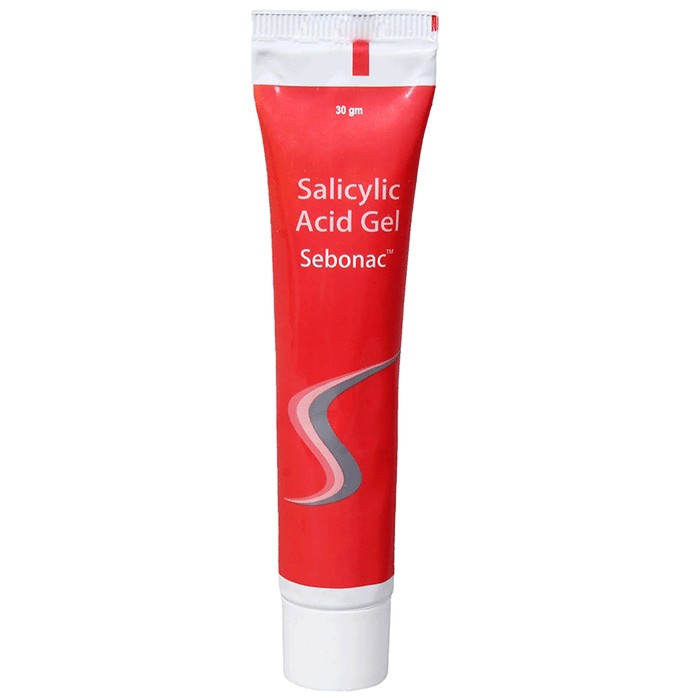
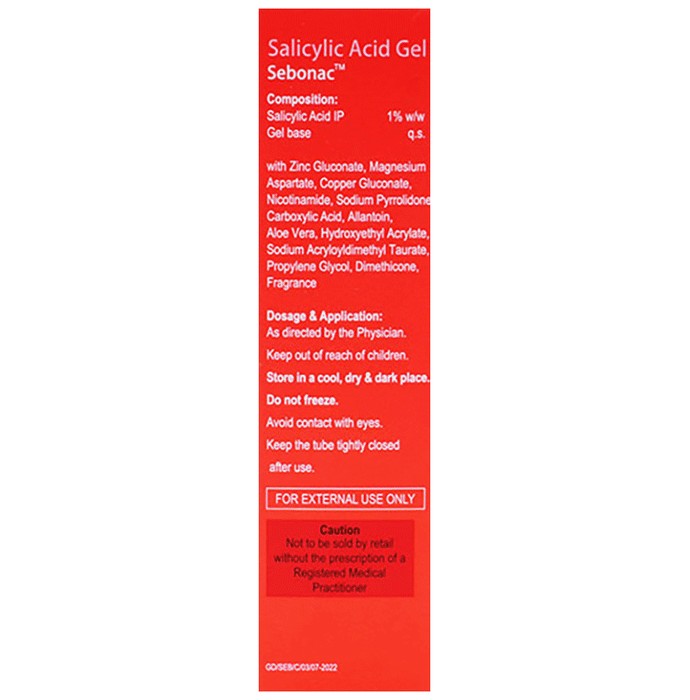
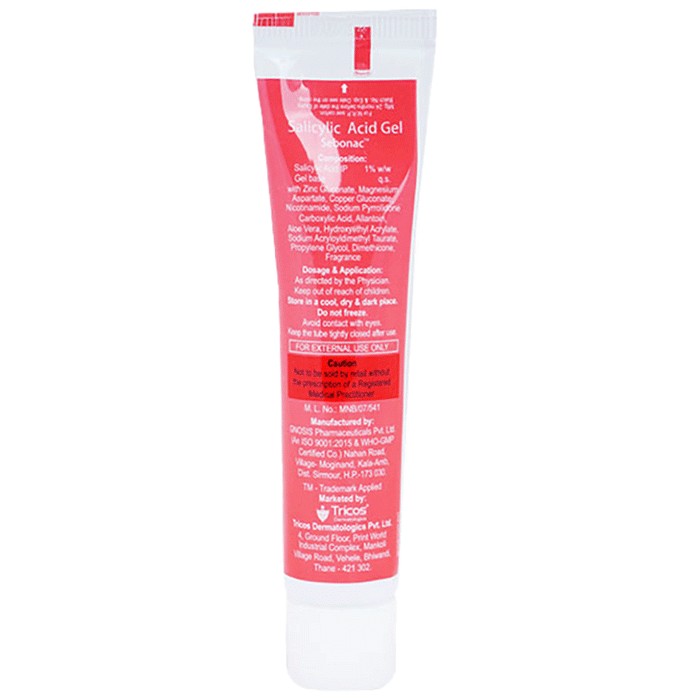
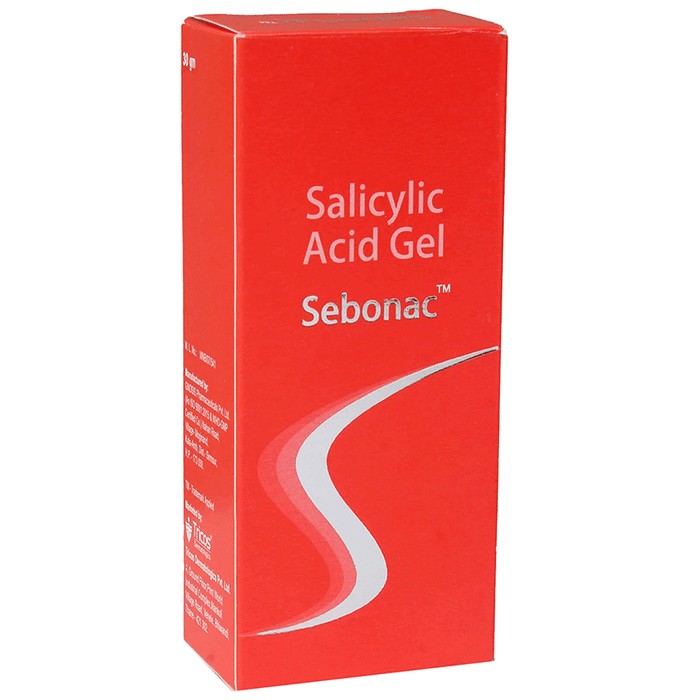
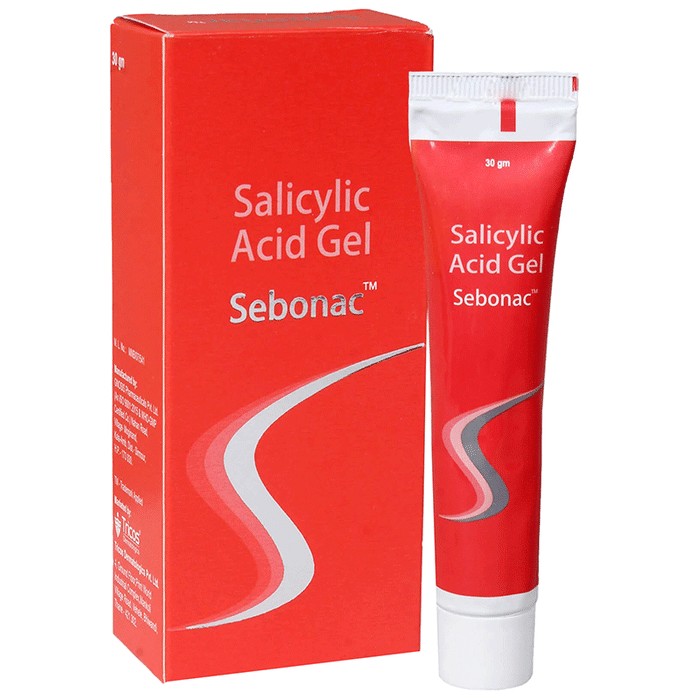
Sebonac Gel

Marketer
Glowderma Labs Pvt Ltd
Salt Composition
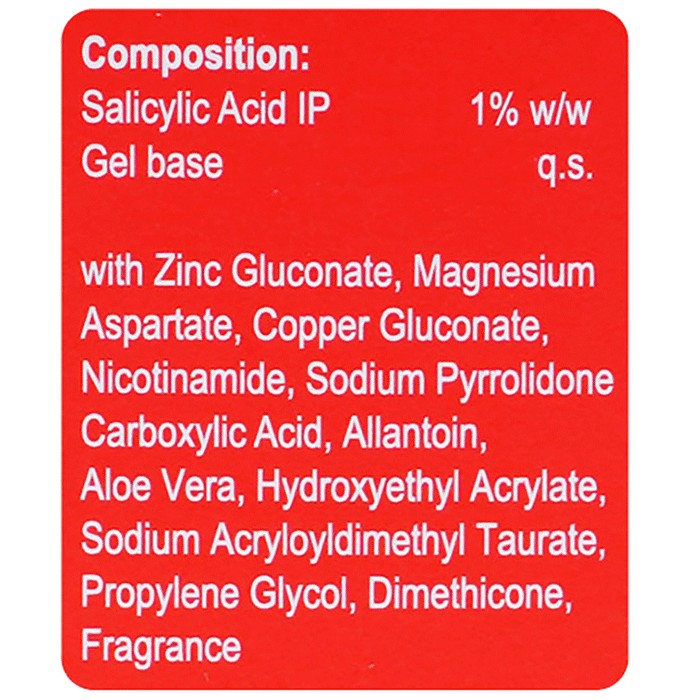
Salicylic Acid (1% w/v)
Overview Sebonac Gel
Acnemycin Gel combats acne-causing bacteria, effectively treating blemishes on the face, chest, and back. This topical medication targets the microorganisms responsible for acne. Acnemycin Gel can be used independently or alongside other acne therapies, always following your doctor's instructions and the accompanying patient information leaflet for optimal results. Apply a thin layer to clean, dry affected skin once or twice daily. Avoid application to broken skin and contact with eyes, nose, and mouth. Significant improvement may take weeks, with maximum benefit seen after several months. A follow-up appointment with your doctor after one month of use is recommended to assess progress. Common mild side effects include skin irritation (itching, stinging, peeling, redness). Inform your doctor if these persist or worsen; reducing application frequency or amount may help. Increased sun sensitivity is possible; minimize sun exposure, or apply the gel in the evening. Avoid contact with hair and clothing due to potential bleaching. While generally safe, inform your doctor about pre-existing skin conditions, other medications (especially topical ones), and if you have highly sensitive skin. Consult your physician before use if pregnant or breastfeeding.
Primary Ingredients of Sebonac Gel
There is no text provided to rephrase.
Uses of Sebonac Gel
Inflammatory skin condition
Major Benefits of Sebonac Gel:
Apply this medication topically only. Follow your physician's instructions regarding dosage and treatment length. Always consult the product label for application details. Before applying the gel, cleanse and thoroughly dry the affected skin. Wash your hands immediately afterward, unless the affected area is on your hands.
Common Side effects of Sebonac Gel:
- Itching
- Stinging sensation
- Skin peeling
- Erythema (skin redness)
How to use Sebonac Gel:
Apply this medication only to the skin's surface. Follow your physician's instructions regarding dosage and treatment length. Always consult the product label for application details. Before application, ensure the affected area is clean and dry; then, spread the gel evenly. Wash your hands thoroughly afterward, unless the application site is on your hands.
How Sebonac Gel works:
Applied topically, Sebonac Gel's keratolytic action combats acne by eliminating acne-causing bacteria within the skin. This medication also decreases sebum production, promotes skin restoration, and helps maintain clear pores.
SAFETY ADVICE
 AlcoholNone
No known drug interactions.
 PregnancyCONSULT YOUR DOCTOR
Employing Sebonac Gel during pregnancy may pose risks. While human research is scant, animal studies indicate potential harm to a developing fetus. A physician will assess the advantages against possible hazards prior to prescribing. Seek medical advice.
 Breast feedingCAUTION
The use of Sebonac Gel while breastfeeding requires careful consideration. Mothers should discontinue breastfeeding throughout their treatment course and until the medication is fully cleared from their system.
 DrivingNone
No drug interaction detected.
 KidneyNone
No drug interactions identified.
 LiverNone
No drug interactions identified.
What if you forget to take Sebonac Gel :
Should you forget a Sebonac Gel application, use it as soon as you remember. If your next application is nearly due, however, omit the missed one and resume your usual regimen. Never apply a double dose.
Facts to Know About Sebonac Gel
| Label | Value |
|---|---|
| Chemical Type | Salicylic acid |
| Developing Habits | No. |
| Treatment Category | DERMA |
| Behavior Class | Corneal resurfacing and exfoliating agents |
 3,018 People bought this recently