


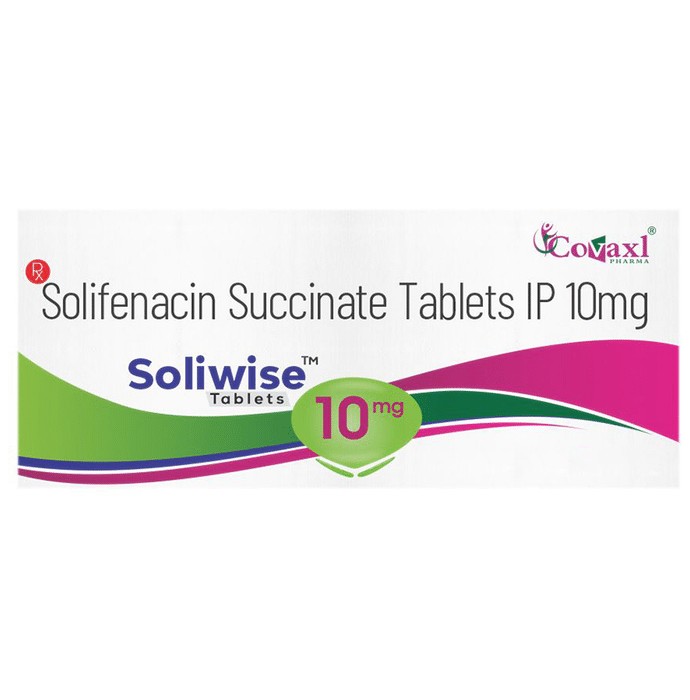
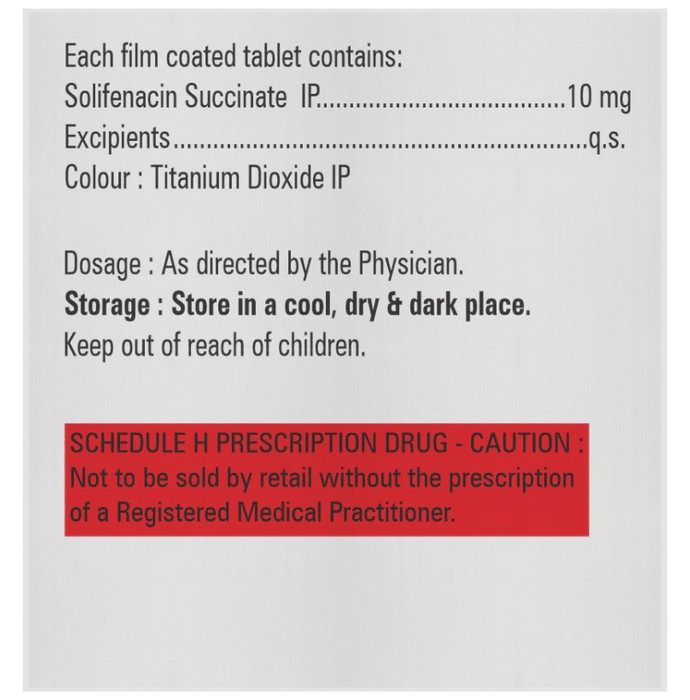
Soliwise 10mg Tablet

Marketer
Fibovil Pharmaceuticals Pvt Ltd
Salt Composition
Solifenacin (10mg)
Overview Soliwise 10mg Tablet
Overactive bladder is treated with the muscarinic receptor blocker, Soliwise 10mg Tablet. This medication alleviates urinary symptoms such as urinary frequency, urgency, and incontinence. Always adhere to your doctor's prescribed dosage and duration for Soliwise 10mg Tablets; it can be administered with or without food. Swallow the tablet whole; avoid crushing or chewing. Discontinuing treatment prematurely may exacerbate symptoms, so consult your physician before stopping. Complete the prescribed course for optimal results. Dry mouth, constipation, nausea, and urinary tract infections are potential side effects. Increased water intake may help manage these. Blurred vision or dizziness are also possible; refrain from driving if affected. Inform your doctor about all other medications and pre-existing health conditions before starting treatment. Disclose pregnancy or breastfeeding to your physician. Patients with liver or kidney impairment should exercise caution and undergo regular monitoring as directed by their doctor.
Uses of Soliwise 10mg Tablet
Managing the signs and symptoms of overactive bladder
Major Benefits of Soliwise 10mg Tablet:
Administer this medication precisely as your physician directs, adhering to both the prescribed dosage and treatment length. Ingest the tablet whole; avoid chewing, crushing, or fracturing it. Soliwise 10mg Tablets can be consumed with or without food; however, consistent daily timing is recommended.
Common Side effects of Soliwise 10mg Tablet:
- Dryness in mouth
- Constipation
- Blurred vision
- Nausea
- Upset stomach
- Urinary tract infection
How to use Soliwise 10mg Tablet:
Administer this medication precisely as prescribed by your physician, both in terms of dosage and treatment length. Ingest the tablet whole; avoid chewing, crushing, or breaking it. Soliwise 10mg Tablets can be consumed with or without food, though consistent timing is recommended.
How Soliwise 10mg Tablet works:
Urinary bladder muscle relaxant Soliwise 10mg tablets alleviate frequent, urgent, and involuntary urination through an antimuscarinic mechanism.
SAFETY ADVICE
 AlcoholCAUTION
Use caution when drinking alcohol while taking Soliwise 10mg tablets. Physician consultation is recommended.
 PregnancyCONSULT YOUR DOCTOR
The use of Soliwise 10mg Tablets during pregnancy may pose risks. While human data is scarce, animal research indicates potential harm to the fetus. A physician will assess the advantages against possible dangers prior to prescription. Seek medical advice.
 Breast feedingSAFE IF PRESCRIBED
The use of Soliwise 10mg Tablet while breastfeeding is likely safe. Available human data indicates minimal risk to the infant. However, prolonged Soliwise 10mg Tablet use may decrease milk supply and potentially lead to constipation, dry mouth, and urinary tract infections in the nursing infant.
 DrivingUNSAFE
Driving ability may be impaired by Soliwise 10mg Tablet side effects, such as blurred vision, drowsiness, and fatigue.
 KidneyCAUTION
For individuals with advanced kidney impairment, the use of Soliwise 10mg tablets requires careful monitoring. Dosage modification of Soliwise 10mg tablets may be necessary. Physician consultation is advised. Soliwise 10mg tablets are contraindicated for patients receiving renal dialysis.
 LiverCAUTION
Individuals with hepatic impairment should exercise caution when using Soliwise 10mg tablets, as dose modification may be necessary. Consult a physician before use. Soliwise 10mg tablets are contraindicated in patients exhibiting severe liver dysfunction.
What if you forget to take Soliwise 10mg Tablet :
Should you forget a Soliwise 10mg Tablet dose, take it immediately. Nevertheless, if your next dose is imminent, omit the missed dose and resume your usual dosing pattern. Avoid taking a double dose.
Facts to Know About Soliwise 10mg Tablet
| Label | Value |
|---|---|
| Chemical Category | Tetrahydroisoquinoline Quinuclidine Derivative |
| Developing Habits | No. |
| Type of Therapy | Urological Care |
| Behavioral Class | Targeted bladder M3 anticholinergic therapy |
 3,018 People bought this recently