


Stablanz-PV Tablet

Marketer
Ordain Health Care Global Pvt Ltd
Salt Composition
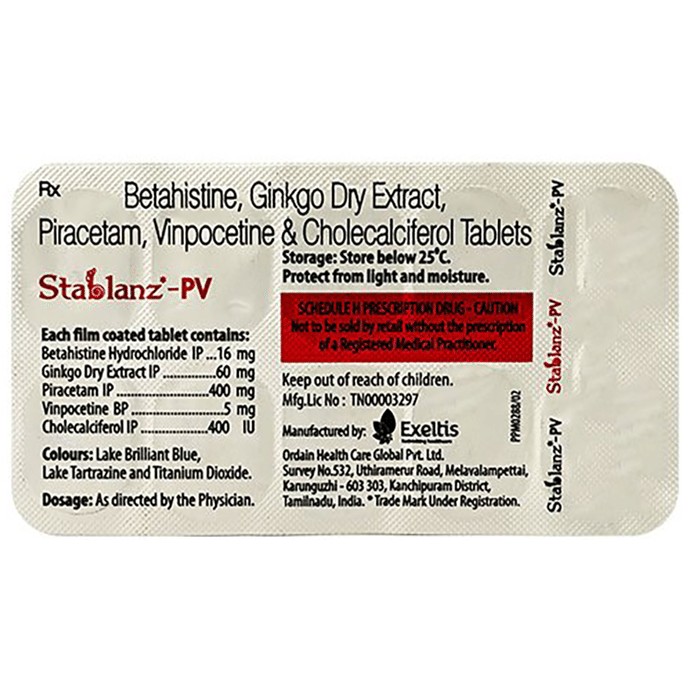
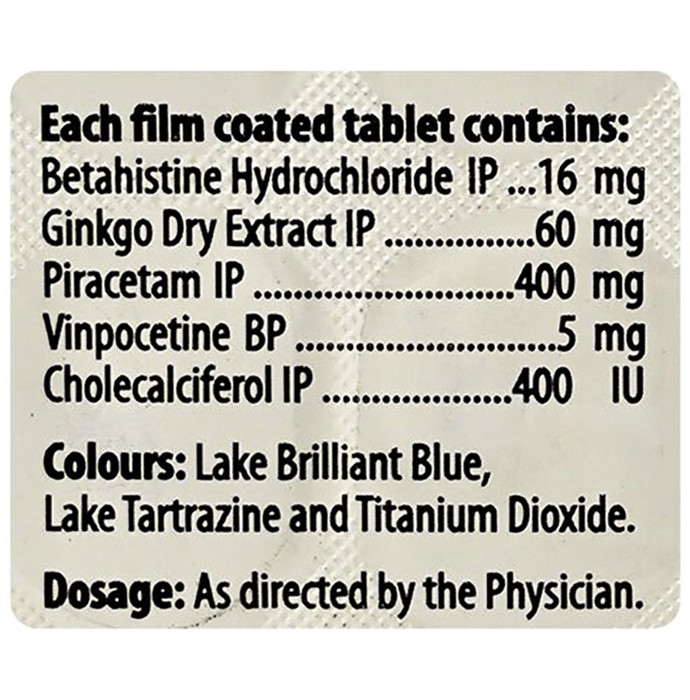
Betahistine (16mg) + Vitamin D3 (400IU) + Ginkgo Biloba (60mg) + Piracetam (400mg) + Vinpocetine (5mg)
Overview Stablanz-PV Tablet
Vertigo and Meniere's disease may be managed with the prescription medication Stablanz-PV Tablet. This drug combination improves inner ear circulation, offering neuroprotective benefits during oxygen deficiency. Stablanz-PV Tablets may be administered with or without food, strictly following your physician's prescribed dosage and duration. Exceeding the recommended dose is inadvisable. Common, typically mild, side effects include headache, anxiety, tiredness, and indigestion. Persistent side effects warrant medical attention. Seek immediate medical help for allergic reactions such as swelling, rash, breathing difficulties, or hives. Prior to commencing treatment, disclose all existing health conditions, concurrent medications, and pregnancy or breastfeeding status to your doctor. Alcohol consumption should be avoided following administration.
Primary Ingredients of Stablanz-PV Tablet
No text was provided to rewrite.
Uses of Stablanz-PV Tablet
Ménière's syndrome
Major Benefits of Stablanz-PV Tablet:
Follow your doctor's instructions precisely regarding the dosage and treatment length for Stablanz-PV Tablets. Ingest the tablet whole; avoid chewing, crushing, or breaking it. While Stablanz-PV Tablets can be taken with or without food, consistent timing is recommended for optimal results.
Common Side effects of Stablanz-PV Tablet:
- Nausea
- Upset stomach
- Indigestion
- Weight gain
- Rash
- Headache
- Flushing (sense of warmth in the face, ears, neck and trunk)
- Nervousness
- Abnormality of voluntary movements
How to use Stablanz-PV Tablet:
Follow your doctor's instructions precisely regarding the dosage and treatment length for Stablanz-PV Tablet. Ingest the tablet whole; avoid crushing, chewing, or breaking it. While Stablanz-PV Tablet can be taken with or without food, consistent timing is recommended.
How Stablanz-PV Tablet works:
Stablanz-PV Tablet integrates five active components: betahistine, vitamin D3, ginkgo biloba extract, piracetam, and vinpocetine. Betahistine enhances inner ear perfusion, thereby alleviating inner ear hydrops. Vitamin D3 inclusion addresses potential vitamin D deficiency implicated in Ménière's disease. Ginkgo biloba and vinpocetine augment cerebral blood flow and offer neuroprotection against oxidative stress. Piracetam provides further neuroprotection against hypoxia and modulates neuronal ion channels.
SAFETY ADVICE
 AlcoholCAUTION
Exercise caution when combining Stablanz-PV Tablet and alcohol. Seek medical advice before doing so.
 PregnancyCONSULT YOUR DOCTOR
The use of Stablanz-PV Tablets during pregnancy may pose risks. While human data is scarce, animal research indicates potential harm to the fetus. A physician will assess the advantages against possible risks prior to prescribing. Seek medical advice.
 Breast feedingCONSULT YOUR DOCTOR
Data on Stablanz-PV Tablet use while breastfeeding is absent. Seek medical advice from your physician.
 DrivingUNSAFE
Driving ability may be impaired by Stablanz-PV Tablet side effects, including drowsiness and tremors. The medication may induce sleepiness and instability.
 KidneySAFE IF PRESCRIBED
Use of Stablanz-PV Tablet in patients with kidney impairment appears to present minimal risk. Current evidence indicates dose modification may be unnecessary, however, physician consultation is advised.
 LiverSAFE IF PRESCRIBED
The use of Stablanz-PV Tablets in patients with liver disease appears to pose minimal risk. Current evidence indicates dose modification may be unnecessary, but physician consultation is recommended.
What if you forget to take Stablanz-PV Tablet :
Should you forget a Stablanz-PV Tablet dose, administer it promptly. Nevertheless, if your next dose is imminent, omit the missed dose and resume your usual dosing regimen. Avoid taking a double dose.
Facts to Know About Stablanz-PV Tablet
| Label | Value |
|---|---|
| Developing Habits | No. |
| Type of Treatment | Neuroscience of the Central Nervous System |
 3,018 People bought this recently