
Search Icon

AUM Pharmacy

Hi there!

Hello, Login
All Categories
VisaVisaVisa
slide-0
slide-1
slide-2

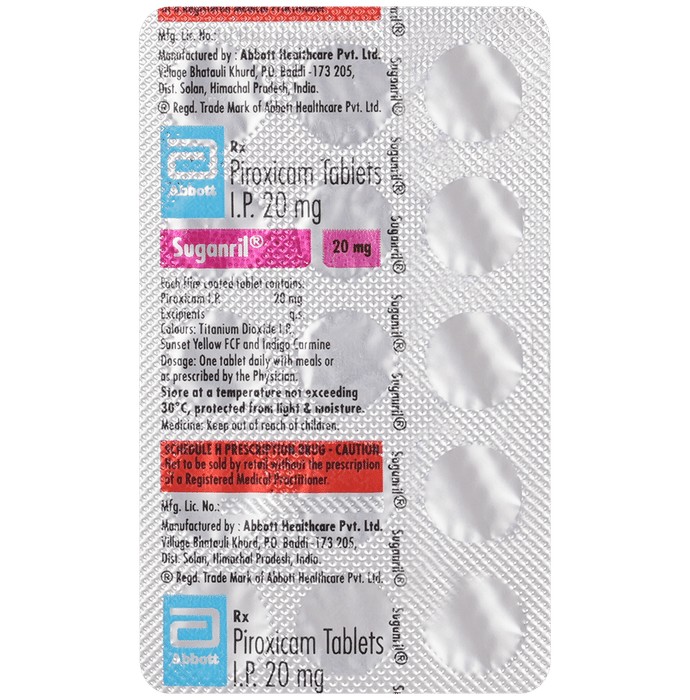
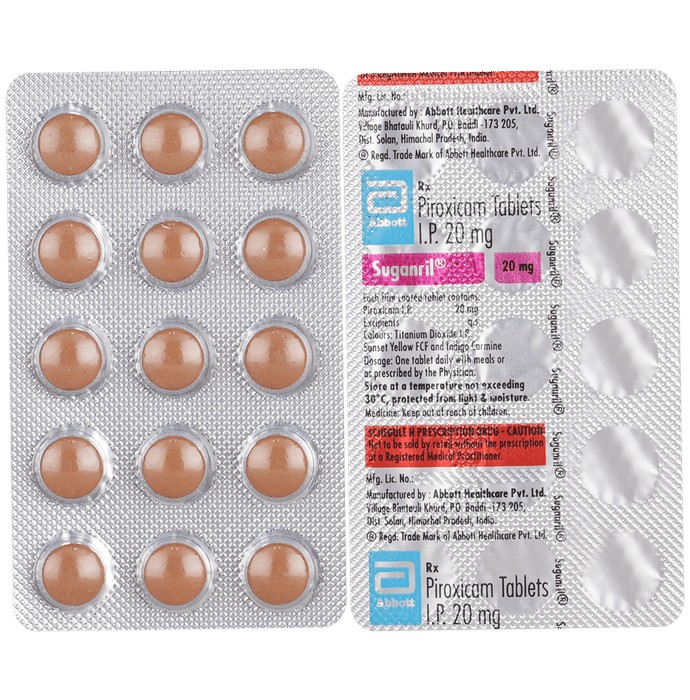
Suganril Tablet

Prescription Icon
Prescription Required

Marketer

Abbott

Salt Composition

Piroxicam (20mg)

Overview Suganril Tablet

Arthritis pain can be effectively managed with the analgesic Suganril Tablet, indicated for moderate to severe discomfort associated with conditions like osteoarthritis and rheumatoid arthritis. This medication targets joint and muscle pain and inflammation. For optimal absorption and to minimize stomach upset, Suganril should be administered with food. Dosage and treatment length are individualized, determined by the specific condition and response to therapy. Continue using the medication as prescribed, even with symptom improvement, until your physician advises discontinuation. Common, generally mild, side effects may include nausea, vomiting, stomach pain, headache, or dizziness. Report any persistent or worsening side effects to your doctor, who can offer strategies for management. Prior to commencing treatment, inform your doctor of any pre-existing conditions, such as stomach ulcers, heart disease, hypertension, or liver/kidney impairment, and provide a complete list of all medications being taken to avoid potential interactions. Pregnant or breastfeeding individuals should seek medical advice before using Suganril.

Uses of Suganril Tablet

Analgesia

Major Benefits of Suganril Tablet:

Consume this medication precisely as your physician directs, adhering to both the prescribed dosage and timeframe. Ingest the tablet whole; avoid chewing, crushing, or fracturing it. Suganril should be administered with a meal.

Common Side effects of Suganril Tablet:

  • Vomiting
  • Stomach pain
  • Nausea
  • Headache
  • Dizziness

How to use Suganril Tablet:

Administer this medication precisely as your physician directs, adhering to both the prescribed dosage and treatment schedule. Ingest the tablet whole; avoid chewing, crushing, or fracturing it. Consume Suganril Tablet with food.

How Suganril Tablet works:

Suganril Tablet is a non-steroidal anti-inflammatory drug (NSAID). It works by blocking the release of certain chemical messengers that are responsible for inflammation (pain and swelling).

SAFETY ADVICE

AlcoholAlcoholUNSAFE

Combining Suganril Tablet with alcohol is not advisable due to safety concerns.

PregnancyPregnancyCONSULT YOUR DOCTOR

Using Suganril tablets during pregnancy is contraindicated due to established risks to the fetus. In exceptional, life-threatening circumstances, a physician might prescribe it if the potential benefits outweigh the known hazards. Always seek medical advice.

Breast feedingBreast feedingCONSULT YOUR DOCTOR

Breastfeeding while taking Suganril Tablets is potentially hazardous. Available human data indicate a possibility of the medication transferring to breast milk, posing a risk to the infant.

DrivingDrivingUNSAFE

Taking Suganril Tablet may cause drowsiness, blurred vision, and dizziness, reducing alertness. Driving should be avoided if these effects are experienced.

KidneyKidneyCAUTION

Patients with severe kidney impairment should use Suganril Tablet cautiously, potentially requiring dosage modification. Physician consultation is recommended.

LiverLiverCAUTION

Patients with liver impairment should exercise caution when taking Suganril tablets, as dosage modification may be necessary. Physician consultation is advised.

What if you forget to take Suganril Tablet :

Omit a Suganril Tablet dose? Take it immediately if remembered. If your next dose is imminent, however, forgo the missed one and resume your usual dosing regimen. Never take a double dose.

Facts to Know About Suganril Tablet

LabelValue
Type of Compound Esters of enolic acids
Addictive None.
Medication Classification Medication for Pain Relief

FAQs on Suganril Tablet

Suganril Tablet and diclofenac are analgesics. Diclofenac, unlike piroxicam, exhibits preferential inhibition of the COX-2 enzyme, a component of the cyclooxygenase system involved in inflammation and pain signaling. This selective action is believed to reduce the incidence of adverse effects compared to Suganril Tablet.
Naproxen and Suganril tablets are both analgesics, non-selectively inhibiting cyclooxygenase—the enzyme mediating pain and inflammation. Clinical trials indicate comparable efficacy for both drugs. Nevertheless, naproxen exhibits a lower incidence of gastrointestinal adverse effects than Suganril tablets.
Suganril Tablet and meloxicam are analgesics, both non-selectively inhibiting cyclooxygenase—the enzyme mediating inflammation and pain perception. Clinical trials indicate comparable efficacy between the two. Nevertheless, meloxicam exhibits a lower incidence of acute gastrointestinal adverse events relative to Suganril Tablet.
Suganril tablets and ketoprofen are both analgesic medications, both acting non-selectively on COX enzymes, which mediate inflammation and pain. Clinical trials indicate superior efficacy of topical ketoprofen gel relative to Suganril tablets. Furthermore, ketoprofen gel demonstrated exceptional patient acceptance.
Suganril tablets contain a COX inhibitor (cyclooxygenase, an enzyme involved in inflammatory and pain processes), while Tramadol is an opioid analgesic. Tramadol carries a risk of dependence.
Suganril Tablets and nimesulide are analgesics. Unlike nimesulide, which selectively inhibits the COX-2 enzyme, Suganril Tablets non-selectively inhibit cyclooxygenase (COX), an enzyme mediating pain and inflammation. Nimesulide's selectivity is believed to reduce adverse reactions relative to piroxicam. Its use is contraindicated in children under 12.
In most instances of chikungunya, platelet levels remain stable. However, analgesics such as piroxicam may heighten the risk of bleeding. Therefore, avoid using Suganril tablets or other pain relievers if you experience fever accompanied by joint pain. Seek medical advice prior to commencing Suganril Tablet treatment.
Suganril tablets and aspirin are distinct medications, although both are categorized as COX (cyclooxygenase) inhibitors. Both possess anti-inflammatory and analgesic properties.
Concurrent use of Suganril tablets and dexamethasone is contraindicated due to the synergistic increase in their respective toxicities, resulting in a heightened risk of gastrointestinal ulceration.
Concurrent use of methocarbamol and Suganril tablets is considered safe, as no significant adverse interactions have been documented. However, physician consultation is advised prior to initiating either treatment.
Paracetamol and Suganril Tablet may be used concurrently; no significant adverse interactions are documented. Consult your physician prior to initiating either treatment.
Suganril Tablet is confirmed to be a non-steroidal anti-inflammatory drug.
Suganril tablets contain sulfur. Use of Suganril tablets may trigger serious side effects in susceptible patients, including potentially life-threatening skin conditions such as Stevens-Johnson syndrome. Always disclose any allergies to your physician.
Suganril Tablets do not possess anticoagulant properties; they are analgesics. Their use is contraindicated in individuals with hemorrhagic conditions.
Suganril tablets do not possess muscle relaxant properties. Instead, this analgesic medication targets the COX enzyme (cyclooxygenase), an enzyme mediating inflammation and pain.
Suganril tablets do not contain narcotics. This analgesic targets the COX enzyme (cyclooxygenase), a key player in inflammation and pain signaling, to reduce both symptoms.
Suganril Tablets are ineffective for managing high blood pressure. Concurrent use of Suganril Tablets diminishes the efficacy of antihypertensive drugs. Disclose any antihypertensive medication use to your physician prior to commencing Suganril Tablet treatment.
Suganril Tablet and Losartan should not be used concurrently. Concomitant administration of Suganril Tablet diminishes the efficacy of antihypertensive drugs such as Losartan, potentially rendering blood pressure treatment ineffective. Patients currently using antihypertensive medications must disclose this to their physician prior to commencing Suganril Tablet therapy.
Suganril Tablets and lisinopril should not be used concurrently. Concurrent use of piroxicam, a component of Suganril, diminishes the antihypertensive effect of lisinopril, potentially rendering blood pressure treatment ineffective. Disclose current antihypertensive medication use to your physician prior to commencing Suganril Tablet therapy.
Affirmative. Concurrent use of Suganril Tablet and calcium channel blockers is acceptable. Studies indicate that nonsteroidal anti-inflammatory drugs (NSAIDs) may lessen the efficacy of most antihypertensive medications, with calcium channel blockers being a notable exception (White, 2007).
Suganril tablets may be used concurrently with tizanidine. Tizanidine, a skeletal muscle relaxant, complements piroxicam, an analgesic, in managing conditions such as back pain.
Suganril Tablet's compatibility with beta-cyclodextrin is confirmed. Studies indicate this combination accelerates piroxicam's efficacy and mitigates gastrointestinal adverse reactions.
Indeed, Suganril Tablet has substitutes. Analgesic selection depends on the specific ailment. A physician's consultation is necessary before commencing piroxicam therapy or switching medications.
Piroxicam should not be used in patients with hypersensitivity, bleeding disorders, duodenal, gastric, or peptic ulcers, mouth sores, systemic lupus erythematosus, ulcerative colitis, upper gastrointestinal problems, advanced pregnancy, heart conditions, liver dysfunction, or kidney impairment.
Suganril Tablets are not indicated for allergic reactions; they are an analgesic.
Suganril tablets provide extended pain relief with a single daily dose. Individual responses vary, however; the analgesic effect of piroxicam generally improves with continued use over several weeks.
Suganril tablets are not associated with elevated blood pressure. This medication is a non-narcotic analgesic.
Menstrual cramps are not an approved indication for Suganril Tablet. Clinical trials demonstrate that piroxicam offers substantial relief from menstrual pain.
Suganril tablets lack regulatory approval for migraine treatment. Clinical trials have demonstrated Suganril tablets' efficacy in substantially reducing pain from migraine headaches lacking an aura.
Affirmative. This medication may alleviate back pain. Nevertheless, a physician's consultation is necessary to determine the underlying cause of your back pain before commencing treatment. Avoid self-treating with Suganril Tablets, as the etiology of back pain varies among individuals.
Acute gout can be treated with Suganril Tablet. Clinical trials have demonstrated Suganril Tablet's high efficacy in managing acute gout episodes.
Blood donation is permissible while taking Suganril tablets; however, it's crucial to disclose your medication to the attending physician prior to donation.
In diabetic patients, Suganril tablets should only be used under a physician's supervision. Prolonged use of this medication carries a significant risk of kidney damage. Since diabetes itself contributes to kidney problems, adding piroxicam (the active ingredient in Suganril) greatly increases the likelihood of renal failure.
Suganril tablets are contraindicated in individuals with impaired kidney function. Prolonged use of nonsteroidal anti-inflammatory drugs (NSAIDs) has been linked to kidney damage, including papillary necrosis.
Skin reactions, potentially severe and even life-threatening, are a known side effect of Suganril Tablet. These reactions, including exfoliative dermatitis, Stevens-Johnson Syndrome (SJS), and toxic epidermal necrolysis (TEN), can appear suddenly. Report any skin rash, however mild, to your physician and stop taking the medication immediately.
Suganril tablets are contraindicated during pregnancy. Their use is associated with premature closure of the ductus arteriosus, potentially resulting in fetal cardiac failure and neonatal mortality.
Suganril Tablets are not suitable for patients with active peptic ulcers. This medication has been associated with the development of gastric ulcers and bleeding.
Individuals with asthma may experience heightened sensitivity to non-steroidal anti-inflammatory medications, such as aspirin, potentially triggering severe asthma episodes. Physician consultation is advised prior to initiating this type of drug therapy.
Affirmative. Suganril tablets may induce temporary infertility in certain instances. Piroxicam's pharmacological properties can potentially impede or hinder the release of ovarian follicles, a factor linked to reversible infertility in some female patients. Physician consultation is advised prior to commencing this treatment.
Suganril Tablets are contraindicated for concurrent use with diuretics. In certain individuals, Suganril Tablets diminish the sodium-excreting action of furosemide and thiazide diuretics. This effect is believed to stem from the suppression of renal prostaglandin production.
Suganril Tablets and lithium should not be co-administered. Suganril Tablets increase lithium concentrations in the blood and decrease the kidneys' ability to eliminate lithium. This effect stems from the NSAID's suppression of renal prostaglandin production. Physician consultation is mandatory prior to commencing Suganril Tablet treatment.
Concurrent use of Suganril tablets and warfarin is contraindicated due to the heightened risk of hemorrhage. Patients should disclose warfarin use to their physician before taking Suganril. If co-administration is unavoidable, close clinical monitoring is essential.
Gastric ulcer risk rises with the use of medications such as corticosteroids and anticoagulants. Prolonged medication use, alcohol consumption, smoking, and advanced age are additional contributing factors to ulcer development.
Individuals experiencing asthma, urticaria, or other allergic responses to aspirin, other nonsteroidal anti-inflammatory drugs (NSAIDs), or pain medication immediately preceding or following coronary artery bypass grafting.
Abdominal distress, and in uncommon instances, severe gastrointestinal adverse events including ulcers and hemorrhage; serious dermatological reactions like exfoliative dermatitis, Stevens-Johnson syndrome (SJS), and toxic epidermal necrolysis; hepatic insufficiency; and kidney injury.
Suganril Tablet
166
MRP 202
18% off
